
The Democrats’ Victory in the Midterms Is an Opportunity for Israel
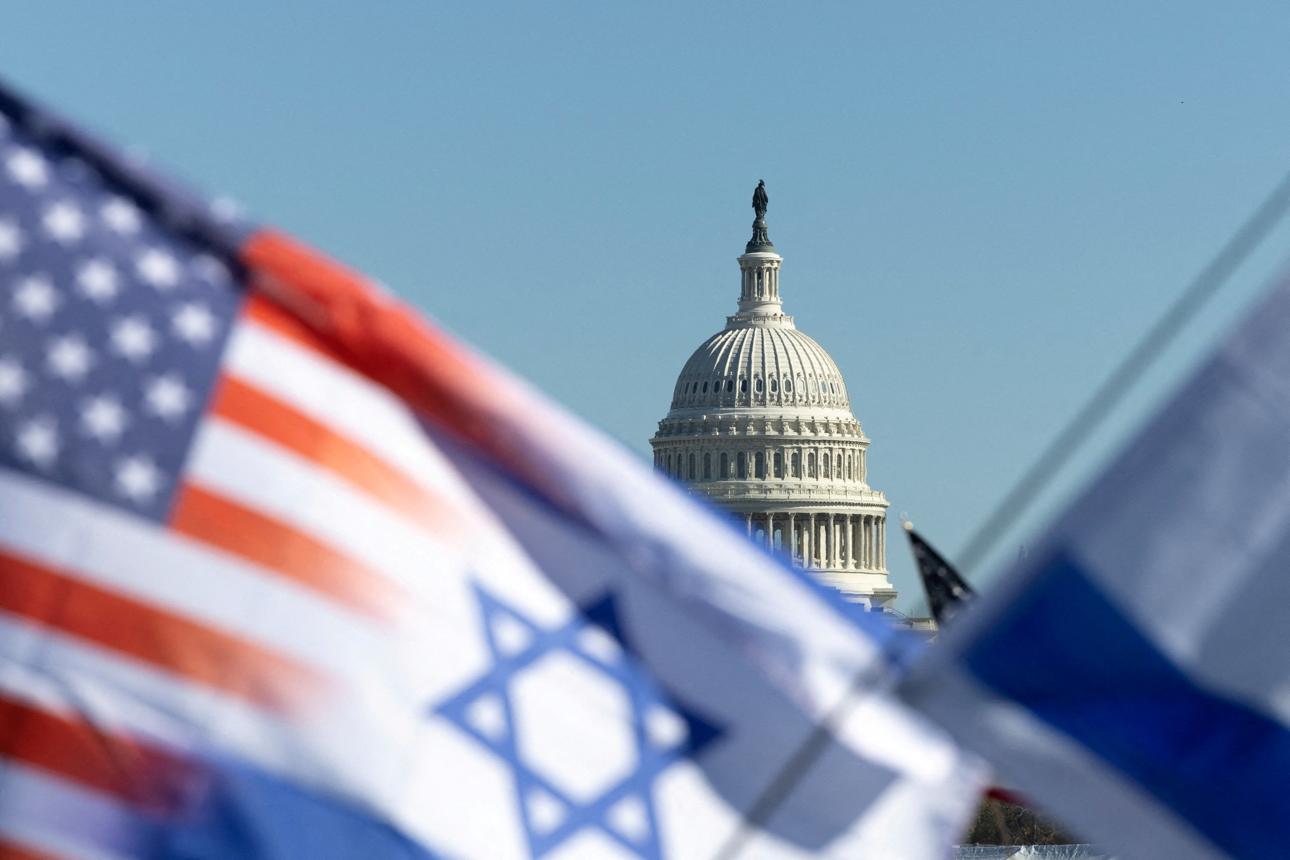
The Democrats’ victory in both houses of Congress in the midterm elections is far more than a political defeat for President Donald Trump. It may signal a profound change in relations between the United States and Israel – a change that the current Israeli government views as a threat, but that a government choosing a different path could turn into a historic opportunity.
The election results show that American voters sought to limit Trump’s power. His failure to improve the cost of living, his trade wars that harmed the economy, and the war with Iran, which led to rising prices and damaged American interests, generated disappointment among voters. Even on immigration, which is considered a winning issue for him, Trump lost support because of the aggressiveness of the immigration agency ICE.
The war with Iran is also unpopular among parts of his support base. Many see it as a war fought for foreign interests, first and foremost those of Israel, contrary to the promise of America First and Trump’s commitment to end wars rather than start new ones.
The Democrats’ victory in both houses of Congress will limit Trump’s ability to advance his policies without cooperation from his political opponents. Congress will be able to increase oversight of the administration, block legislative initiatives, and prevent or condition funding. In foreign and security policy, this could make it harder to finance military initiatives and continue wars without broad political support.
This does not mean that Trump has become a powerless president. He still holds extensive powers, particularly in foreign and security policy. However, the Democrats’ victory narrows his room for maneuver and allows them to present an alternative to his policies ahead of the next presidential election.
A Pro-Israel Congress – But Definitely Not Pro-Netanyahu
In Israel, there are fears that the next Congress will be anti-Israel. This concern is justified if it refers to Israel under the Netanyahu government. Still, it misses the profound change taking place in the perception of support for Israel in the United States. Congress will be very pro-Israel – but not in the traditional sense of the term.
For decades, bipartisan support for Israel was based on the assumption that Israel is a strategic ally of the US, the nation-state of the Jewish people, and a democracy entitled to defend itself. This assumption remains widely held in Congress. The vast majority of lawmakers in both parties will continue to support Israel’s security and regard relations between the two countries as an important American interest.
But more and more lawmakers understand that supporting Israel does not require unconditional support for every policy of its government. On the contrary: in their view, it is precisely the commitment to Israel’s security and future that requires the United States to use diplomacy and the leverage at its disposal to help Israel unburden itself from perpetual occupation, finally resolve the Israeli-Palestinian conflict, and meaningfully integrate into the region.
This change is particularly evident in the Democratic Party. A large majority of American Jews have traditionally supported the Democrats, including in these elections. Jews constitute a central part of the American base of support for Israel. However, their support for Israel is no longer automatic support for its right-wing governments, as it was in the past.
There is indeed a wing of the Democratic Party that does not view Israel as a central ally or questions the very American commitment to it. New lawmakers will join this wing. However, the party’s mainstream includes a majority of lawmakers who consider themselves Zionists, support Israel’s security and good bipartisan relations, but believe that the perpetuation of the occupation endangers Israel’s future as the democratic nation-state of the Jewish people. From their perspective, judicious use of American leverage can help Israel reach an agreement that strengthens its security and regional standing.
The Democrats will not act as a single bloc. There will be disagreements among them over security assistance, the extent of pressure to be exerted on Israel, and the scope of American involvement in the region. However, control of both houses of Congress gives them real power to shape policy, not merely oppose it.
Change is also taking place within the Republican Party, although in a different direction. Alongside evangelicals who see the conflict in the Middle East as part of a theological vision and neoconservatives who believe in military force as a central tool for advancing American interests, the America First movement is gaining strength.
For this movement, the question is not how to invest additional military resources in the region, but how to reduce American military involvement and support diplomatic arrangements that advance American interests without drawing the US into further wars. They will not necessarily support Israel because of shared values, but their preference for diplomacy over wars may serve us better than a policy of endless fighting.
From an American Opportunity to an Israeli Opportunity
From the Israeli perspective, the profound change lies here: For years, American support for Israel was presented as a zero-sum game; either one supports Israel by aligning with its government, or one exerts pressure on it and harms it. But today, most of the Democratic Party and most American Jews believe that it is possible to be committed to Israel’s security while believing that it needs a negotiated resolution with the Palestinians for both moral and security reasons; to support Israel as the democratic nation-state of the Jewish people while believing that the perpetuation of the occupation endangers its future; and to view the US-Israeli alliance as a strategic asset and therefore believe that Washington should help advance a diplomatic solution.
This shift may also be reflected in the Trump administration’s policies, although Trump is impossible to predict. Following his failure in Iran, Trump may come to understand that the only way to leave a positive legacy is to implement the 20-point plan for Gaza, which he has abandoned since signing it. Implementing the plan could enable him to advance his deals with the Gulf states, which seek regional stability, and cement the legacy to which Trump aspires – a peacemaker and Nobel Peace Prize laureate.
The 20-point plan includes recognition of a Palestinian governance alternative to Hamas in Gaza and of a political horizon for a Palestinian state. A new Israeli government that chooses this path could rely on Trump and Congress to advance diplomatic agreements, ensure Israel’s security on all open fronts, and integrate Israel into a broader regional framework.
This framework is not limited to establishing a Palestinian state. It involves a regional architecture in which Israel and a demilitarized Palestinian state are integrated into a comprehensive regional cooperation infrastructure, security guarantees, and economic ties. Such a framework could serve the interests of Israel, the United States, and other American allies and create a foundation for stability and prosperity in the Middle East.
Trump will also find support in the new Congress for efforts to disarm Hezbollah and empower the Lebanese government to do so. However, here too, American support will not necessarily be unconditional. It will depend on the ability to present policies that advance American interests and reduce the risk of being drawn into another war.
Perhaps this will be the paradox of the new Congress: it will be less willing to define support for Israel as automatic alignment with every policy of its government, but precisely for that reason, it may offer Israel more meaningful support in breaking out of the cycle of wars and building a future of security and prosperity.
If Benjamin Netanyahu remains prime minister, he will not find unconditional support in the next Congress for policies of continued occupation and military confrontation. By contrast, a government headed by Gadi Eisenkot, which demonstrates a willingness to pursue diplomatic agreements and integrate Israel into a regional framework, will find partners in Congress and in the US administration in the effort to protect Israel’s security and extricate it from the current reality.
Israel is not facing a choice between American support and American pressure. The choice is between continuing policies that deepen isolation and confrontation versus partnering with the United States to advance agreements that will ensure Israel’s security and its future as the democratic nation-state of the Jewish people.
The Democrats’ victory in the midterm elections therefore marks not only the beginning of a period of constraints for Trump but also an opportunity to reshape relations between Israel and the United States: an alliance between two countries that may disagree on the path but are committed to a shared goal – a secure, strong Israel integrated into a stable and prosperous Middle East.