The Doorpost of Redemption
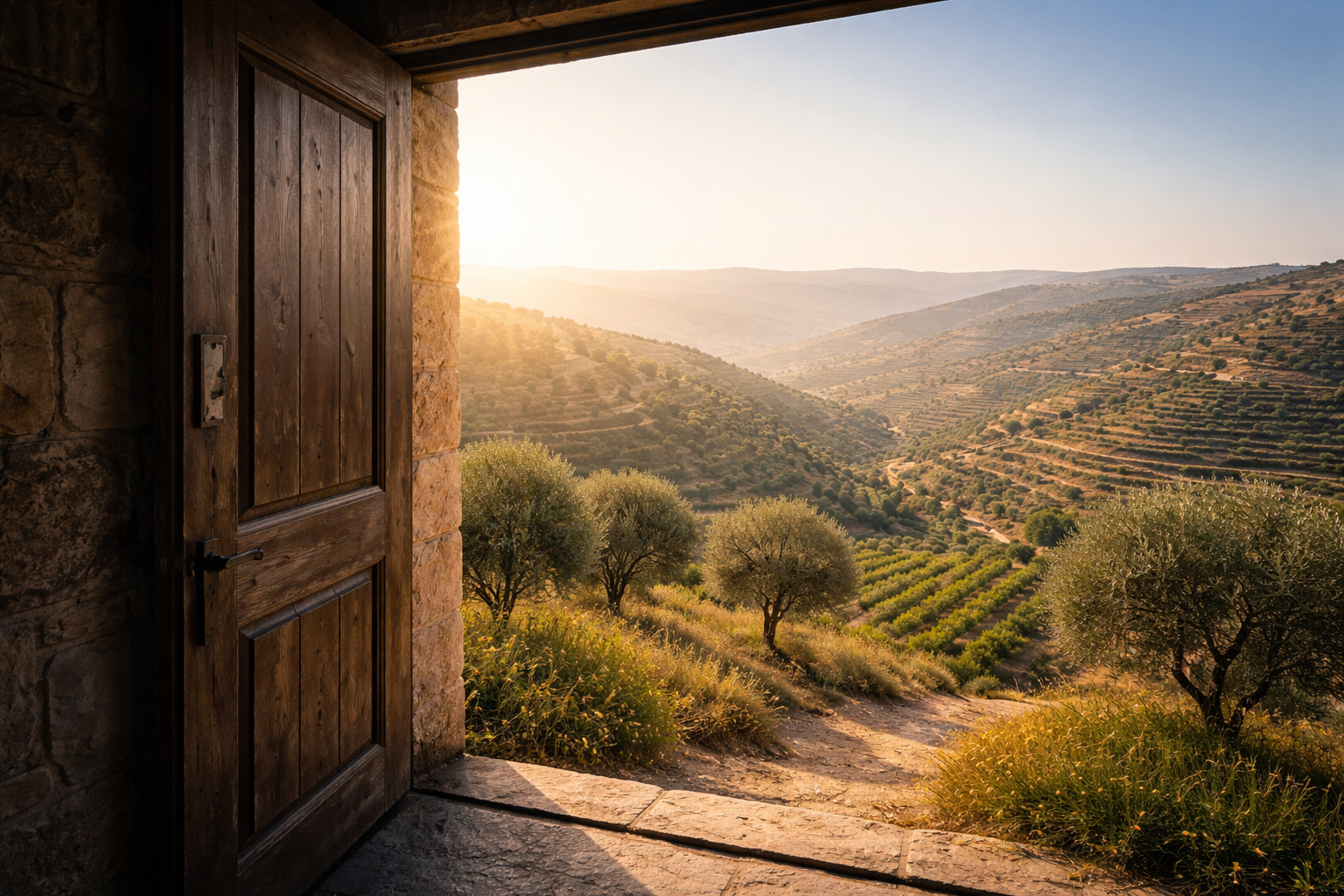
Not in the streets or the palaces of power, but at the threshold between inside and out—between what we cling to and what we are willing to leave behind. Parashat Va’era opens with the first seven of the ten plagues, dismantling Egypt’s world layer by layer: water, land, agriculture, health, and economy. Before a people can be redeemed, the world that holds them must first lose its grip.
Redemption is not portrayed as a sudden break, but as a passage—one that requires an opening.
Pharaoh watches his civilization fracture in real time. Yet the Torah tells us again and again that his heart hardens—not because the signs are unclear, but because accepting them would require surrender. Egypt sacrifices its own future to preserve control, refusing to acknowledge that the moment has shifted.
Across history, moments like these tend to reverberate beyond their original setting.
We are living through a period of global instability in which long-standing certainties—political, cultural, and moral—are eroding. Much of the Western world is struggling not with material collapse, but with a loss of moral coherence, unsure of what it stands for or where it is headed. History teaches that when societies lose their internal compass, they often look outward for scapegoats. Once again, the Jewish people find themselves bearing the weight of that confusion.
Anti-Israel rhetoric has become the language through which ancient hostility reemerges, newly legitimized and widely amplified. Like Egypt of old, much of the world undermines its own long-term interests in pursuit of a refusal it can no longer rationally defend.
The Zohar offers a deeper lens. The plagues, it teaches, were acts of birur – בִּירוּר – spiritual clarification. They separated illusion from truth, darkness from light, those capable of movement from those immobilized by fear or comfort. Chaos, in this view, is not merely destructive; it is revealing—forcing distinctions that comfort prefers to blur. (Zohar II:36b–38a)
That separation did not occur only among the Egyptians.
Chazal teach that during the plague of darkness, many Israelites did not leave Egypt. Some were so embedded in exile that redemption held no appeal. They perished there, unseen, while those prepared to move stepped into the light. Redemption, the sages remind us, is never granted by default. It requires response. (Mechilta, Bo; Rashi, Shemot 10:22)
Rabbi Tzadok HaKohen of Lublin explains that exile dulls perception. One can witness collapse and still cling to what is familiar, mistaking continuity for meaning. Redemption begins not when suffering peaks, but when clarity breaks through—when a person or a people recognizes that what once sustained them no longer can. (Resisei Layla §47)
Darkness revealed who could not move; the doorway revealed who was prepared to choose.
Even the final plague demanded action. The blood on the doorposts was not symbolic alone; it was decisional. The Zohar understands it as a declaration of identity at a moment of judgment. Protection did not come from proximity, but from choice—from marking one’s doorway and being ready to move. (Shemot 12:7, 12–13)
History does not repeat itself, but it educates.
We are living through modern plagues of a different kind: moral inversion, ideological extremism, and strategic blindness. Nations fracture their own cohesion while claiming virtue. Terror is excused; self-defense is questioned. Like Pharaoh, the world hardens its heart, mistaking rigidity for strength.
Yet the plagues were never meant only to break Egypt. They were meant to loosen Israel’s chains.
In the end, Egypt expelled the Jews not out of enlightenment, but exhaustion. Holding on had become unbearable.
And so it is today.
As hostility intensifies, more Jews are quietly hearing an ancient call—not only from fear, but from recognition: that Jewish history does not linger indefinitely in exile once the doorway opens. Aliyah is no longer merely aspirational; for many, it has become the natural response—not to panic, but to clarity—in a world revealing its limits.
At the Pesach Seder, we drink four cups of wine, corresponding to the four expressions of redemption spoken by G-d:
I will take you out of Egypt….וְהוֹצֵאתִי אֶתְכֶם מִמִּצְרַיִם
I will save you….וְהִצַּלְתִּי אֶתְכֶם
I will redeem you….וְגָאַלְתִּי אֶתְכֶם
I will take you to Me as a nation…וְלָקַחְתִּי אֶתְכֶם לִי לְעָם
(Shemot 6:6–7)
A fifth cup is poured, but not drunk—the Cup of Eliyahu. Halachically, this cup remains untouched. It stands for a redemption still unfolding, for questions not yet fully resolved. Chazal teach that Eliyahu comes to clarify—to bridge past and future, exile and home. As the prophet promises:
“Behold, I send you Eliyahu the prophet before the coming of the great and awesome day of G-d.”
הִנֵּה אָנֹכִי שֹׁלֵחַ לָכֶם אֵת אֵלִיָּה הַנָּבִיא לִפְנֵי בּוֹא יוֹם ה׳ הַגָּדוֹל וְהַנּוֹרָא
(Malachi 3:23)
The cup waits because we are still living within its moment.
The return to Jewish sovereignty after two thousand years was not the end of redemption, but its reentry into history—a beginning marked by responsibility, courage, and choice.
Rabbi Tzadok writes that as redemption draws near, the doorway narrows. The call becomes clearer, but so does the demand. Those who listen step forward. Those who wait for certainty often remain behind.
This year, we are asked to stand at the threshold.
“I will take you to Me as a nation, and I will be a G-d to you.”
וְלָקַחְתִּי אֶתְכֶם לִי לְעָם, וְהָיִיתִי לָכֶם לֵאלֹהִים
(Shemot 6:7)
שבת שלום וראש חודש טוב
שמואל