The doors I wish we could keep open
Each year, as we get closer to the High Holy Days, our choir and musicians rehearse at a nearby church while our synagogue is being prepared for Rosh Hashanah and Yom Kippur. Our music director has a key to the church entrance, and when we arrive for rehearsal, he unlocks the door, turns on the lights, and we get to work.
There’s nothing particularly memorable about this routine, which is probably why I have started paying so much attention to it.
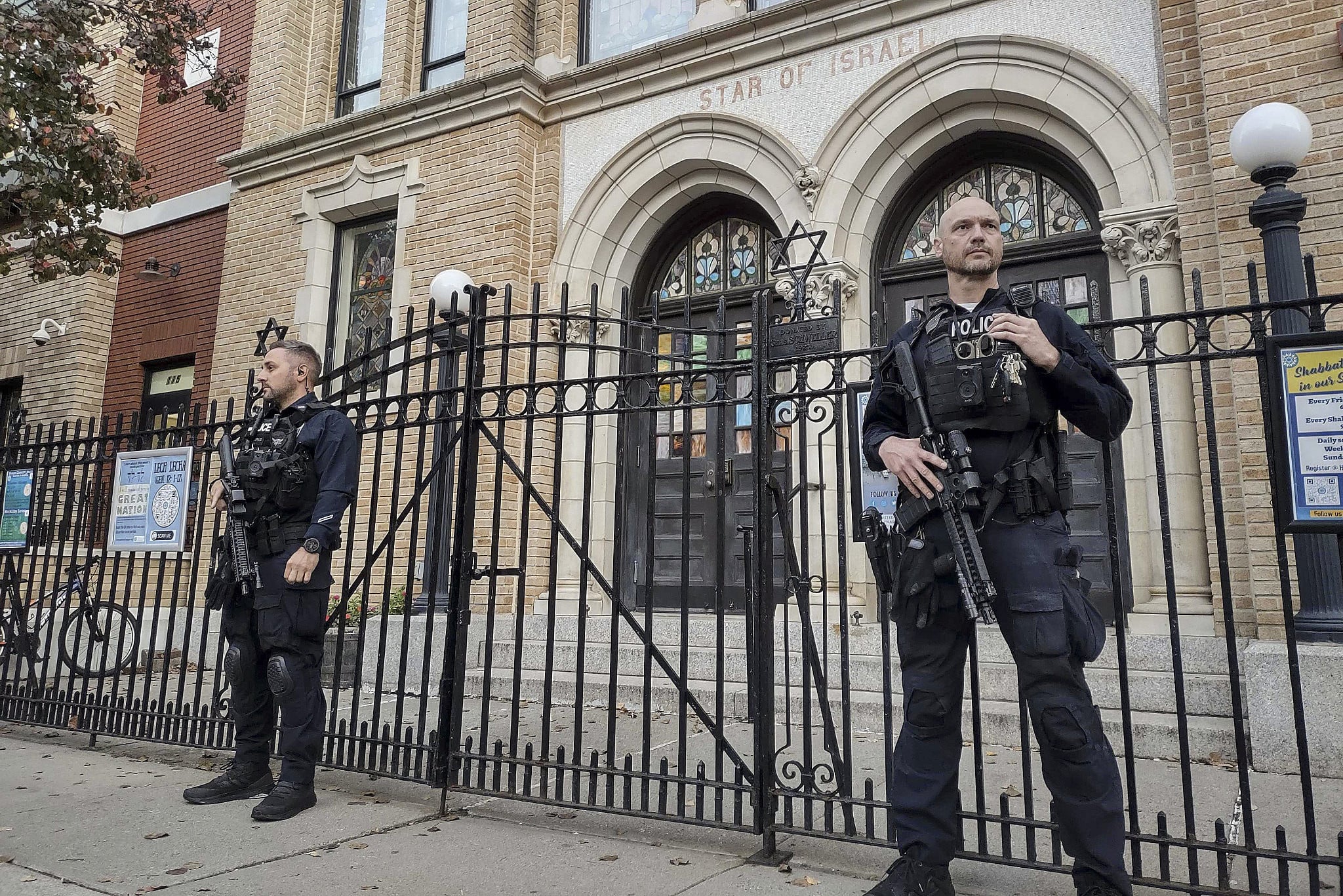
I serve as a cantor at a Reform synagogue in suburban Cleveland, where getting into the building is a little more complicated. We have professional security guards, cameras, locked entrances, key fobs and emergency buttons. Our staff has regular security training, and keeping our synagogue safe requires a significant investment of money, staff time and attention. That is especially true around the High Holy Days, when thousands of congregants and guests will pass through our doors.
Our synagogue is also one of several local congregations participating in a new Jewish Federation of Cleveland pilot program that trains congregants to assist professional security officers. Volunteers are learning emergency preparedness, physical security, stop-the-bleed techniques, and how to recognize and report potential concerns. I am enormously grateful to all the people, professional and lay, who do this work and protect us.
After a while, you get used to it. I reach for my key fob automatically. I know which entrances I can use and which ones I probably shouldn’t. I pass the cameras on my way to my office and greet the guards when I come in. Most days I don’t spend much time thinking about any of it. Then I drive to rehearsal, where our music director opens the church with his key, turns on the lights, and we walk in. There is no security officer at the door, no visible camera watching us enter, no key fob to scan.
I notice it every time.
Churches and other houses of worship have experienced horrific violence, and every religious community has reason to think seriously about safety. Jewish communities have been forced to think about it with particular urgency. Pittsburgh, Poway, West Bloomfield and Colleyville are now names that carry a second meaning for American Jews. Just recently, an attack during Shabbat services at Central Synagogue in New York City added another frightening incident to that list.
We have gotten remarkably accustomed to living this way. Most of us can remember when synagogue security looked very different. I sometimes wonder what a synagogue board in the 1980s would have thought of the amount of money we now spend on guards, cameras, secured entrances, training and technology. Today those expenses are part of the budget. We plan for them every year alongside everything else it takes to run a synagogue.
The money is only part of it. Synagogues depend on people walking through the door. Someone comes for the first time and eventually becomes a familiar face. A mourner shows up because they need a minyan. A family brings a child to religious school, and before long that child is racing down the hallway ahead of their parents. People come to sing, study, celebrate, grieve, eat, argue, volunteer and spend time with other Jews. Jewish community depends on people being willing to come inside and feeling that there is a place for them once they do.
So we spend a lot of time thinking about doors. We want people to walk through them, while also paying close attention to who is walking through them. Every synagogue I know is working through some version of this. We have gotten very good at it, which is its own sad measure of how much has changed.
Much of the work that makes this possible happens quietly. Security officers, staff and volunteers spend hours thinking through entrances, procedures and emergencies so that the people who come through our doors can get on with the business of being a Jewish community. Ideally, most of them will never know how much preparation went into making that possible.
In a few weeks, our choir will finish rehearsing at the church and bring the sacred music we have prepared back to our synagogue. Thousands of people will arrive for the High Holy Days, pass our security officers on the way in, find their seats and open their prayer books. On Rosh Hashanah evening, we will sing words from Hashkiveinu, the ancient prayer for protection: Ufros aleinu sukkat shlomecha — spread over us Your shelter of peace.
I’ve been singing those words for most of my life, and lately I’m hearing them differently. The prayer asks God to spread over us a sukkah of peace. A sukkah is temporary and exposed, with a roof open enough for us to see the sky through it. It is an unusual image to find in a prayer asking for protection.
When I sing those words on Rosh Hashanah, I will be standing in a building where an extraordinary amount of work has gone into keeping us safe. Guards will be at the doors. Cameras will be on. Staff and volunteers will know what to do in an emergency. Because they are there, thousands of us will be able to sit together and welcome a new year.
And I will probably think about the church where we rehearsed. Our music director puts his key in the lock, opens the door and turns on the lights. We find our places, turn on our iPads or open our binders and start singing. A few seconds later, nobody is thinking about the door anymore.
I want that for Jewish life. I want to walk into my synagogue thinking about the people waiting inside, the music we are about to sing and the prayers we are about to say. I want the door to be among the least interesting things about the building.
As I prepare to sing the prayers of 5787, I keep seeing that little moment before rehearsal: the key turns, the door opens, the lights come on, and we walk inside.
I hope someday opening our synagogue doors can feel that ordinary, too.