


The Dream of a Deal in a Diplomatic Quagmire
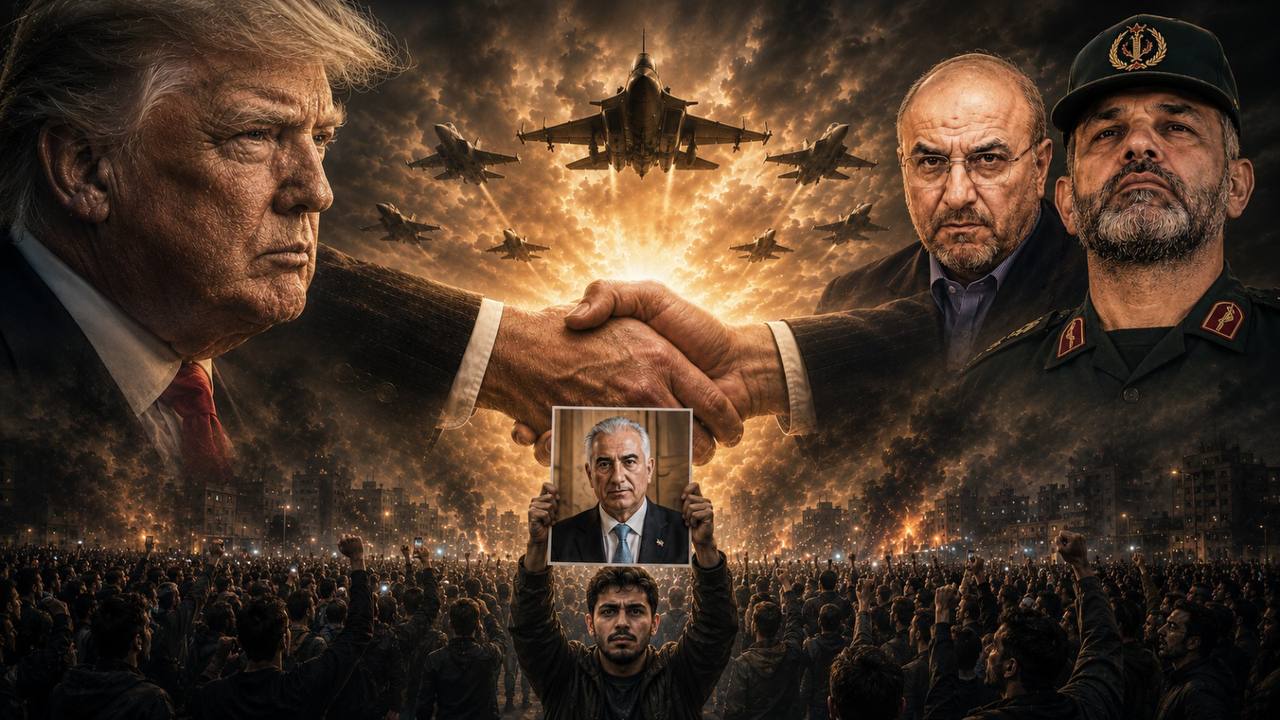
Since the Islamic Republic came to power in Iran in 1979, the United States has had nine different presidents. Each one has faced the same basic problem: how to deal with a regime that uses talks, threats, terrorism, and delay to stay alive and expand its power. None of them has fully dealt with that problem.
During his first term, Donald Trump came closer than any of his predecessors. His maximum pressure campaign, the Abraham Accords, and the killing of Qassem Soleimani changed the usual American approach. Washington showed that it was willing to put real pressure on the Islamic Republic and confront its actions directly.
But starting a policy is not the same as finishing it. The question now is whether the United States is ready to complete what was started, or whether it will again settle for half-measures, temporary deals, and short-term calm.
There are three realistic options before the American president.
The first option is to return to negotiations. But after 47 years of dealing with the Islamic Republic, one point is clear: the regime does not use diplomacy in the normal sense. It uses diplomacy to buy time, reduce pressure, divide its enemies, and protect itself.
The regime’s recent ballistic missile attack toward Diego Garcia showed once again that private messages and quiet promises from the Revolutionary Guards cannot be trusted. Backchannel assurances may sound serious, but they have little value unless they are backed by strict verification and real consequences.
If talks begin again, they must be handled with extreme caution. America may have the upper hand today. It may not be trapped in a full war. But it must also avoid being trapped in endless negotiations. Long talks with no clear result are one of Tehran’s favorite methods. They give the regime time to regroup and wait for political changes in Washington.
If earlier American presidents had dealt with this problem sooner, the cost would have been lower. Today, delay is far more dangerous.
The second option is more direct. It would involve the quick removal of the Islamic Republic’s nuclear materials from the Isfahan facilities, along with the creation of a 100-kilometer security zone. This would give American and Israeli forces a short window — perhaps three to six weeks — to find, secure, and remove remaining nuclear materials before the regime can rebuild its program in hidden sites.
This option could reduce the immediate nuclear danger. But it would not solve the larger problem. As Defense Secretary Pete Hegseth has said, removing the materials would not remove the regime’s desire to obtain nuclear weapons in the future.
The third and strongest option would be a focused military and political operation centered on taking Tehran, carried out in close coordination with Israel and with parts of the Iranian people who are ready to help end the regime. This option is based on a simple fact: the real center of power in the Islamic Republic is not only its nuclear sites. It is the ruling system itself — the leadership, the command structure, the ideological institutions, and the forces that keep the regime in power.
If the goal is only to slow the regime down, then limited strikes and temporary deals may be enough. But if the goal is to end the threat, then the plan must be larger and clearer. It must have a defined goal and a defined end.
Each option carries serious risks.
The first risk is delay. Tehran is very skilled at using time as a weapon. Every extra day of talks, every pause, and every unclear military exchange can be presented inside Iran as a victory for the regime.
The regime’s calculation is simple. If it can drag out the process long enough, it may survive until American politics change. Midterm elections may weaken the administration. A future election may bring a different president. Divisions inside the United States may grow. International attention may move elsewhere.
Recent events show this pattern. A ceasefire that was first presented as lasting two weeks has now gone on for more than a month. The Strait of Hormuz was briefly reopened, reportedly at Pakistan’s request, and then closed again. Each step gave regime media new material to claim that resistance had worked.
The lesson is clear. Even talks aimed at formal surrender must have short and firm deadlines. The United States cannot allow another open-ended diplomatic process to replace real strategy.
The second major risk is not having a complete plan. Airstrikes can weaken an enemy, but they rarely solve the political problem by themselves. They can destroy sites, reduce military capacity, and disrupt command centers. But regimes like the Islamic Republic are built to survive pressure. They move assets, hide commanders, absorb damage, and wait.
No serious campaign can rely on air power alone. There must be a plan for what comes next. That plan must be able to force a real change in behavior, or support a real change in power. Otherwise, military action becomes punishment, not strategy.
The main source of the Islamic Republic’s power is not only its nuclear program. It is also its missile and drone network. These weapons allow Tehran to threaten Israel, pressure the Gulf states, endanger American bases, and support its proxy forces across the region.
Under heavy pressure, Tehran may agree to limited nuclear concessions. It may accept temporary restrictions or sign another agreement. But it will not willingly give up its missiles and drones. These are the tools it uses every day to threaten others and protect itself.
Any American president who wants a real result must be prepared to take this capability away from the regime. Waiting for the regime to give it up on its own is not realistic.
The comparison with North Korea is useful. Pyongyang did not need nuclear weapons to threaten Seoul. Its conventional artillery has kept the South Korean capital at risk for decades. In a similar way, the Islamic Republic already has strong leverage through its missiles, drones, and proxy forces, even without a nuclear weapon.
If Washington decides that success means only limiting uranium enrichment or destroying a few old aircraft and ships, it will miss the main issue. Iran’s air force is old. Much of it is based on American and Soviet designs from the 1960s and 1970s. Its surface navy is also weak and outdated. Destroying these assets may produce dramatic pictures, but it will not necessarily change the balance of power.
The real problem is the regime itself. Its nuclear program, missile program, drone warfare, proxy network, hostage-taking, and regional attacks all come from the same system.
Anything less than dealing with that system will only produce a temporary victory on paper. Democrats will call it a failure and say the regime survived, kept its proxies, and will rebuild. Republicans will face criticism for weakness. The American public will see another expensive but unfinished operation and may become even more isolationist.
The Islamic Republic, meanwhile, will claim survival as victory. Even if it is weakened, it will tell its supporters that it stood against the United States and survived. That message would strengthen the regime at home and encourage it abroad.
For this reason, the United States must define its goal from the beginning. The goal cannot be another arms-control deal or a temporary pause in enrichment. The goal must be to end the Islamic Republic as a revolutionary threat.
This does not mean a reckless occupation or an open-ended war. It means a clear strategy. That strategy should combine diplomatic isolation, strong economic pressure, precise strikes against command centers, and, if needed, a limited ground role to support Iranian opposition forces ready to replace the theocracy with a government that respects its own people and its neighbors.
President Trump understands the risks: escalation, refugees, oil price shocks, and political division inside the United States. These are real concerns. But the greater risk is allowing the current situation to continue. Each year, the regime becomes bolder, moves closer to nuclear capability, and continues to export violence beyond its borders.
The United States has the power to lead a serious coalition. What it has often lacked is the will to finish the job.
The time for half-measures is over. Two generations have already paid the price for delay, weak policy, and misplaced trust in negotiations. A third generation should not be forced to pay the same price.
Victory is possible, but only if American strategy matches American words. The real tools of power must be taken out of the hands of the Revolutionary Guards. They will not give them up politely at a negotiating table.
History will judge whether the Trump administration has the courage to do what previous administrations avoided.