


The Druze-Jewish Covenant: A Unique Alliance of Fate and Destiny
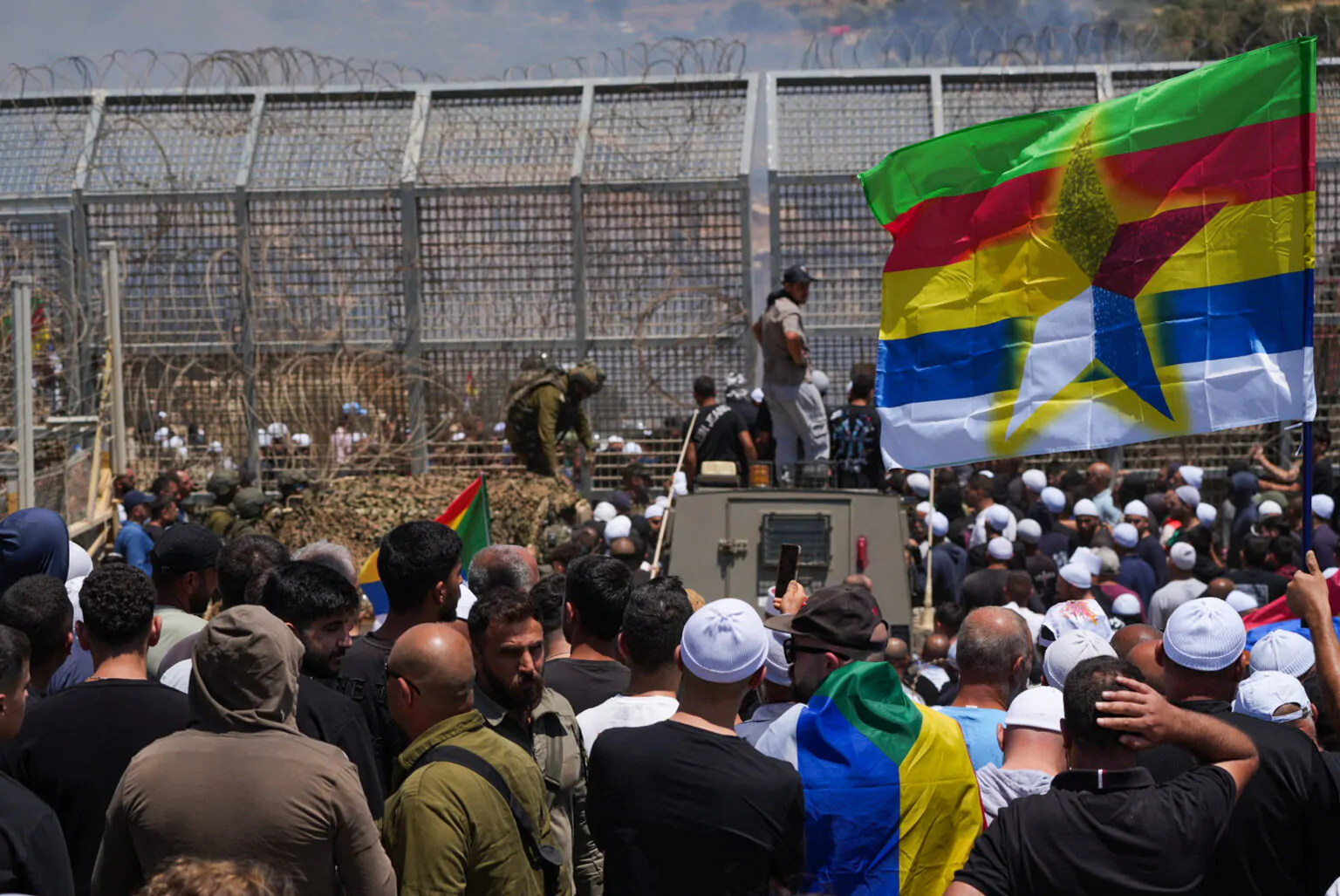
In a world where the sense of belonging and identity is shaken and threatened, and where alienation and suspicion often replace solidarity and trust among nations, cultures, and religions – this is a moment to return, to reflect, and to learn about one of the most noble and unique partnerships formed in the turbulent Middle East: the covenant between the State of Israel and the Druze community.
This is not a product of fleeting interests or cold geopolitics, but a deep bond founded on values of loyalty, mutual responsibility, and authentic partnership – a Covenant of Fate, but also a Covenant of Destiny.
Who Are the Druze: A Closed Identity, An Open Loyalty
The Druze religion, founded in the 11th century, is one of the most distinct ethno-religious groups in the Middle East. It is rooted in monotheism, communal loyalty, spiritual secrecy, and high moral values. Its doctrine includes belief in one God, reincarnation, the pursuit of moral wisdom, and a commitment to truth, honor, and internal brotherhood.
As a persecuted minority throughout history, the Druze chose to settle in the mountainous regions of Lebanon, Syria, and the Land of Israel – where they built strong, cohesive, and hospitable communities with a unique and proud identity.
In Israel, Druze towns are concentrated in the Galilee, Carmel, and the Golan Heights. Upon the state’s founding, Israel recognized the Druze as a distinct religious community. The Druze faced a crossroads: remain neutral, or join actively in building the emerging state. They chose full partnership. By the 1950s, they began volunteering for the IDF, and in 1956, conscription became mandatory – not by force, but by a sincere desire to take part in shaping the nation’s future and defending its existence.
More Than Support: It Is Belonging
The Druze in Israel are not “supporters” of the state – they are an inseparable part of it. They are its citizens, soldiers, commanders, teachers, doctors, public servants, and pillars of society. Their partnership is not born of fear or incentive, but of a deep moral choice: to live together, to defend together, to build together.
The Druze community has long been – and continues to be – a full partner in the Zionist endeavor. It stands alongside the State of Israel – in times of triumph and in times of hardship – sharing a covenant of blood and sacrifice, marked by the heroism and loyalty of Druze soldiers and officers who have fallen in Israel’s battles.
But that is not the full story. One of the most difficult dilemmas for Druze soldiers is the knowledge that some of their relatives live across the border – in enemy states like Syria. They wear Israeli uniforms, protect the borders, lead troops – all while hearing of their loved ones suffering under hostile regimes, sometimes persecuted themselves, as is happening right now.
This pain does not fracture the covenant – it deepens it. It does not undermine loyalty – it emphasizes its strength.
This partnership reflects Rabbi Joseph B. Soloveitchik’s profound distinction between a Covenant of Fate – forged through shared threat – and a Covenant of Destiny – chosen through shared vision and purpose. The Druze–Jewish covenant embodies both – and stands as a living testimony to the power of true partnership between different communities striving together for security, justice, and a shared future.
What Happened This Week in Syria: A Moral Test for the Entire World
This past week, violent clashes erupted in the city of al-Suwayda, the heart of the Druze community in southern Syria. What began as local skirmishes between Druze fighters and Bedouin tribes quickly escalated when Syrian army forces entered the city — and according to many reports, not only failed to stop the violence, but actively collaborated with the attackers.
The assault was brutal: gunfire in residential areas, homes invaded, looted, and set ablaze, kidnappings, sexual assaults, and the murder of civilians – women, children, and the elderly. Dozens of bodies lay in the streets, and the media reports hundreds of Druze casualties. Despite U.S. and Israeli efforts to broker a ceasefire, Bedouin militias violated it, and atrocities continue even now.
Within Israel, the Druze community did not wait for orders. Dozens of Druze citizens rushed to the Syrian border, and some even crossed it in a desperate attempt to save their family members and protect their community. Leaders from Druze villages declared: “This is not a time for words -this is a time for action.”
It was not a government operation – but a human response of a community risking its life for its brothers across the border.
While the world may fall silent—the State of Israel will continue to be the voice
In the face of extremist, violent, and murderous groups – Israel once again stood guard.
Israel acted immediately: the IDF struck Syrian army targets near Suwayda and Damascus, driven by a moral commitment to protect the Druze and a clear objective – to create a safe zone and stop the massacre.
Not out of a desire for conflict – but from a profound sense of covenant. This is not a new front – not a war – but mutual responsibility in its deepest and most essential form. A concept too often forgotten in the language of diplomacy.
And the world? Silent. No emergency councils convened. No headlines. No calls for sanctions.
When Druze blood is spilled – the international conscience grows quiet. The global community cannot afford to offer hollow condemnations. What is needed is action: humanitarian protection, documentation of crimes, prosecution of perpetrators – and the prevention of further atrocities.
This is not a local issue – it is a global responsibility.
What We Can All Learn from This Covenant
The covenant between the State of Israel and the Druze community is not merely a national story – it is a moral, social, educational, and universal lesson of the highest order. It reveals a profound truth: genuine partnership does not demand the erasure of identities – but pride in them. It proves that one can maintain a unique, proud, and at times vulnerable identity – while still choosing to act together for the common good.
It teaches us that belonging is not built by flattening differences – but by recognizing them, by listening, and by insisting on mutual respect and loyalty. This covenant shows that one can be Druze, Christian, Muslim, or Jewish – and live side by side. Not through uniformity, but through shared commitment.
The covenant with the Druze is also a living testament to the complex and inclusive character of the State of Israel: an Arabic-speaking, religious, and independent minority that preserves its culture – while also serving, leading, and contributing as an integral part of society. Not despite its identity – but through it.
A state is not measured only by its majority – but by how that majority treats its minorities. And Israel, for all its challenges, presents a unique model of civic partnership built on mutual respect.
And not by chance, the American Jewish community, too, was built on similar alliances: with civil rights movements, immigrant communities, and other minorities fighting for equality. At times, these covenants were forged in tears – and at times in blood.
But in recent years, as Jewish and Zionist identity comes under attack, and the connection to Israel becomes a point of political tension – those alliances are being tested anew.
Now, more than ever – we must return to the root: strong alliances are not born out of apology for identity – but from deep commitment to it. And only when we are truly connected to our story – do we have the strength, clarity, and authenticity to build real bonds with others.
The Druze–Jewish covenant is a call for moral awakening for all who believe in partnership, in values, and in mutual responsibility. It is a reminder that the courage to stand with the other – while remaining loyal to who we are – is the most ethical act a community can choose.
This is not only a story of the past – it is a mission for the future.