
Learning The Lessons Of History
The Duty Of Early Recognition
Early Recognition Is Not Prophecy
It does not mean knowing the future. It does not mean treating every warning sign as proof that catastrophe is coming. It does not mean panic, exaggeration, or certainty before certainty is possible. A society that sees disaster everywhere loses judgment. It frightens people without protecting them. It makes serious warnings easier to dismiss.
But the opposite failure is just as dangerous.
A society that waits for certainty may recognize danger only after meaningful action has been lost. It may wait until the pattern is undeniable, but by then the pattern may already have done its work. It may wait until targeted people are frightened enough to withdraw from public life, but by then trust may already be damaged. It may wait until institutions are forced to respond, but by then prevention has become repair.
The Discipline Between Panic And Denial
Early recognition lives between these failures.
It is the discipline of taking warning signs seriously without surrendering judgment. It is the discipline of seeing direction before destination. It is the discipline of asking not only what has happened, but what is becoming possible if the present direction continues.
That discipline is central to this book.
The historical question has never been simply whether danger existed. Danger often existed long before people agreed on what it meant. The harder question is how danger should be interpreted while there is still time to act.
That is where human beings struggle. They do not usually delay because they see nothing. They delay because they see pieces. They see a law, a speech, a threat, a silence, a rumour, an act of intimidation, a failure of leadership, or a change in public language. Each piece may be explained. Each piece may appear manageable. Each piece may be treated as isolated.
Early recognition asks whether the pieces are beginning to form direction.
That is why it is a discipline rather than a reaction.
A reaction responds to the latest incident. A discipline looks for pattern. A reaction is often driven by fear, anger, or exhaustion. A discipline requires evidence, proportion, memory, and courage. A reaction may be right in the moment but unstable over time. A discipline creates habits that can be used again and again, especially when the public atmosphere is confusing.
The First Habit: Attention
The first habit is attention.
Attention means noticing what has changed. It means asking whether language has become harsher, whether threats have become more common, whether institutions have become less clear, whether people are becoming afraid to identify themselves openly, and whether a targeted community is altering its behaviour in quiet ways. It means noticing not only spectacular acts, but smaller shifts in daily life.
Many serious dangers first appear as atmosphere.
A person pauses before wearing a visible Jewish symbol. A parent gives a child new instructions about what not to say at school. A student stops speaking in class. A synagogue increases security. A community event changes its procedures. A workplace avoids direct language because the issue feels too difficult. A friend says nothing when silence itself becomes meaningful.
None of these signs proves catastrophe.
That is not the point.
The point is that early recognition pays attention to change before it becomes normal. It notices when belonging begins to feel conditional. It notices when people who once moved freely now calculate where they can speak, what they can wear, what they can say, and whether they will be believed if they explain their fear.
The Second Habit: Distinction
The second habit is distinction.
Early recognition requires the ability to separate discomfort from danger, disagreement from hatred, criticism from demonization, and isolated incidents from pattern. Without this discipline, language becomes careless. Everything becomes a warning. Every argument becomes a threat. Every disagreement becomes evidence of collapse.
That is not recognition.
That is alarm.
But distinction also works in the other direction. It prevents denial. It prevents people from hiding behind complexity when something is clear. It prevents institutions from calling antisemitism tension, intimidation misunderstanding, harassment debate, and fear sensitivity. It demands that each event be examined honestly, neither inflated nor minimized.
This is why early recognition must be calm.
Calm does not mean passive. Calm does not mean detached. Calm means disciplined enough to see clearly. Fear may alert people to danger, but fear alone cannot define the response. Anger may reveal that something has been violated, but anger alone cannot build protection. Early recognition requires moral seriousness without panic.
The Third Habit: Pattern Reading
The third habit is pattern reading.
A pattern is not created by one event alone. It is created when separate events begin to point in the same direction. A slogan appears in one place. A threat appears in another. A school mishandles a complaint. A synagogue requires increased protection. A public official avoids naming the issue. A student hides identity. A workplace treats Jewish fear as a complication rather than a concern. A social media post spreads old accusations in new language.
Each event may be defended as separate.
A pattern asks whether they are connected by direction.
Pattern reading does not require conspiracy thinking. It requires the opposite. It requires the careful collection of visible facts. What happened? Who was targeted? What language was used? How did institutions respond? Was the response clear or evasive? Did people feel safer afterward, or more alone? Did the incident remain isolated, or did similar incidents begin to appear elsewhere?
This is practical work.
It is the work of communities, schools, employers, police services, universities, governments, civic organizations, and ordinary citizens. It asks people to take records seriously, to listen to testimony, to observe repeated failures, and to ask whether the response is matching the direction of the risk.
The Fourth Habit: Listening
The fourth habit is listening.
Targeted communities often recognize shifts before the wider society does. They hear tones others miss. They understand references others do not recognize. They feel the change in rooms where they once felt comfortable. They know when a joke is not only a joke, when a slogan carries more than political meaning, when silence is not neutral, and when reassurance does not match lived experience.
This does not mean every fear is automatically correct in every detail.
It does mean fear should be treated as evidence, not dismissed as inconvenience.
A society practising early recognition does not begin by asking targeted people to prove that their concern is convenient for everyone else. It begins by listening carefully. It asks what has changed. It asks whether people are altering behaviour. It asks whether children, students, employees, worshippers, or community members feel less safe. It asks whether existing protections are working.
Listening is not the end of judgment.
It is the beginning of responsible judgment.
The Fifth Habit: Proportional Action
The fifth habit is proportional action.
Early recognition is not only about seeing. It is about responding in the right measure at the right time. Not every warning requires the same response. Some require conversation. Some require education. Some require public statements. Some require security changes. Some require investigation. Some require discipline. Some require legal response. Some require moral leadership.
Proportional action protects credibility.
If every incident is treated as catastrophic, people stop listening. If serious incidents are treated as minor, people stop trusting. Early recognition requires response that matches the evidence and the risk. It must be firm enough to protect and careful enough to remain fair.
This balance is difficult, but necessary.
A society that cannot act proportionately often swings between denial and overreaction. It ignores a problem until it becomes impossible to ignore, then responds in ways that may be dramatic but late. Early recognition tries to avoid that cycle. It acts sooner, more calmly, more precisely, and more effectively.
The Sixth Habit: Preserving Agency
The sixth habit is preserving agency.
This may be the most important point.
Early recognition exists to preserve the ability to act. It is not meant to prove, after the fact, that fear was justified. It is meant to prevent fear from becoming withdrawal, isolation, or entrapment. It is meant to keep people visible, protected, and fully included before they begin to disappear from public life.
Agency is lost gradually.
It is lost when people decide it is easier not to speak. It is lost when they stop wearing symbols. It is lost when students avoid certain spaces. It is lost when parents quietly change plans. It is lost when employees decide a workplace is not safe for honesty. It is lost when religious life requires constant security anxiety. It is lost when people begin to ask whether they can remain visible without consequence.
Early recognition is the discipline of noticing that loss before it becomes normal.
The Final Habit: Institutional Courage
The final habit is institutional courage.
Institutions often prefer calm. They prefer process. They prefer language that offends no one. They prefer statements that condemn hatred in general rather than naming the hatred in front of them. Sometimes that caution is understandable. Institutions must be fair. They must avoid careless accusation. They must protect rights. They must consider evidence.
But caution becomes failure when it replaces clarity.
Early recognition requires institutions to act before public pressure forces them to act. It requires them to say what is happening when the facts support it. It requires them to protect targeted people even when doing so produces criticism. It requires them to understand that neutrality in language can become partiality in effect if it leaves the vulnerable unprotected.
Institutional courage is not loud.
It is steady.
It appears when a school protects students before parents have to beg. It appears when a university distinguishes protest from intimidation. It appears when an employer takes Jewish fear seriously without treating it as a workplace inconvenience. It appears when police understand that threats to Jewish institutions affect the whole community. It appears when civic leaders speak clearly before silence becomes its own message.
Why Waiting Is Not Neutral
This is what makes early recognition a discipline.
It must be practised before the evidence is complete. It must be careful enough to avoid exaggeration and honest enough to avoid denial. It must listen without surrendering judgment. It must judge without dismissing fear. It must act before action becomes symbolic. It must preserve agency before people begin to lose it.
None of this is easy.
It is easier to wait. It is easier to demand more proof. It is easier to say the situation is complicated. It is easier to reassure. It is easier to condemn hatred in general terms. It is easier to avoid naming patterns until others have named them first. It is easier to hope that the atmosphere will improve on its own.
Sometimes it will.
Sometimes it will not.
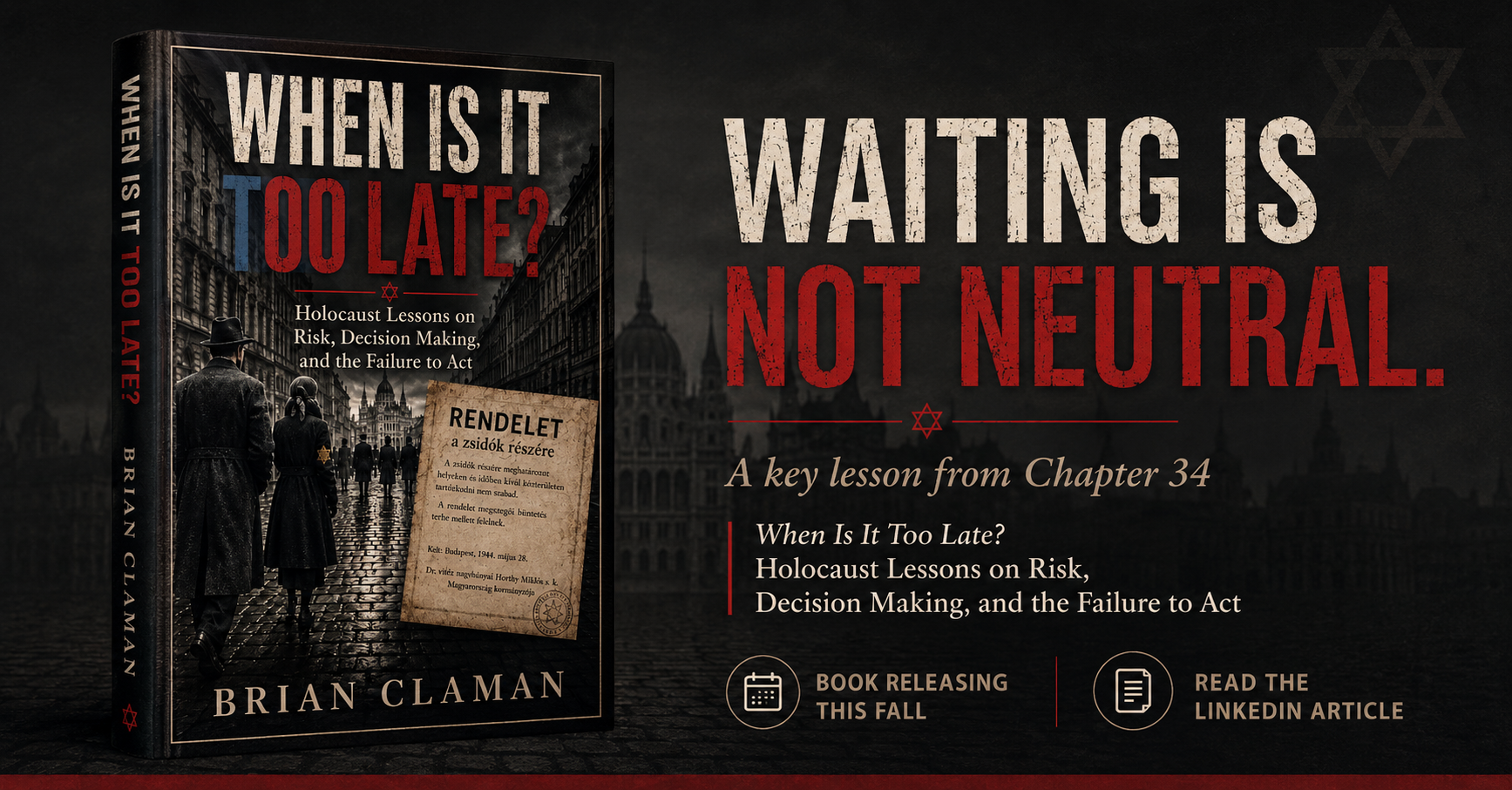
The discipline of early recognition exists because waiting is not neutral. Waiting can preserve calm, but it can also preserve danger. Waiting can prevent overreaction, but it can also allow harm to deepen. Waiting can feel responsible while it quietly transfers the cost of delay onto those already under pressure.
A Shared Civic Responsibility
That is why the burden cannot belong only to Jews.
A society that asks Jews alone to recognize antisemitism has already failed part of the test. Jews can warn. They can document. They can explain. They can advocate. They can protect their institutions. But the responsibility for recognition must be shared by the society that claims to include them.
Early recognition is a civic discipline.
It belongs to neighbours who notice when Jewish friends become quieter. It belongs to schools that notice when Jewish students feel exposed. It belongs to universities that notice when debate becomes intimidation. It belongs to employers that notice when Jewish employees feel unsupported. It belongs to police services that notice when threats form patterns. It belongs to political leaders who notice when words are being used to excuse hatred. It belongs to media organizations that notice when complexity is being used to obscure antisemitism. It belongs to anyone who believes safety should be protected before it is lost.
Responsibility Before Regret
Early recognition does not guarantee safety.
No discipline can do that.
But it improves the chance that warning will become protection rather than regret. It creates a habit of seeing before crisis. It keeps institutions from hiding behind uncertainty. It helps society distinguish between noise and direction. It gives people a way to act before the final evidence arrives.
That is why it matters.
The central lesson is not that every danger becomes catastrophe. Most do not. The lesson is that catastrophe becomes possible when warning signs are missed, minimized, excused, or treated as someone else’s problem until agency has already narrowed.
Early recognition is the discipline of refusing that delay.
It is not prophecy.
It is responsibility.
Related Topics
Related Posts