

Mathematics Teaching Professor, Author
The Edinburgh Hebrew Congregation and the Growth of Jewish Life in Scotland
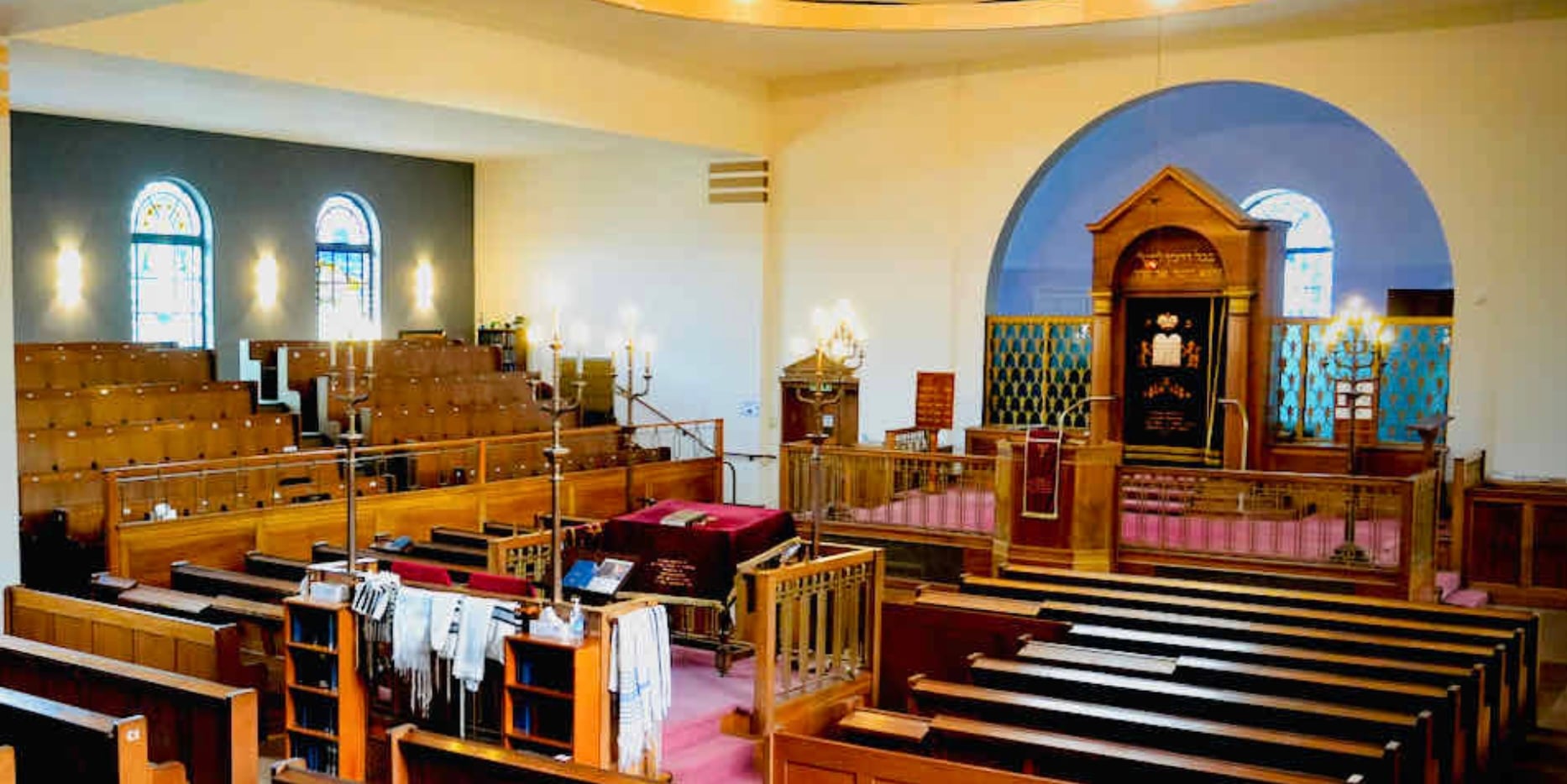
Shul Interior (Source: Alan Meerkin Photography.)
The Edinburgh Hebrew Congregation (EHC) is the main Jewish community in Scotland’s capital and the only purpose-built synagogue in Edinburgh, reflecting over two centuries of continuous Jewish life since the community was first organized in 1816. Its synagogue on Salisbury Road, completed in 1932 and designed by James Miller, remains the center of religious, cultural, and social life for the community today.
Opened to accommodate over 1,000 members and later remodeled in 1980 to seat around 400, the building continues to serve a smaller but active congregation. Services are held regularly on Friday evenings, Saturday mornings, and Sunday mornings, with weekday minyanim arranged as needed, alongside a Sunday Cheder and a full program of communal and social events.
Synagogue
The Edinburgh Hebrew Congregation’s Salisbury Road synagogue, built between 1931 and 1932, was the first and remains the only purpose-built synagogue in Edinburgh since the community was founded in 1816. While Edinburgh’s Jewish population peaked at around 2,000 in the 1920s, it numbers about 900 today (though not all are members of the synagogue).
Designed by Glasgow architect James Miller, the synagogue was granted Scottish Category B listed status in 1996. Its striking red-brick exterior, unusual in Edinburgh, features four cubic corner turrets that create a simple yet monumental form. High-quality Flemish-bond brickwork with white mortar reinforces its robust appearance.
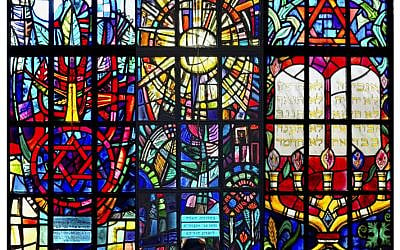
The Edinburgh Hebrew Congregation is home to a collection of beautiful stained glass windows, including six created by William Wilson, RSA, who is widely regarded as one of the most distinguished Scottish stained glass artists of the post-war generation. These windows enhance the synagogue’s beauty and reflect its rich artistic and cultural heritage.
Behind its traditional design lay advanced engineering for the period. The shallow saucer dome was suspended on steel hangers, giving the building excellent acoustics, while the gallery was largely cantilevered. The interior remains traditional, centered on a French walnut Ark with a classical pediment, a grilled choir gallery, and an octagonal pulpit.
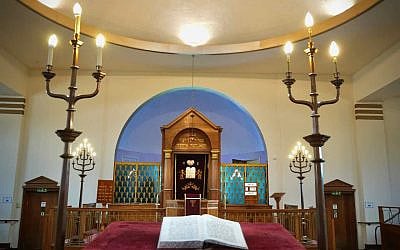
The bimah occupies a central position in keeping with Orthodox Ashkenazi tradition, with seating facing the ark. Designed by James Miller (1860–1947), one of Scotland’s leading architects, the synagogue was intended to be entered through its west façade, though this is now obscured by a later neighboring extension.
By the 1980s, the 1,000-seat building exceeded the needs of the declining congregation. In 1981, architect Michael Henderson halved the interior volume by inserting a new floor at gallery level, creating a community hall below. The original adjoining hall was sold for redevelopment. The mikveh in a separate building was restored to use in 2003 with support from a £300,000 Heritage Lottery Fund grant.
In 2012, the old Beit Hamidrash, along with the former brides’ room, classroom, and hallway, was remodeled and refurbished to create a comfortable, warm, bright, and intimate smaller synagogue. This newly renovated space provides a welcoming setting for worship and community gatherings.
Religious Events
The Edinburgh Hebrew Congregation (EHC), with a full time rabbi, offers Jewish education for children and adults, serving both members and the wider community.
The community offers an Orthodox education experience for children from pre-school age up to Bar and Bat Mitzvah, which includes a weekly Shabbat morning children’s service, with toddlers’ active participation, special activity days and Cheder around the Chagim, and several additional learning opportunities
Children learn Hebrew language, Jewish festivals, customs, and heritage through an engaging, community-based program led by teachers, parents, and trained youth volunteers under the Rabbi’s guidance.
EHC provides regular adult classes open to members and non-members, including classes in modern Hebrew. A weekly Tanakh class explores the Hebrew and English texts through shared reading and discussion, while the Parashah class examines the weekly Torah portion alongside traditional rabbinic commentaries.
Culture
Established in 2020, the Green Team promotes environmental responsibility through energy conservation, recycling, waste reduction, and community education. Its work has recently earned EHC a Gold EcoJudaism award and includes Eco Shabbat events, guest speakers, and annual Mitzvah Day environmental projects.
Edinburgh Jewish Burial Friendly Society was founded in 1898, the independent Chevra Kadisha provides traditional Orthodox Jewish burial services for members and non-members in accordance with Jewish law. Funerals are usually conducted by the EHC Rabbi at the Jewish section of Piershill Cemetery.
The synagogue’s long-established male voice choir performs at High Holy Days, civic and Remembrance services, weddings, and other special occasions, with a repertoire including traditional works by Lewandowski and compositions by former choirmaster David Mendelssohn.
Community Centre
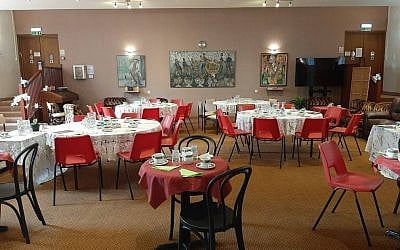
The ground-floor Community Centre is managed by volunteers and hosts a varied program of social events throughout the year, including the annual Chanukah dinner, Burns Supper, quiz nights, and other community gatherings. These events play an important role in community life, with all proceeds supporting the upkeep of the facilities.
Historical Background
Jewish settlement in Scotland began in the late 17th century, although individual Jewish physicians, scholars, merchants, and converts had visited or lived in the country earlier. Unlike many European nations, Scotland never enacted laws expelling its Jewish population, though the community remained very small until the 19th century.
The first recorded Jewish resident of Edinburgh was David Brown, who in 1691 applied to the Town Council for permission to live and trade in the city. At the time, Scotland was adjusting to the aftermath of the Glorious Revolution under King William III, while Edinburgh remained a densely populated medieval city built along its volcanic ridge, with some of the world’s earliest multi-story tenements.
That same year, 1691, marks the earliest recorded Jewish presence in Edinburgh. The minutes of the Edinburgh Town Council record the application of David Brown, a professing Jew, for permission to reside and trade in the city.
The first known Jew to acquire a burial plot in Edinburgh was Herman Lyon, a German-born dentist and podiatrist who settled in the city in 1788. In 1795, he petitioned the Town Council to purchase land on Calton Hill as a family burial place.
Edinburgh’s first organized Jewish community was established in 1816, followed by the opening of its first cemetery in 1820 and its first synagogue in 1825. The present Edinburgh Hebrew Congregation developed during the ministry of Rabbi Salis Daiches (1918–1945), under whose leadership the Salisbury Road synagogue was built.
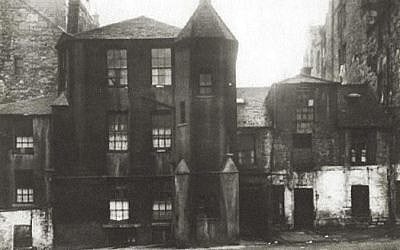
It was around 1825 that the community established its first synagogue in a converted tenement at Richmond Court, Newington, with seating for 67. It served the community’s needs for 43 years.
In 1868, the community moved to Ross House in Park Place, providing space for around 95 men and 80 women, and by the turn of the century its numbers had grown to about 500, leading to the acquisition of a chapel in Graham Street for conversion into a synagogue. In 1888, the Edinburgh Jewish Literary Society was founded and remains the oldest of its kind still active in Britain, and in 1909 the Edinburgh University Jewish Society was established, the oldest in Scotland and possibly in Britain.
Today, the Edinburgh Hebrew Congregation remains the spiritual and communal center of Jewish life in Scotland’s capital. Although the congregation is smaller than at its peak, it continues to be active and resilient, supporting regular religious services, education, and a wide range of social and cultural activities. The synagogue maintains a strong sense of continuity with its long history in Edinburgh, while adapting to the needs of a modern community and preserving its role as a focal point for Jewish life in the city.
Contact Information:
Edinburgh Hebrew Congregation, 4a Salisbury Road, Edinburgh EH16 5AB
Email: ehc.message@gmail.com
Website: https://www.ehcong.com/