


Award-winning feminist author, anthropologist, educator, coach, publisher, and activist
The Election Is Already Failing Women

A new survey reveals: Which MKs look after women? Courtesy of the Israel Women's Network
Israel is heading into another election season, and the picture for women is troubling. Before the campaigns have even fully opened, the old boys’ club is already reassembling itself. Party leaders are nearly all men. The parties that speak the language of democracy and equality are still failing to place women where power actually begins. Women who once led parties or shaped the feminist edge of Israeli politics are gone, going, or pushed to the margins.
The portrait of women in Israel is not good – not in terms of representation, and not in terms of being on the public agenda. The upcoming election may be an opportunity to address this – if people care enough.
Where are the women?
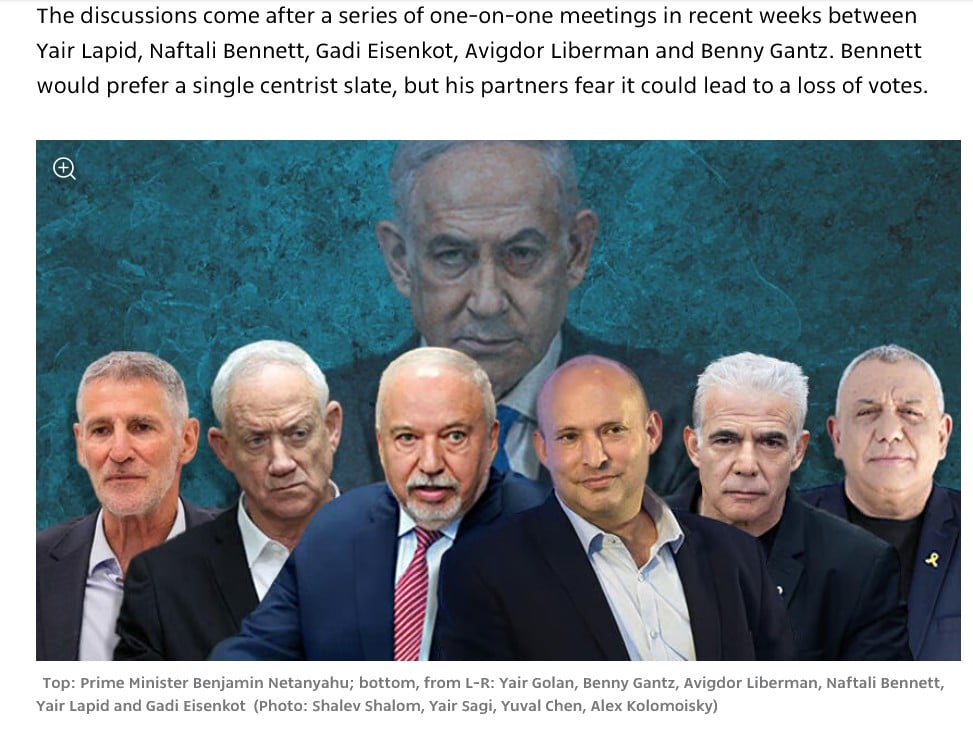
Let’s look at women’s representation. The Israel Democracy Institute recently reported that women’s representation in the Knesset, which improved significantly between 1999 and 2015, has stalled over the past decade. Women still make up roughly a quarter of the Knesset. But by international comparison, Israel is doing terribly, ranking a pathetic 94th among countries in the world when it comes to women’s parliamentary representation. In other aspects of national government, the regression is even sharper: the current cabinet has only five women among 24 ministers, there is now exactly one woman running a government office (who was appointed just recently after a massive push by the Israel Women’s Network and other organizations), and there are almost no women leading parties running for office. (The exceptions are the new Makom Lekulanu jointly headed by Rula Daoud and Alon Lee-Green, and Einat Wilf’s party, which does not yet have enough supporters to be included in national polling.)
Local government is even worse. In the 2024 municipal elections, women were elected to head a minuscule 5.8% of local authorities, barely above the previous record of 5.6% in 2018. That means the places where budgets, schools, welfare services, urban planning, transport, religious services, and daily life are managed remain overwhelmingly controlled by men.
This is the backdrop to the coming election. The system is not naturally moving toward equality. It is stuck. In some places, it is moving backward.
Retreating from gender equality
Perhaps the most painful example right now is Hadash. The party that claims equality as one of its defining values failed to place even one woman in its top four slots. That result landed like a betrayal for many of its own supporters, especially women. I have spoken with several long-time female Hadash supporters who are now unsure whether they can vote for the party. These are not right-wing critics looking for a reason to attack Hadash. These are women who have believed in the party, organized around its values, and defended its vision of Jewish-Arab equality and social justice. Their disappointment should worry Hadash deeply. A party cannot ask women to trust its justice politics while asking them to accept male leadership as the default.
Sexism is painful for women always. But it is especially hard when it comes from supposed allies. When places that have vowed to promote gender equality fall back on old inequalities, with men at the top while women are asked to keep hanging on, trusting a process that sidelines them time and again – well, that stings in a whole other way. Jill Filopovic wrote a masterful take-down of this dynamic in 2018 in the NYT, and unfortunately, it still resonates.
The disappearance of women from political leadership is not limited to Hadash. The best women legislators have been dropped from their parties or forced into retirement over the past decade: Merav Michaeli, a life-long feminist activist who led Labor and kept feminist issues at the center of public debate, announced her departure from politics. (She is widely “blamed” for the failure of the left to win in the last elections, but I would hardly place that responsibility on the shoulders of one person alone.) Aida Touma-Suleiman, one of the most important feminist voices in the Knesset and a long-time fighter against violence against women, is also leaving. Other feminist leaders we have lost to a brutal political system: Michal Rozin, Aliza Lavie, Zehava Galon, Stav Shaffir, Gaby Lasky, Tamar Zandberg, and other women who shaped the feminist and democratic conversation in Israeli politics over the past decade are no longer central actors in the electoral arena. Some may yet be returning.
Women leaders on the horizon
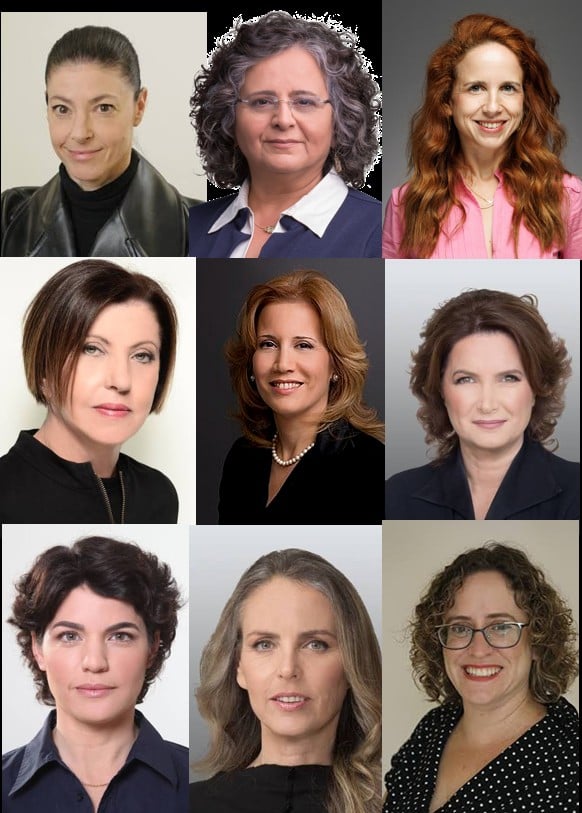
There are some better signs. First of all, there are some new and exciting prospects among women running or possibly running in the upcoming elections, such as Rula Daoud, Sally Abed, and Ghadir Hani in the new Makom Lekulanu party. And the woman in the fifth slot in Hadash, Nihaya Wishahy, is also a compelling candidate. In the upcoming Democrats Party elections, a few very interesting women are running, including former MKs Gaby Lasky, Yael Cohen Paran, and Tamar Zandberg, as well as up-and-coming women to watch such as Nava Rozolio and Somaya Bashir. And let’s not forget the current feminist MKs seeking reelection, like MK Naama Lazimi, MK Merav Ben Ari, MK Merav Cohen, MK Efrat Reiten, and MK Penina Tamano Shata.
We have some impressive women on the horizon. But the ease with which great women get thrown under the bus is a reminder of how slow, mangled, and tortuous women’s advancement in Israeli government is. And although these women bring hope, they are still fighting entrenched patriarchy within Israel’s political system.
Some other good news is that a few male leaders of major parties have started to notice that women don’t like being excluded and pushed out. That is probably because many women’s organizations, such as IWN and others, keep pointing this out. Thus, for example, Naftali Bennett has been making a point of women’s representation in his renewed political project. At a campaign event for women, he emphasized that six of his party’s nine co-founders are women, and said that if elections were held immediately, his list would have a female majority. He also pledged that a future government led by him would work toward 50% women in senior public service positions within five years. Eizenkot recently made a similar declaration about women’s equality. And Yair Golan also says his party will have 50-50 representation.
That’s not nothing. Men in charge realizing that they need to have gender diversity is definitely a step in the right direction. In particular, when a religious right-wing man like Bennett says women belong in senior positions, he is actively pushing back against multiple patriarchal systems that support him. Still, let us not confuse inclusion with equality. These men are still exclusively The Man at the Top. Even when Bennett built his previous political brand together with Ayelet Shaked, the hierarchy was clear: he was number one. A politics in which men “make room” for women is better than a politics in which men exclude women altogether, but it is not the same as women holding equal power.
Women do not need to be invited into men’s rooms. Women need to have an ownership stake in the building.
Who is serving women’s needs?
All this said about women’s representation, that is only the first problem. The second problem is what kind of representation.
A recent survey of the Israel Women’s Network (IWN) asked respondents which MK is the best for women. The dominant response: 59% said none of the above.
Women are one of the most powerful electorates in Israel, but many do not feel represented: 59% of women surveyed did not identify a party leader who represents their interests, and 46% did not identify a Knesset member who represents them. At the same time, women are paying attention. The survey found that 71% of undecided women said a party that promotes women’s rights would increase the likelihood that they would vote for it, while 74% said a party acting against women would decrease the likelihood of their support. In other words, women’s rights are not a niche issue. They are a voting issue.
Perhaps this is not so surprising. In a government overwhelmingly dominated by men, who is representing the interests of women? Apparently nobody.
Even women in politics are not automatically good for women. A woman can sit in the government and support policies that harm women – she can promote gender segregation, racism, religious coercion, attacks on democratic institutions, or policies that silence victims of violence. We have, unfortunately, a plethora of such examples in the current coalition: a woman MK who built a career on defending sexual predators while attacking victims of sexual violence; a woman MK heading gender-equality committee who calls herself a “proud racist” and attacks feminists, a woman MK whose legislative agenda highlights the push FOR gender segregation and bans women’s organizations from Knesset meetings, and a women cabinet member under investigation for running a religious sexual abuse cult. Like that.
This reality in which the few women in positions of power are often working to systematically hurt other women is mind-numbing in its absurdity. The idea that some men in the Knesset are doing more on behalf of women than women themselves is absolutely crushing. And it’s also an urgent wake-up call. Urgent.
“We urgently need women leaders who bring with them a vision not only of gender inclusion but also of an agenda that protects and promotes women’s needs, women’s equality, women’s safety, women’s power, and women’s well-being,” says Israel Women’s Network CEO, Attorney Gali Zinger. “We need women who pull other women up.”
Making sure women are seen
We need women who understand that gender equality is a core component of democracy. We need women, especially from invisible corners of society – such as Arab women, Mizrahi women, Haredi and formerly Haredi women, Ethiopian women, women from the geographic and social periphery, women with disabilities, LGBTQ women and others – we need diverse women in position of power. This is a must if Israel is ever going to be a healthy, functioning, safe and secure democracy for all its people.
This is why the Israel Women’s Network is launching a national, nonpartisan election campaign focused on gender equality. The campaign will not tell voters which party to support. It will ask every party the questions that should already be at the center of this election: Where are the women in realistic positions? Which candidates are committed to advancing women’s rights? What will the party do about economic and legal inequalities, violence, gender segregation, representation, reproductive freedom, and promoting democracy? In an election shaped by war, fear, religion-and-state battles, and democratic erosion, gender cannot be treated as a side issue. It is one of the clearest tests of whether a party is serious about democracy.
The coming election will not only determine who sits in the Knesset. It will determine whether Israel continues down the current path of danger, violence, coercion, and inequalities. Another government dependent on extremist religious parties will mean more threats to women and vulnerable communities. It will mean more violence, more economic inequalities, more restrictions on basic rights, and more policies designed around men’s authority and women’s compliance.
This election is therefore not only about the number of women on party lists. It is about whether parties understand democracy as something women are allowed to shape, or merely something women are asked to vote for.
“Women are more than half the public, yet they are still not truly represented in the rooms where decisions are made,” says Attorney Zinger. “In the coming elections, the question is not only how many women appear on party lists, but who is genuinely committed to advancing women’s rights, equality, personal safety, and the fight against the exclusion of women. The Israel Women’s Network will work to ensure that every voter can ask the right questions, demand clear commitments from the parties, and hold them accountable before Election Day and after it – equality not only for themselves, but for everyone.”
So far, too many are failing.
Parties should be judged now, before the lists close, not after the damage is done. Every party should be asked: Who are the women in your top five? Who are the women in realistic slots? Who are the women in leadership positions? Who controls the budget, strategy, negotiations, and public messaging? Are women present only as candidates, or are they part of the real power structure? What issues that are important to women are on your platform: such as, ending violence against women, ending wage gaps, ensuring equal rights, protecting women from religious extremism, and women’s representation? Have you taken active steps towards these goals?
And women voters should not be treated as a sector to be flattered at campaign events. Women are half the country. Women are workers, soldiers, reservists, mothers, students, business owners, caregivers, taxpayers, activists, teachers, doctors, lawyers, voters, and leaders. Women are also the ones paying the price when politics becomes more violent, more religiously coercive, more economically brutal, and more indifferent to rights.
The parties still have time to fix this. They can place women in realistic positions. They can commit to parity. They can create mechanisms that prevent women from being pushed out during mergers and negotiations. They can elevate feminist women who are committed to
An election that begins by sidelining women will not produce a government that protects women. An election that treats women’s representation as optional will not produce democracy. And a political system that keeps telling women to wait their turn should not be surprised when women stop waiting, and start looking elsewhere.