


The erosion of the Jewish-American hyphen
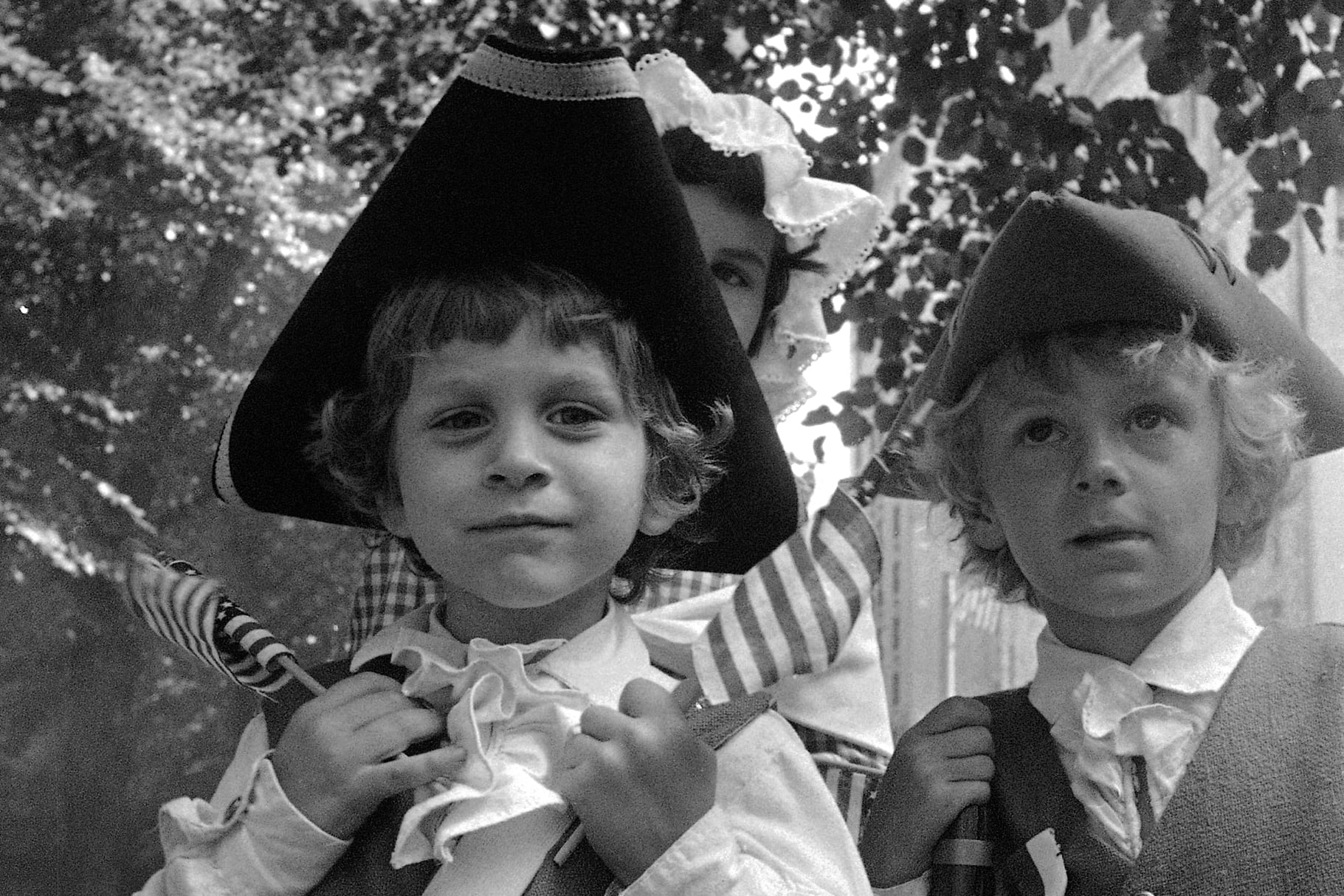
My bar mitzvah fell in 1976, the bicentennial year, and for reasons a 13-year-old doesn’t examine too closely, I was proud of that. I redecorated my bedroom to match the moment: red and white striped wallpaper on the walls, a field of white stars on blue on the ceiling. Then I painted one wall with an Israeli flag, because as far as I was concerned, the two belonged in the same room. I was an American kid having an American rite of passage in an American bicentennial year, and I was also, without any sense of contradiction, a Jew.
Aliquippa, Pennsylvania, was built for that kind of arithmetic. Everyone I knew was some kind of hyphenate: Irish-American, Italian-American, Polish-American, Serbian-American, Black American, Greek-American; the ethnicities were numerous. We hurled ethnic slurs at each other with a casualness that would not survive five minutes today, and none of it touched the more basic fact underneath: nobody doubted anyone else’s claim to the place.
My non-Jewish friends came to my bar mitzvah the way I went to their confirmations, because that was simply what neighbors did for each other. Our synagogue had no guard and no gate. When people were inside, the front door was left unlocked, because we assumed, correctly, that if trouble ever came from outside, the neighbors we grew up with would be the ones standing between it and us.
My grandparents had immigrated to America not as Romanians or Russians but as Jews. That was their nationality, just as the mill families down the street were Italian, Greek, or Serb. Nationality was the organizing category, not creed, and a Jew from Aliquippa was as unambiguously American as anyone else on the block, slurs and all.
I don’t think that arithmetic holds anymore, and that is what has me unsettled as the country turns 250.
Start with the plainest evidence: there is only one group in America whose communal institutions require police presence and private security as a matter of routine – not just synagogues but Jewish community centers, schools, and day camps. That’s not paranoia. It is a fact about how American Jewish life is now organized. The unlocked door in Aliquippa is unthinkable today. The assumption that an attack on us would be treated as an attack on all of us no longer holds the way it once did.
Then there is New York City’s mayor, Zohran Mamdani, who recently told ABC’s Jonathan Karl that he could not support any state that “privileges one religion over the other,” naming Israel and, in the same breath, Saudi Arabia. It is worth sitting with the fact that Saudi Arabia was the only other example he reached for. A kingdom that bars the public practice of any faith other than Islam and can impose the death penalty for apostasy got named once, as a kind of alibi, and then the argument moved on. To the best of my knowledge, Mamdani has never protested or boycotted Saudi Arabia. The roughly 80 other states in the world with an established or preferred religion, most of them Muslim-majority, a few of them Christian democracies in Europe, went unmentioned. Only the one Jewish state was made to answer for the universalism he pretends to support.
That is the part my grandparents would have recognized immediately as anti-Semitism, even if the vocabulary is new. It was never really about religion as a legal category. It was about whether Jews get to define themselves as a people, the way the Irish or the Poles or the Saudis have always been allowed to, or whether that claim has to be re-litigated every time it’s convenient. Mamdani’s formula sounds like a universal principle. Applied only once, it isn’t.
I painted an Israeli flag on my bedroom wall the same year my friends filled the pews at my bar mitzvah, and I sat in theirs at confirmation, and nobody in Aliquippa thought any of that needed defending. Somewhere between an unlocked synagogue door and an armed guard at every Jewish preschool, being visibly, unapologetically a Jew and being fully American stopped being treated as the same uncomplicated thing, and that is the loss this anniversary should actually be measured against.
Fifty years after my bar mitzvah, I write this from Israel’s Negev Desert. Again, I am hyphenated, but in reverse. I am an American-Israeli. I used to be proud of the adjective. Today I am not so sure.