
Strategic Intelligence Consultant & Insights Advisor
Featured Post
The etrog’s long journey: How one fruit crosses the world before Sukkot
From the orchard to your sukkah, a lot could go wrong, so the growers, rabbis, freight companies, and border inspectors work small miracles to ensure timely delivery
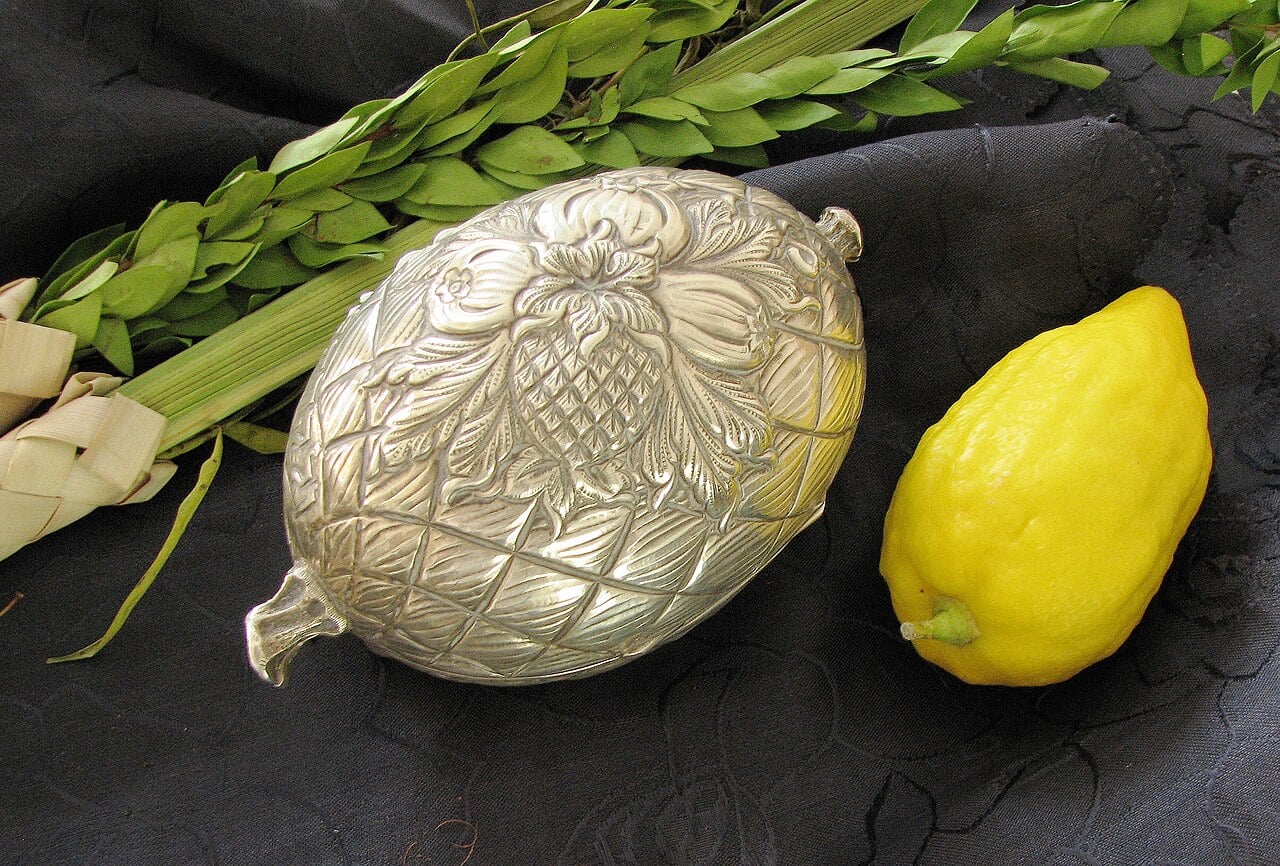
Etrog. (Wikipedia)
By the time you pick up an etrog this week in Golders Green, Brooklyn or Jerusalem, turn it under the light and check the pitom, it has already survived a journey that would humble most luxury goods. It was chosen in the orchard by a supervisor rather than a packer, wrapped by hand, flown across a border, opened by a plant-health inspector and sold by merchants who trade on reputation rather than contract. Sukkot begins at sunset on September 25. Everything that follows happens in the weeks before that deadline, and almost none of it is visible to the buyer.
I have spent the past few weeks mapping this supply chain from open sources, as one would any strategic commodity. It is a market that behaves less like citrus and more like gemstones: small volumes, extreme price dispersion, and a value that depends on trust as much as on the fruit itself.
Two chains, one fruit
The first thing to understand is that every etrog moves through two chains at once. The physical chain is familiar to anyone in perishable produce: orchard, packing, phytosanitary certificate, air freight, customs, importer, retailer. The second chain is religious. It begins before the harvest, with the question of whether the tree was grafted onto other citrus rootstock, and continues through rabbinic supervision at selection, inspection of each fruit, aesthetic grading, and finally a sealed box with a trusted name on it.
Where the two chains touch, a logistics decision changes ritual value. In Calabria, supervisors are present in the orchards at selection rather than certifying packed fruit afterwards. A fruit that is kosher on the tree can become problematic on a customs bench if the pitom breaks in handling. That intersection is where the market is most fragile.
Four origins, not one
Four production systems are documented in the open record. Israel is the scale producer. The only hard production figure in the public domain is a 2013 Ministry of Agriculture number reported by the Jerusalem Post: roughly 150 hectares, about one million fruit, around 300,000 exported to some 30 countries, with about 85 percent of exports going to the United States. That figure is 13 years old, and I have found no more recent audited series from any origin. Anyone quoting a 2026 figure is guessing.
Morocco is the balancing origin. Growers around Taroudant and Agadir supply merchants serving Israel, Europe, the United States and Canada. In the 2022 shmita year, when Israeli commercial supply was constrained, Morocco exported around 600,000 fruit worldwide, roughly 10% above normal, according to JTA reporting. The same substitution happened in 2015. The first commercial Moroccan shipment to Israel, in 2013, was a mere 1,500 fruit. Since normalization in 2020, the fruit flies directly from Casablanca to Tel Aviv on Royal Air Maroc, removing an entire layer of indirect routing through Turkey, Spain, or Italy.
Calabria is small and strategically disproportionate. The Riviera dei Cedri in southern Italy harvests around 500,000 kilograms (some 500 tons) of citron a year, down from seven million in the 1960s, and only a fraction is kosher grade. However, Chabad-Lubavitch regards Calabria as the only acceptable origin, and Satmar-linked importers in New York have a strong preference for it. In 2020, with COVID restrictions barring American supervisors from Italy, a White House envoy contacted the Italian embassy so that supervisors could be admitted; about 100,000 Calabrian etrogim were inspected for export to the United States that year.
The fourth origin surprised me. California has a commercial etrog farm, Lindcove Ranch near Exeter, established around 1980 precisely to avoid import inspection risk, growing four cultivars on six or seven acres and distributing nationwide. Its 2024 crop fell to roughly 30% of the previous year after the founder’s death.
Where the fruit actually goes
Broad customs data is almost useless here. The EU classifies citron and etrog under a residual heading, CN 0805 90, which also holds other minor citrus, so any annual total mixes etrogim with fruit nobody will shake in a sukkah. The corridors that can be defended are those evidenced by importers, border incidents and regulators.
Those point to a seasonal hub-and-spoke network. New York is the redistribution node for the United States. Manchester is the United Kingdom’s gateway. Casablanca to Tel Aviv is the Morocco-Israel link. Johannesburg is supplied from Italy, Morocco and Israel. Air freight is the dominant long-haul mode, with road taking over inside the EU. Antwerp, Rotterdam and Paris are often assumed to be hubs, however I found no etrog-specific shipment evidence for any of them, and I will not assert what I cannot show.
The value cliff
What makes this chain unusual is not perishability. Citron keeps reasonably well. The constraint is the calendar. Months of orchard preparation, selection and packing are compressed into a selling window of a few weeks, and a delay of days at the end destroys the most value. After the festival the ritual premium collapses. A 2017 report put post-holiday Calabrian prices at about one dollar a pound, and surplus fruit goes to marmalade or liqueur.
That asymmetry is why regulation can create a shortage without any agricultural failure. In September 2019, in the week before Sukkot, 600 etrogim were detained at Manchester Airport under a rule requiring citrus stalks to be trimmed for plant-health reasons. The importer, Stephen Colman, expected around 10,000 fruit that season. The Board of Deputies of British Jews, DEFRA and the importer agreed a protocol: the trimming would be done in a synagogue, so the fruit was not invalidated, and later consignments would be destroyed after the festival. The GB regime has since been rewritten after Brexit, with pre-notification through IPAFFS and entry via border control posts, so the 2019 fix should not be mistaken for the current rule.
The plant-health authorities are not being obtuse. Their rules target stalks and blossom ends because that is where pests travel. Those are also exactly the parts of the fruit that carry ritual meaning. A naturally pitom-less etrog is kosher; one whose pitom has broken off is problematic. Every handling protocol, whether trimming, fumigation or unwrapping for inspection, therefore has to be negotiated with religious authorities in advance. US Customs and Border Protection issues recurring Sukkot traveler guidance for the same reason: citron is admissible but subject to inspection, travelers must open and unwrap the fruit, and European willow is prohibited. Israel’s plant protection service warned travelers on September 22 not to bring the Four Species in from abroad at all.
Grading is a language, not a standard
There is no global certification regime. Assurance is spread across rabbinic authorities, merchant families, named supervisors and retailer brands, with sealed boxes and reputation doing the work a certificate would do elsewhere. Moroccan and Israeli merchants grade Aleph-Aleph, Bet and Gimel; the top grade may exceed $80 a fruit and represents about 5% of the crop, while Gimel sells for under 10. A Rome retailer lists Calabrian fruit from 25 euros for “simple” to 125 euros for “mehudar” in a sealed box. A US set retailer sells six tiers, with Prime, Deluxe and Superior sets at $52 to $70, origin not stated. Comparing prices across vendors without matching the standard is meaningless.
Putting the fragments together, the international system plausibly handles 1.5 to 2.1 million fruit in a normal season, of which perhaps 0.8 to 1.25 million cross a border, with a retail value for the etrog alone somewhere between $50 and $180 million. These are modelled orders of magnitude, not observed totals, and I would treat anyone offering a precise figure with suspicion.
What resilience really means
The shocks of the past decade tell a consistent story. The Calabria frost of January 2017 devastated the orchards, with reports of 80% of trees or 90% of yield lost depending on the source, and ungrafted trees, the only kosher option, were among the worst hit. Prices doubled or tripled and Russia’s allocation collapsed from tens of thousands to a few hundred. In 2023 Johannesburg’s main distributor exited perishables after forty years; set prices rose from 795 to about 1,500 rand and 80 emergency sets were sourced with one-set-per-family rationing, despite an adequate global crop.
The lesson is that origin diversification and religious diversification are not the same thing. A system with four producing countries looks resilient on a map. A buyer whose tradition accepts only one origin remains single-sourced. Acceptable supply, by community, before an immovable deadline, is the only measure that matters.
So when you hold your etrog this week, you are holding a small miracle of coordination between growers, rabbis, freight forwarders and border inspectors who mostly never meet. It arrived on time. Given everything that could have gone wrong, that is worth a moment’s gratitude before the blessing.
Related Posts