The face and the voice
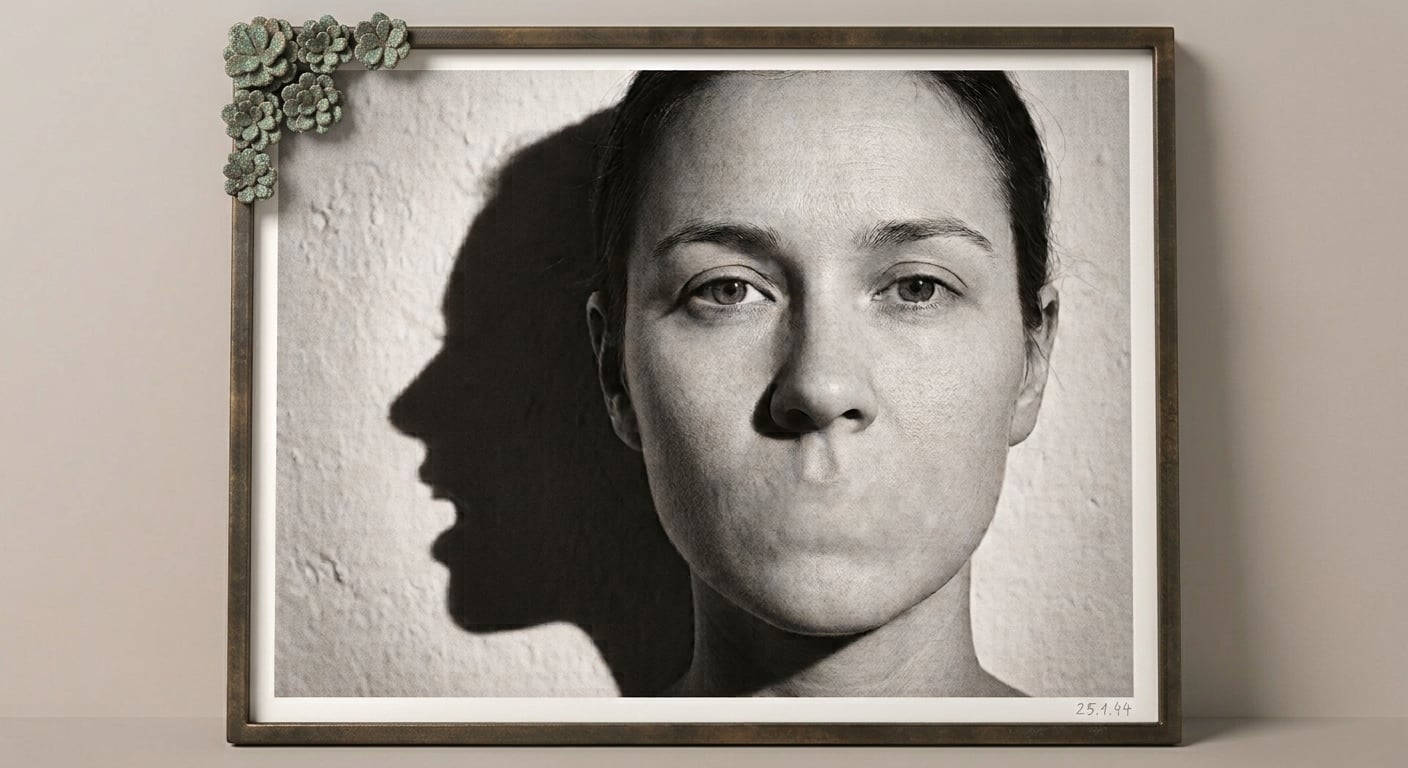
TL;DR: Europe knows what to do with a Jewish face in a photograph: name it, mourn it, preserve it, learn from it. A Jewish voice is harder. It can disagree with the lesson, demand protection in the present, and refuse to remain an object of someone else’s memory. The distance between the face and the voice is where remembrance becomes a test.
*
Giving history a face
In January 2024, Dutch education minister Mariëlle Paul opened a national conference on Holocaust education at Westerbork, the former Nazi transit camp from which most Dutch Jews were deported, with a photograph of Heintje van der Molen and her children Elly, Sonja, Max and baby David. Father Bennie was absent. On 25 January 1944, the family was transported from Westerbork to Auschwitz. All six were murdered on arrival. Paul widened the frame to the approximately 107,000 Jews deported from the Netherlands and described their individual stories as giving the Holocaust in the Netherlands a face. Persecution had reduced people with names, families, and biographies to a category marked for destruction. History could reduce them again to a number. Holocaust education reverses that movement. It takes people back out of the category.
The Dutch Ministry of Education, Culture and Science, or OCW in Dutch, does not encounter the Jewish past only through remembrance. It also governs the university system, where antisemitism appears as a contemporary problem rather than as completed history. That distinction became concrete in March 2025, when the government appointed a Taskforce on Combating Antisemitism whose remit included Jewish safety in higher education. Rianne Letschert, then president of Maastricht University, joined on behalf of the association representing Dutch research universities. Five days later, Syrian-German activist Rawan Osman came to Maastricht to speak about her journey from antisemitism to Zionism. The response to her appearance brought the taskforce’s abstract concern with safety in higher education directly onto the campus Letschert led.
When history becomes present
Among the groups that opposed Osman’s appearance was Free Palestine Maastricht (FPM), a registered student organization at Maastricht University. Its role mattered because the hostility surrounding Osman’s lecture did not come from an unknown group at the university gates. Since 2020, Maastricht University has provided FPM with shared premises on its Tapijn campus and recognized it as a student organization. In November 2024, during Letschert’s presidency, material associated with FPM bearing the phrase “Kill All Zionists” was publicly documented. FPM retained its registered status and university accommodation and, months later, mobilized against Osman’s appearance. That continued institutional relationship is documented in government answers to Parliament: UM regarded FPM as a registered student organization entitled to university space, while Letschert, by then minister, later told MPs that expressions such as “Kill All Zionists” were incompatible with a safe and inclusive learning environment.
Dit zegt Free Palestine Maastricht. Mag gewoon aan onze universiteiten. Kijk wat er staat bij het logo pic.twitter.com/KXv07f6SY9
— Amanda Kluveld (@AmandaKluveld) November 9, 2024
On 12 March, protesters gathered inside and around the glass-walled lecture room, pounded on its windows and chanted that they wanted no Zionists there. Several repeatedly interrupted Osman from inside. Police and university security were present, but the disruption continued. Those inside were removed only after repeated requests, and the pounding outside continued until the lecture was terminated. The people in the room included Jewish and Israeli students and staff, members of Maastricht’s Jewish and Israeli communities unaffiliated with the university, and other guests. Ernst de Reus, chair of the regional Jewish community, later said that he and his wife had felt “naked and unprotected.” Maastricht’s mayor subsequently described a “threatening atmosphere” and insufficient police capacity to end the demonstration.
Jewish representatives wanted the conduct surrounding the lecture examined as more than an event-management failure. NIHS Limburg called for scrutiny of public order, academic freedom and civil rights, access to the instructions given to police, and direct involvement by affected Jewish representatives, students and academics. According to the organizers’ contemporaneous account, they later withdrew from the university’s reconstruction because they considered its mandate and composition insufficiently independent. They pointed in particular to prior legal work for Maastricht University by the inquiry chair. The reconstruction nevertheless proceeded without their participation, and the underlying factual report was not published. Maastricht instead presented its conclusions under the heading “12 March: A case of imbalance”, emphasizing better venue selection, access control, professional moderation and rapid response.
The inquiry concerned the intimidation of Jewish participants, and when those participants challenged its independence and withdrew, the inquiry continued to completion without the victims whose experience it was meant to examine. It became, in effect, an institutional reconstruction of victimization from which the victims themselves were absent. At an institution whose leadership included deep academic expertise in victimology, the significance of that absence can hardly have been obscure. The reconstruction proceeded on those terms nonetheless.
Each proposed measure – better venue selection, tighter access control, professional moderation and faster response – addressed something that had plainly gone wrong. Taken together, however, they also changed the object of explanation. What began as the intimidation of Jewish participants and the silencing of a Zionist speaker re-emerged in the university’s account as a problem of venue, moderation, access control and response capacity. Questions of intimidation, exclusion and institutional responsibility were converted into questions of procedure. By the end of the reconstruction, the event had become administratively legible and politically less exact. The university did not erase the event. It changed the question.
The consequence appeared before the reconstruction was complete. On 15 May Maastricht announced special caution toward politically charged Israel-Gaza events involving external speakers. Four days later, UM cancelled an IJAR-organized event with Jewish-American activist Shabbos Kestenbaum, citing a safety risk it assessed as too great. The government later confirmed that this judgment was based partly on Maastricht’s experience with the earlier StandWithUS-organized Osman lecture. Kestenbaum eventually spoke elsewhere in the city, in a private home. The sequence is difficult to miss: the university’s failure to protect one Jewish-organized event became part of the reason the next one could not occur there, while anti-Israel demonstrations continued on campus and FPM retained its accommodation. The institutional answer to an inability to protect Jewish and Israeli participants was not to remove the threat, but to remove the event, and with it, the people who required protection.
COWARDS:
The Dutch Union of Jewish Students invited me to give a lecture at the University of Maastricht next week.
The students just informed me the University has suddenly cancelled the lecture due to "security concerns."
I have offered to provide my own security at no… pic.twitter.com/UnORDq9ZSU
— Shabbos Kestenbaum (@ShabbosK) May 14, 2025
From Maastricht to government
At national level, the same translation was built into the Taskforce on Combating Antisemitism. It spoke to more than 120 people and recorded intimidation, concealment of Jewish identity and withdrawal from university life. Yet its mandate organized those experiences primarily as problems of safety, speakers, demonstrations, legal instruments, and implementable measures. It was not conducted as an independent, victim-centered inquiry into whether decisions by universities themselves had helped produce the conditions it examined. Composition followed mandate. University leadership and public-order authorities sat within the process. Formal Jewish representation did not include a designated body for Jewish and Israeli students and academic staff. This mattered because the institutions charged with remedying the problem were also among those whose own decisions formed part of its causes. The affected supplied testimony while the institutional framework supplied the categories into which that testimony could be translated. What emerged at the other end was correspondingly institutional: enforcement, training, coordination, legal possibilities and management.
Letschert provides a compressed illustration of how institutional experience can travel across offices while responsibility is treated as belonging to the office left behind. Parliament appointed her informateur, the temporary mediator charged with guiding political parties toward a governing coalition, on 10 December 2025. Her departure from the Taskforce was formalized with effect from 1 January 2026. She remained president of Maastricht University until becoming education minister on 23 February 2026. Debating the Taskforce report two months later, she placed herself among university administrators who had undergone a steep learning curve after October 7. She acknowledged that she too had had to learn. When MPs approached Maastricht as a question of responsibility, however, she drew a boundary: she was present as minister, not as the University’s former administrator, and declined to revisit what had happened there. The Maastricht experience remained available when it supplied learning, but became unavailable when the same history required an account. Experience crossed the institutional boundary. Accountability did not.
What the face cannot do
At the same time, the Netherlands continues to deepen Holocaust education. Its 2026 “Learn about the Holocaust” campaign presents such education as part of preventing antisemitism, while UNESCO says education must address antisemitism in its “complex, shifting and multilayered forms, both past and present”. Yet the European Commission describes post-October 7 antisemitism as reaching levels unprecedented since the Union was founded. A study of Jewish and Israeli students and staff experiences in Dutch higher education after October 7 found that 63.4 percent of respondents perceived some degree of danger to Jewish students and staff in their university environment. Across the EU, 76 percent of Jewish respondents told the Fundamental Rights Agency that they hide their Jewish identity at least occasionally. Forty-one percent frequently do so at school or university. Europe has never possessed more developed institutions for remembering antisemitism. Yet by its own account, antisemitism in the present has rarely been more acute.
The contrast reveals what historical remembrance cannot test. A murdered Jew makes an immense moral claim, but no institutional demand. His name can be restored, his photograph displayed, his suffering mourned and lessons drawn from his destruction. He cannot reject those lessons, dispute the category assigned to what happened, or object when his memory is universalized and turned into a standard by which later Jews are judged. The living Jew can.
Agency changes the relationship. A Jewish student can demand protection. A community can insist that intimidation be investigated as intimidation. A Zionist can insist that Jewish powerlessness yielded not only a universal lesson about tolerance but also a political claim to self-determination. Israel presents the furthest version because Jewish sovereignty means that protection is no longer exclusively something Jews petition other states to provide. A Jewish state possesses institutions through which threats are defined, judgments made, and action taken. Jewish suffering remains legible as something Europe must remember. Jewish agency asks whether Jews themselves possess authority over what that history means politically.
The logic does not end with institutional translation. At its furthest point, Jewish history itself becomes portable: detached from Jewish agency, retained as moral authority, and redeployed against Jews when they exercise power. In a July 2026 interview in the Belgian newspaper De Morgen, Frans Timmermans, a former Dutch foreign minister and former executive vice-president of the European Commission, begins with “the right and far right in Israel,” gives the position he attributes to that faction the collective voice “we Jews,” invokes grandparents and great-grandparents murdered in the Holocaust, and concludes that “they” are now doing “precisely the same” to another people. The movement is more consequential than the analogy itself. If the conduct establishes the alleged crime, the Holocaust contributes nothing to its proof. The murder of the accused actors’ ancestors cannot make their descendants more culpable. Yet ancestry is introduced precisely where it can add no evidentiary content and enormous moral weight. A political accusation has acquired a genealogical subject. The catastrophe once understood as the ultimate demonstration of Jewish powerlessness is made relevant to the indictment of Jewish power. At that point, Holocaust memory is no longer merely universalized, appropriated or used to instruct Jews about the limits of their conduct. The suffering of Jews has become part of the case against Jews. The dead retain their moral authority while the living encounter that authority as evidence against their agency.
The photograph at Westerbork exposes the limit of what remembrance can restore. Paul used it to show how names, relationships and faces can be recovered from the number 107,000. The Nazis reduced Bennie, Heintje, Elly, Sonja, Max and David to a category. Remembrance takes them back out of it. Their names, relationships and faces are restored. But restoration has a boundary. History can return individuality, but it cannot return agency. They cannot tell the minister what their story means, object when their suffering is universalized, or say that Europe has learned the wrong lesson from their destruction. The voice can. It can dispute not only what happened but who has authority to say what it means, including whether the institution doing the listening belongs inside the explanation. The dead can be individualized without contesting institutional authority. The living can speak back.
None of this makes Holocaust education less necessary. It makes its limits clearer. Europe does not lack knowledge that antisemitism is dangerous, nor institutions devoted to preserving the memory of where it can lead. The unresolved problem is what happens when antisemitism appears in forms that require institutions to recognize it in the present, examine their own role in sustaining it, and act while the people affected are still there to disagree with the diagnosis.
Holocaust education teaches Europe to recover the face after history has taken the voice away. That recognition comes too late to be contested by the person being recognized. The dead cannot reject the lesson drawn from their suffering, demand protection, assign responsibility, or insist that the institutions remembering them are themselves implicated in what is happening now. The living can. Contemporary antisemitism therefore presents the harder test: whether Europe can recognize Jews before recognition becomes costless, while they can still dispute its categories, make demands of its institutions, refuse the meanings imposed upon their history, and exercise power on their own behalf.
The unresolved question is no longer whether Europe remembers what happened when Jews were powerless. It is whether the lessons Europe claims to have learned from that history still bind it when Jews refuse powerlessness as the condition of recognition. The face shows what Europe learned after Jews were no longer answer. The voice tests whether it can recognize them before silence makes recognition easy.