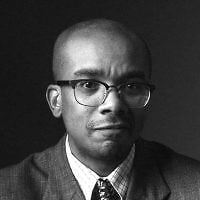
President & CEO, Jewish Funders Network, writing here in his personal capacity.
The Flattening of Jewish Values: A Response to Mamdani’s Rabbinic Defenders
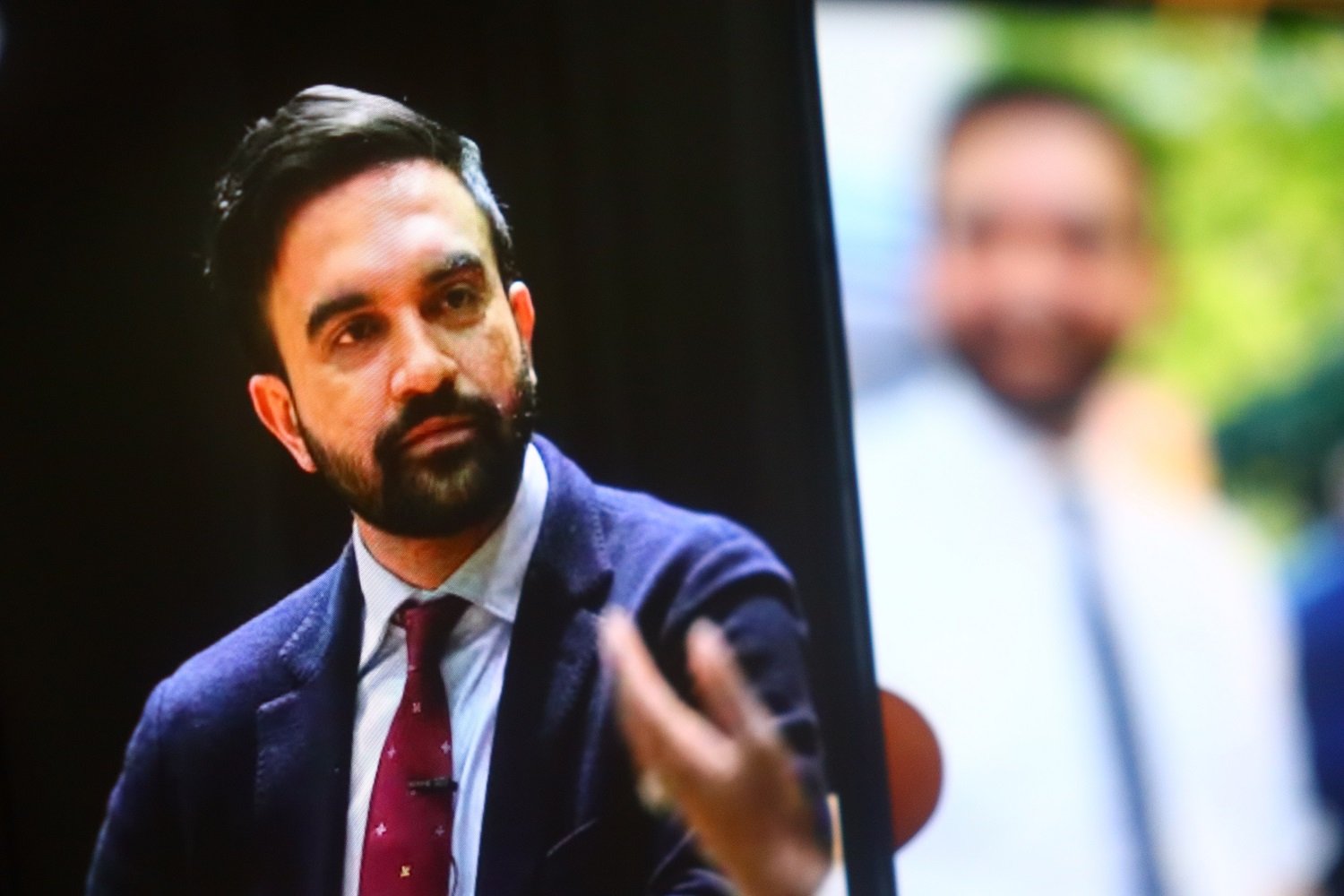
(via YouTube)
A recent blog post by six New York-based rabbis in support of Zohran Mamdani has been met with the usual derision and shrill attacks on X. I understand that sentiment, and I’m not immune to the temptation of venting my anger on social media posts. However, I thought it could be interesting to offer a calmer and more reflective response to the actual arguments these rabbis are presenting.
The first thing that struck me when I read the piece is not the policy positions these rabbis embrace (more on that later), but their utter lack of empathy for their fellow Jews, the majority of whom are genuinely afraid of an extremist who can’t find it in himself to condemn the phrase “Globalize the Intifada,” which brings actual fear to many of us. The term intifada brings unspeakable trauma in a very direct way to 55% of the world’s Jews (those who live in Israel), and to the vast majority of Jews around the world. The “intifada” caused the death of Jews in places as distant as Seattle and Buenos Aires, but these rabbis simply shrug figuratively and say, “The term means different things to different people.” In doing so, they are violating a key duty of the rabbinate, as the Talmud says, “A leader over a community must be with them in their pain.” (Talmud Mo’ed Katan 17a). Centuries later, Rabbi Abraham Joshua Heschel, whom I’m sure these rabbis revere, said, “The rabbi must be more than a preacher and teacher… and above all, a person who knows the pain of his people” (Moral Grandeur and Spiritual Audacity, p. 259). The complete lack of acknowledgement of the Jewish pain since October 7th is baffling, especially in people who pretend to be so empathetic towards the pain of others.
It may well be that these rabbis serve only fringe, anti-Zionist Jews, so therefore “their flock” is not the Jewish people writ large but those who hold these beliefs. In that sense, they are showing empathy to those in their congregation who are “hurt” by the existence of a sovereign Jewish state. However, a rabbi has a responsibility that spreads beyond her congregation. As Rabbi Soloveitchik said, “A rabbi does not belong to his kehillah (congregation) alone. He belongs to Klal Yisrael. His task is to serve the people wherever they are, whenever they call.”
In relation to the usage of the word intifada, the double standard is impossible to ignore. Imagine being asked to condemn the phrase “Globalize the Crusade” and responding, “Well, I don’t use that phrase, but it means different things to different people,” or “It’s not my role to police language.” These rabbis would be up in arms. Suddenly, the same people who taught that speech needs to be judged by the effect it causes, not by the speaker’s intent, tell us now that the traumatic effect the phrase “globalize the Intifada” has on most Jews needs to be ignored. If you accidentally misgender somebody, these rabbis will tell you, rightfully, that this is harmful and wrong because it causes pain for the person misgendered. But now, the fact that the term Intifada causes unspeakable pain in their fellow Jews is not an issue.
Another Jewish principle that these rabbis should advocate for is that of Teshuva (introspection and repentance). Rabbi Israel Salanter, the leader of the Mussar Movement (that, like Heschel, I assume these rabbis celebrate), said, “The rabbi who does not call for teshuvah, he is not fulfilling his calling.” Mamdani hasn’t shown an iota of repentance or introspection for the harm his positions have caused to Jews; instead, he has ignored and deflected questions about those offending comments, when not outright doubling down. When these rabbis don’t use their influence and public voice to point that out, and instead offer him cover, they are committing a dual fault to their role.
Incidentally, the fact that Mamdani has refused to back down, and instead doubled down, on his positions shows the fallacy of the “building bridges” paradigm: the idea that we can influence those with whom we disagree by working with them. Not only did the “bridges” that those rabbis built with Mamdani fail to make him back down from his positions, they were also used by him as a fig-leaf to deflect criticism. Building bridges is an essential exercise, but it can also be, as it has been in this case, a tacit acceptance of bigotry.
The most offensive part of the article, though, is the idea that supporting Mamdani is a Jewish project. We live in a time in which both the Left and Right reduce Judaism to whatever political ideas they themselves hold. I assume that what these rabbis mean to say is that Mamdani will run a more socially just administration, and since Judaism favors social justice, supporting Mamdani is a Jewish project. They’re welcome to cherry-pick a few quotes to show that Judaism is embodied entirely by social justice and tikkun olam to back their position. But once you go that route, you’ve opened yourself up to a “war of quotes.” Somebody can then quote back a homophobic verse of the several that can be found in the Bible as an example that homophobia is a Jewish project, giving fuel to those opposing gay marriage. Itamar Ben Gvir can (and does) quote verses on Amalek to justify the expulsion or even killing of Palestinians. Reductionism is a dangerous exercise because you can’t turn it off. No, supporting Mamdani is no more a Jewish project than supporting Donald Trump. And while Judaism is unequivocally in favor of social justice, both are not equal: equating social justice with the whole of Judaism is rabbinical malpractice.
If anything, Judaism wrestles with conflicting or competing values, it doesn’t embrace one over others. Social justice is important in Judaism, but so is the right to property. These values may clash, and the conversations around them may be difficult and complicated. For instance, while supporting immigrants has significant basis in the Bible, so does respect of the law of the land. Struggling for answers without easy-to-find solutions is what Judaism is all about.
What these rabbis are doing is depriving Judaism of its complexity and its richness by simplistically saying that the “Jewish project” is to support this or that policy without offering any substantiation of that statement.
I would argue that the lack of complexity in Mamdani’s policy proposals makes them completely un-Jewish. In that way, Mamdani and Donald Trump are two sides of the same coin. Both Mamdani and Trump believe in simplistic, magic bullet solutions that, incidentally, have failed before, be it Trump’s tariffs or Mamdani’s proposed rent freeze. In Judaism, we have millennia of texts from which we struggle to reach compromised solutions for our issues. In modern politics, we have decades of relevant policy from which we can come to nuanced solutions to our issues. Mamdani and Trump prefer to cherry pick ideologically convenient policy without doing the hard work of contextualizing it.
Jewish sources deeply mistrust simplistic solutions. New York City is indeed expensive – but so is every major city in the Western World. To suggest that freezing rent without first starkly expanding residential construction (something that has been tried before) will make NYC more affordable is naïve and potentially dangerous. To imagine that one can lower grocery prices by opening government-run supermarkets is another policy that has been tried and failed in many countries, bankrupting “mom and pop” shops in the process and creating corruption at a monumental scale.
The “Jewish view” should be an acceptance of complexity, not a flattening of those issues. Instead of endorsing, Jewish leaders should ask the hard questions of all candidates.
- “If you heavily tax billionaires in New York City, how would you prevent them from moving their endeavors to Connecticut?”
- “You say you’re going to fight antisemitism, so how are you going to protect Jewish institutions while at the same time fulfilling your ideological commitment to defunding the police?”
- “You say you’ll create government-owned stores; why not instead use those billions of dollars to double food assistance and other social programs?”
And finally, those rabbis are guilty of embracing Mamdani as a “luxury belief.” Being white, affluent, and privileged, they aren’t likely to suffer from the fallout of Mamdani’s policies. We can expect organic kale to still be available in Park Slope even if the SNAP program collapses; I don’t think Rabbi Stein’s parents are the Mexican immigrant owners of a bodega in Bed Stuy that could be put out of business by a Cuban-style government store that opens nearby. And finally, because they’re not Zionist, they don’t truly care if the Zionist Jews (close to 90% of all Jews) feel threatened or discriminated against. In other words, they can be Jewish supporters Mamdani because they have no skin in the game, religiously, culturally, or financially. Alas, as Heschel wrote about the prophets, “The prophet’s word is a scream in the night. He does not speak from a distance; he is involved to the point of agony.” These rabbis cannot relate.
So, my advice to these rabbis is simple: do your work. Go and see the pain of your people, that overwhelming majority of Jews who are afraid of an avowed antizionist governing their city. Go and experience the “points of agony” outside of your progressive bubbles. Check your privilege and see those that are hurting. If your generosity of spirit and intellectual curiosity doesn’t extend to Jews like me, then try to understand why 68% of Black voters and 62% of Latinos in the Democratic primary rejected Mamdani.
Whatever you do, reject, in the name of Judaism, simplistic solutions that have always caused tragedy in the past.
Related Topics