
The Forever Elegance of Simplicity
Whenever I have time and the workday allows, I like to get breakfast at Gratziani, a small café on Yehuda ha-Levi. I usually order an afurre (cappuccino) and burrecas pinuki*, pampered burrecas, savory Balkan pastries filled with trina, tomatoes, a boiled egg, and pickles. I just say “ragil” (normal or usual), and they prepare it for me.
They have their own kitchen, where all the cakes and sandwiches they sell are made. Every client there seems to be a regular, and if you come by later, you’ll still see the same faces you saw in the morning. I usually leave quickly to get to work, but most people stay a while longer to read the newspaper.
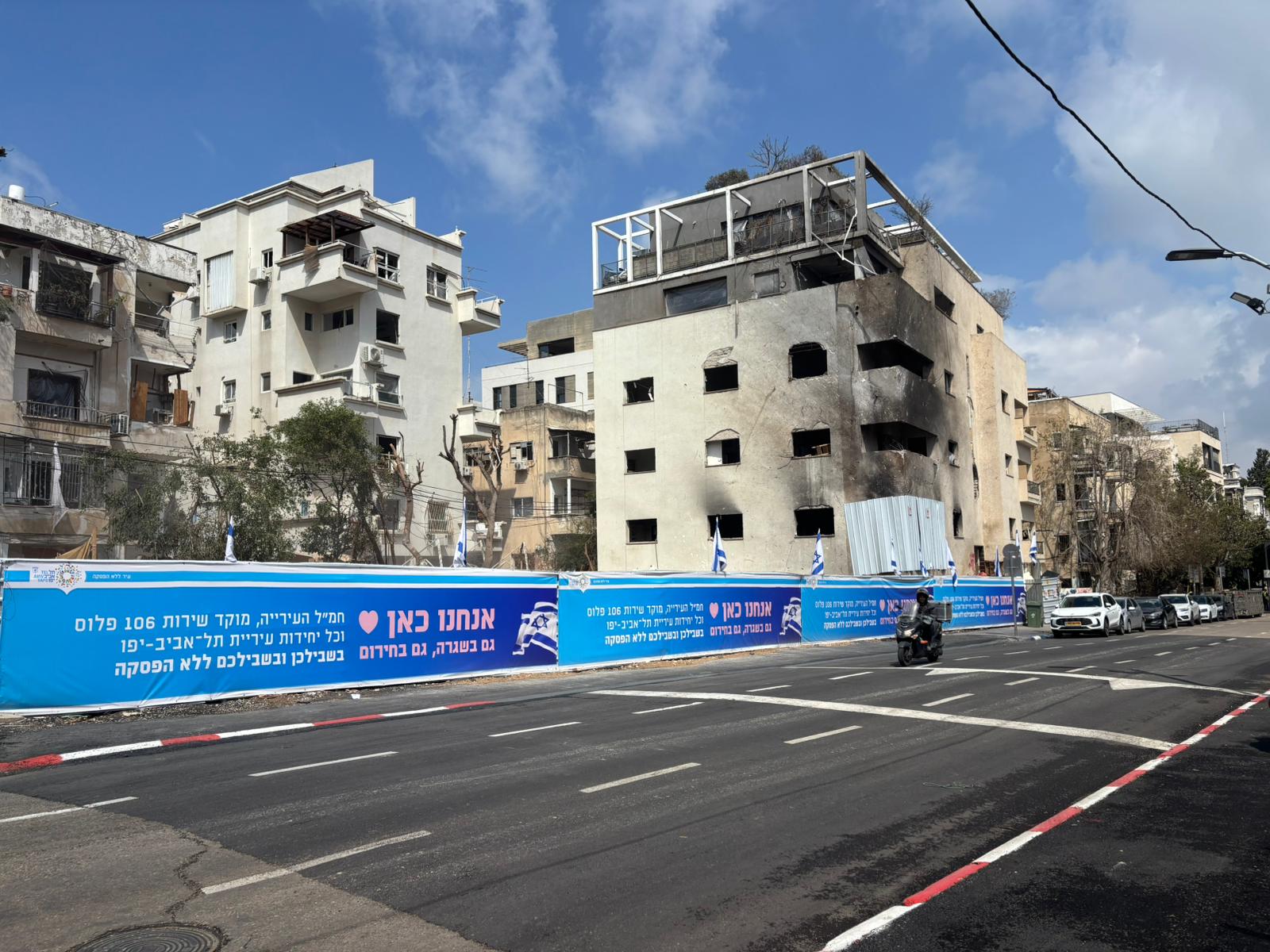
On February 28, Iran fired a missile at a nearby street, and the building of Gratziani got hit with the blaze. In a very Israeli way, people moved on, brushing off the attack as it never happened. I found a different place for breakfast, and life went on as usual until Gratziani reopens.
When I passed by last week, reconstruction was well underway, and something struck me as I looked at the building where I usually had breakfast. It’s a beautiful Bauhaus structure from the 1930s, designed in the International Style—white, with clean geometric lines and long horizontal balconies set against the Mediterranean sky.
I went there for years and never noticed—until I realised that if the mullahs in Iran weren’t targeting civilian structures, I might have spent the rest of my life without ever appreciating the elegance of the building where I have breakfast. Talk about finding a silver lining.
I wrote an entire novel on the origins of the International Style in Israel, exploring its connection to the Zionist leader Chaim Arlosoroff—his mysterious death and his relationship with Magda Goebbels—as well as the Bauhaus students who came to Israel, among them Munio Weinraub and Arieh Sharon.
This style was essential in shaping the early fabric of the city, functioning almost like its skeleton. In this case, quite literally so: when the superficial layers are stripped away, blown off and carried by the heat wave, the essential structure remains. Beautiful, elegant, timeless.