
The Fury That Fell on Warsaw
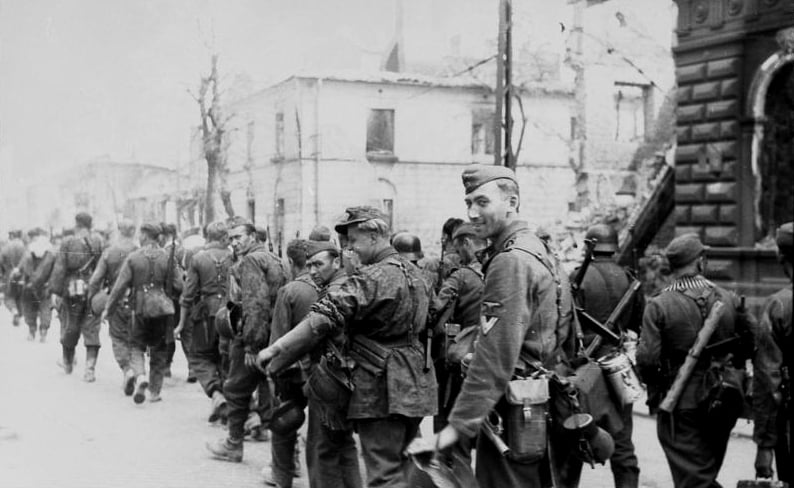
August 5, 1944. Wola District, Warsaw.
Amid smoke, rubble, and gunfire, a nine-year-old girl ran for her life.
Her code name was KAJTEK.
She was the youngest soldier in the Polish Home Army.
And she was moving through one of the most concentrated civilian massacres of World War II.
To understand why what happened in Wola was so extreme, the story must begin two weeks earlier—far from Warsaw.
July 20, 1944: The Bomb
At 12:42 p.m., a bomb exploded at Hitler’s Wolf’s Lair in East Prussia.
Colonel Claus von Stauffenberg had carried it in a briefcase, part of Operation Valkyrie, a coordinated attempt by German officers to kill Hitler and end the war.
Hitler survived.
The heavy oak table shielded him from the blast. Four others died. Hitler emerged shaken, wounded—and consumed by rage.
What followed was a purge. Thousands were arrested. Many were tortured. Some were executed publicly, their deaths filmed for Hitler to watch.
The assassination attempt did not weaken him.
It radicalized him.
Hitler survived the bomb—and emerged consumed by rage.
August 1, 1944: Warsaw Rises
Less than two weeks later, Warsaw rose in armed rebellion.
The Polish Home Army launched the Warsaw Uprising with roughly 40,000 fighters, many poorly armed. Their goal was to liberate the city before the Soviet army—already across the Vistula—arrived.
The Soviets did not intervene. Stalin allowed the Germans to crush the uprising.
Hitler seized the moment.
Still reeling from betrayal, he ordered Heinrich Himmler to make Warsaw an example. Not to defeat the resistance—but to annihilate it.
The order was explicit: destroy the city and kill its population.
Units Chosen for Atrocity
Himmler did not send conventional troops.
He sent units selected for brutality:
- Dirlewanger Brigade, composed largely of convicted criminals
- Kaminski Brigade, collaborators notorious for sadism
- SS “anti-partisan” units trained for terror, not combat
These were not soldiers sent to fight an enemy.
They were sent to murder civilians.
Wola: August 5–12, 1944
What followed in the Wola district was systematic extermination.
SS units moved block by block, pulling civilians from basements, hospitals, churches. Men, women, children, infants—lined up and shot.
Between 40,000 and 50,000 civilians were murdered in just a few days.
Bodies piled so high they blocked streets. Corpses burned in open fields because there was nowhere left to bury them.
This was not warfare.
It was vengeance, organized.
This was not war. It was rage, operationalized.
A Child in the Middle
Somewhere in that destruction was a Jewish child named Edna Szurek.
Disguised as Stefcia, marked with a red-and-white armband, she ran messages for the Polish Home Army under the name KAJTEK.
She moved through streets littered with bodies.
Past buildings where civilians had been burned alive.
Through gunfire and collapsing walls.
She was nine years old.
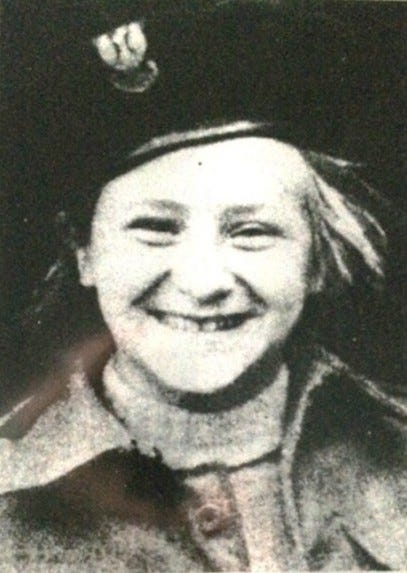
A grenade exploded nearby. Shrapnel tore into her body.
She survived.
She was nine years old. And she survived.
Survival, Calculated
By the end of the uprising, 200,000 civilians were dead.
Eighty-five percent of Warsaw lay in ruins.
Edna had no parents. No home. Only her sister, her false identity, and the discipline survival required.
On October 2, 1944—her tenth birthday—the Home Army surrendered. Edna became a prisoner of war. She received two medals: one for valor, one for wounds sustained in combat.
She was the youngest decorated soldier in Polish military history.
The Long Shadow of July 20
No document can prove that Hitler’s fury after Operation Valkyrie directly caused the massacres in Wola.
But the sequence is unmistakable.
A failed assassination.
A purge fueled by paranoia.
Then the unleashing of the most violent units available on a civilian population.
Hitler survived an attempt on his life.
Warsaw paid for it.
What Remains
Edna lived another seventy-five years.
She married. She had children and grandchildren. She gave testimony. She told the truth about what she had seen.
She called her life “all miracles.”
Those who knew her story understood something else: survival itself was her resistance.
When we tell Edna’s story, we are not recounting an exception.
We are recording what happens when hatred becomes policy, when rage becomes law, when civilians—especially children—become expendable.
The girl called KAJTEK survived what was designed to destroy her.
That matters.
—
From Little Edna’s War by Janet Bond Brill, PhD, daughter-in-law to Holocaust survivor Edna Szurek. Edna’s memoir launched in commemoration with International Holocaust Remembrance Day January 27, 2026.