


Highlight Nepal’s presence in the Global Context
The Gen-Z Movement in Nepal: A Struggle of Pain
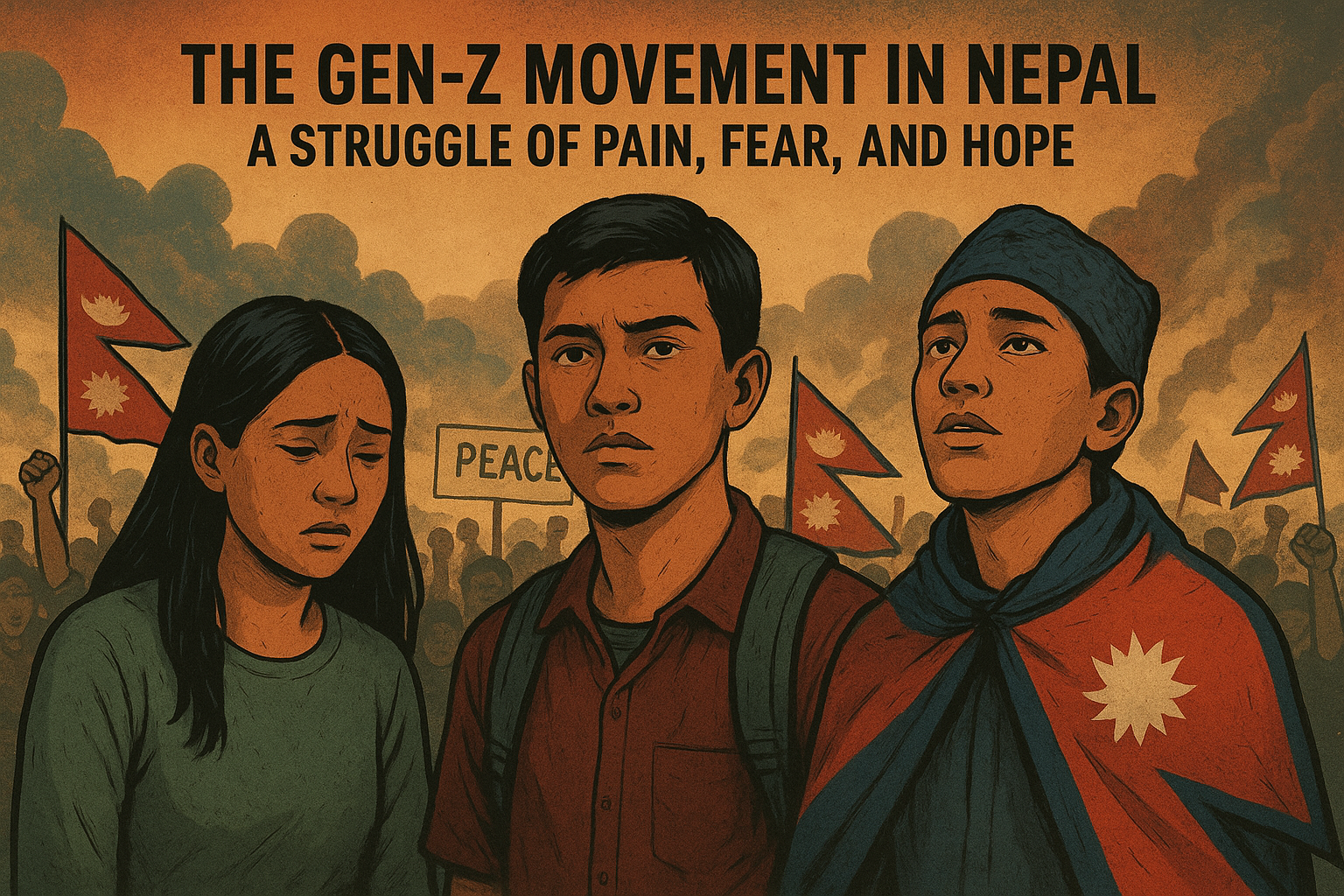
Nepal’s history has repeatedly been written through movements. However, the recent Gen-Z movement is not merely the shouts on the streets it is the cry of a new generation. When a generation, burdened by neglect, lack of opportunities, and despair, raised its voice, the issue was not just political; it was about existence itself. The collective sentiment of “enough is enough” prompted youth across the country to rise, turning their demands into a warning.
For decades, political parties have been engaged in power games in Nepal. Under the banners of democracy and republics, parties and leaders promised the people progress, but democracy became distorted and inaccessible. Young people could not find employment; those needing to work were forced to go abroad. Corruption shattered the national economy, families investing in education became disheartened, and education, skills, and capabilities never translated into opportunities within the country.
Meanwhile, corruption, political instability, and the power struggles of leaders eroded public trust. The new generation, observing past movements, realized that while systems may change, the culture of governance remained the same. It was on this soil of frustration that the Gen-Z movement emerged onto the streets.
History shows that every movement comes at a cost. The Gen-Z movement was no different. While chanting slogans on the streets and clashing with the police, countless youths and civilians were injured. Many innocent lives were lost. Hundreds of buildings were damaged, vehicles burned, commercial establishments destroyed, and the homes of leaders, parties, and ministers were attacked. Yet, these material losses were not limited to structures or money they represented a loss of trust: trust in the state, in leaders, and in the future itself.
The movement dealt a painful blow to the decades-long arrogance of political parties. Leaders, seeing the massive crowds on the streets, panicked. Their decades-long political legacies suddenly turned to dust. Some fled abroad, some were trapped in their own homes, some were beaten on streets or at home, and others sought protection under security forces.
Meanwhile, divisions emerged within political parties over who should support or oppose the movement. Those who tried to ignore the voices of the youth were further criticized. In this way, the movement exposed the true face of parties and leaders in a single moment.
The movement was not only destructive but also enlightening. Nepal’s youth discovered their own strength. Confidence grew that they could bring about change. The older generation realized that youth could no longer be used solely as voting machines.
Youth activism on social issues increased. Early signs of structural reforms appeared. Citizens began to question leaders more vigorously. The movement demonstrated that no force can suppress the collective voice of youth for long.
While the movement raged within Nepal, Nepali expatriates could not remain indifferent. They watched as young brothers, nieces and nephews, fought and bled on the streets. They received reports of mounting tension back home. The pain of the diaspora was twofold: their families were unsafe, and they themselves were unable to stand on the streets to defend their homeland. The question “Why are we so far away? Why is our generation constrained?” weighed heavily on their hearts.
The Gen-Z movement was not only a physical confrontation on streets but also a storm of tension, anger, love, and rage within hearts. Social media overflowed with daily updates, many of which were false or exaggerated. Some claimed dozens had died; others claimed the entire country was a battlefield. Edited videos amplified fear beyond reality.
Many Nepalis spent days and nights scrolling through their phones, seeing their own futures reflected in bloody faces, destroyed shops, fighting youth, and grieving families. These images inflicted deep emotional wounds and psychological trauma. Sleep was lost for many.
Parents worried about the safety and future of their children. Families with members participating in the movement experienced compounded stress. The movement was thus not only political pressure but also a source of mental trauma.
Amid pain, sacrifice, and tension, the movement delivered a critical lesson: change is possible. The older generation must understand that governance cannot endure by ignoring youth. The Gen-Z movement compelled Nepal to rethink. Education, employment, justice, and equal opportunity demands cannot remain limited to slogans; they must be implemented in policy and practice. While the country may endure more pain, the movement illuminated a path one of justice, equality, and transparency.
The Gen-Z movement has become another important chapter in Nepal’s history. It showed that youth will no longer remain silent. They are willing to sacrifice even their lives for their rights, but it also serves as a warning: if old parties and leaders do not reform, a greater storm may hit the country and society.
Given the widespread dissatisfaction of Nepali citizens and the demands of the Gen-Z generation, the current interim government must take urgent steps. First, the cabinet should be compact, enabling efficient decision-making and accountability. Second, provincial assemblies should be dissolved to establish a unified central governance structure. Political appointments must be revoked, a high-level non-partisan commission established to investigate corruption cases since 1990, and empowered to carry out punishments. Constitution amendments should begin immediately to ensure a modern, transparent, and democratic governance system.
Key points of the constitutional amendment include establishing a directly elected executive, abolishing the provincial system, creating non-partisan local governments, implementing the right to recall, ensuring all political appointments go through the Public Service Commission, restricting MPs from becoming ministers, limiting terms of presidents, prime ministers, speakers, and constitutional officeholders to two terms, abolishing the National Assembly, removing ethnic and communal quotas, and eliminating proportional representation. These reforms focus on creating a modern, accountable, and corruption-free governance system, aligning with the demands of the Gen-Z generation.
Today, we must remember the martyrs, the youths bearing mental and physical scars, and the diaspora who wept from afar. That remembrance must now transform into hope and collective action.
Nepal can still stand; our future can still be shaped. If mistakes of the past are learned from, opportunities are provided to the new generation, their voices and demands are properly addressed, and the families of martyrs and the injured are prioritized, the Gen-Z movement will not only mark history it can also define the nation’s future trajectory.