


Insights on the Middle East and U.S. policy
Featured Post
A charade in academic garb
Genocide scholars lent their reputation to an indictment of Israel that is more of a lynching than a serious inquiry
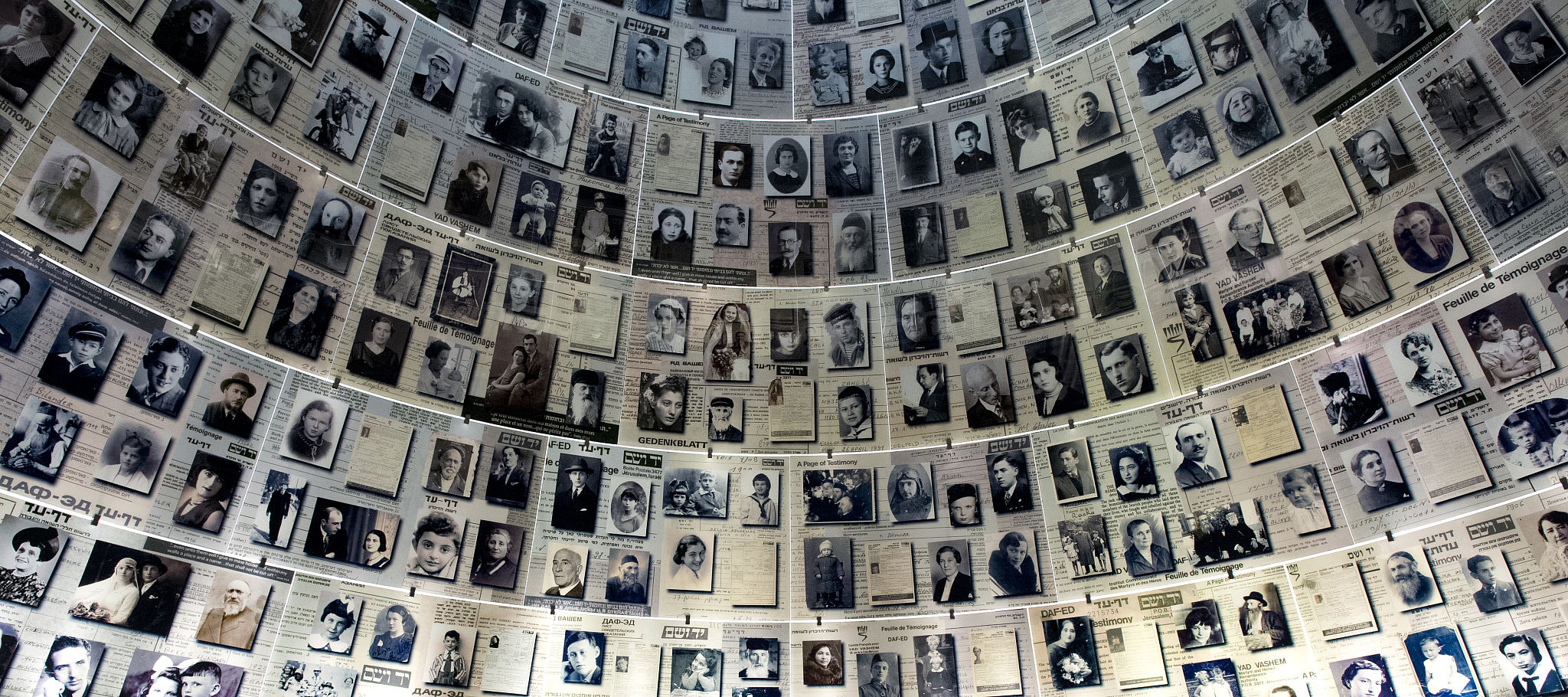
Yad Vashem Hall of Names (David Shankbone/ Wikimedia Commons)
Everyone should read the resolution approved August 31 by the International Association of Genocide Scholars (IAGS) declaring that “Israel’s policies and actions in Gaza meet the legal definition of genocide.” From its opening paragraph, it reflects what I believe to be one of the most egregious examples of the dereliction of scholarly responsibility in recent history.
The opening paragraph? That’s the one that cites UN statistics for the total number of adults and children killed in Gaza since October 7, 2023, as 59,000, without making any differentiation between combatants and non-combatants. A useful rule of thumb is that any discussion of the Gaza war that fails to separate out the number of justly-killed Hamas terrorists from overall fatality statistics is irredeemably flawed – a status the IAGS resolution manages to achieve in its opening paragraph.
Indeed, except for two brief subordinate clauses, Hamas does not appear at all in the resolution – not for its own genocidal acts (which merely earn the one-word description “horrific,” without further detail or condemnation); not for its policy of maximizing its own civilian casualties; not for its systemic embedding within civilian population and infrastructure; not for its failure to provide civilians with access to the underground shelters that protected its fighters; not for its confiscation and hoarding of food designated for civilians, etc. How odd for IAGS, an organization that in March 2016 passed a resolution condemning ISIS for a list of genocidal crimes, every one of which was later committed by Hamas.
Let’s be clear about the resolution characterizing Israeli behavior as constituting genocide – it reflects not one iota of original or independent research by a group that characterizes itself as a “global, interdisciplinary, non-partisan organization that seeks to further research and teaching about the nature, causes, and consequences of genocide, and advance policy studies on genocide prevention.” Its findings are totally and completely derivative of the work of others.
Those “others” include, for example, Francesca Albanese, the notorious “UN special rapporteur on the situation in the occupied Palestinian territories” accused by the US government of “virulent anti-semitism and unrelenting anti-Israel bias.” Her work is first cited as proof of torture by the Israel Defense Forces and then as validation of the genocide accusation. And those “others” also include Navi Pillay, the disgraced former chair of the UN Human Rights Council whose Commission of Inquiry on Israel, on which IAGS based its accusation of Israel’s “sexual violence” toward Palestinians and who is cited by name on the charge of “ethnic cleansing,” was roundly rejected by the Biden administration for its extreme bias. Elsewhere, the IAGS resolution not only relied on multiple reports by Human Rights Watch and Amnesty International – organizations that have long shown deep-seated animus toward Israel – but IAGS went one step further by inflating the accusations made in those reports. For example, the IAGS resolution accuses Israel of “deliberate” attacks on medical professionals, although the cited HRW report never actually made such a claim.
One doesn’t have to support either the Netanyahu government or the Trump administration to note that the IAGS resolution made things up out of thin air. For example, one of the resolution’s accusations is that Israel endorsed “the current US President’s plan to forcibly expel all Palestinians from the Gaza Strip,” linking to a BBC report that makes no mention of the forcible expulsion of Palestinians, a policy that Trump himself specifically renounced in March 2025.
My critique of the IAGS resolution should not be misread as endorsement of Israeli strategy and tactics in Gaza or indifference to the terrible human toll in this conflict. Neither characterizes my view of this hellish war. Rather, my outrage is directed at a scholarly organization that lent its reputation to an indictment of Israel that more closely resembled a lynching than a judicious academic inquiry.
Who wrote this outrageous, tendentious resolution?
Did the 86 percent of IAGS members who voted to endorse it actually read it?
Did any of those august scholars take the time to examine its underlying citations?
On closer inspection, that 86 percent number is itself a bit of a ruse. Evidently, only 28 percent of IAGS’ approximately 500 members participated in the vote on the resolution. This means that a resolution damning the Jewish state for “genocide” was approved with the support of only one-fifth – 20 percent — of the organization’s membership. How ironic – how shameful – given that the image that graces the homepage of the IAGS website is the one at the top of this article: the iconic Hall of Names in Israel’s Martyrs and Heroes Remembrance Authority, more commonly known as Yad Vashem.