
The Genocide That Wasn’t
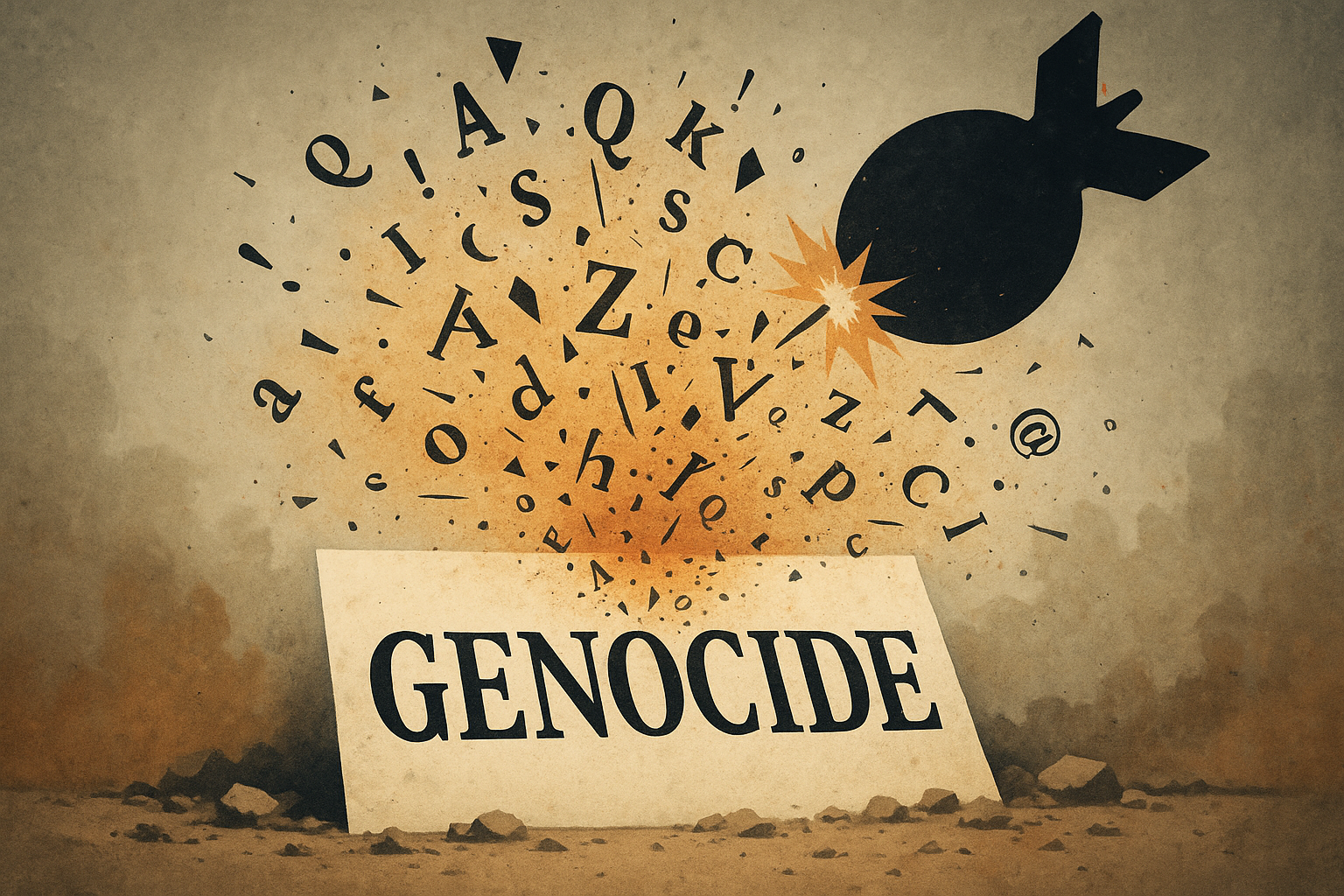
Israel’s war was brutal, flawed, and human. But not genocidal. The real casualty may be our ability to tell the difference.
The war in Gaza has ended. If “ended” is the word one can ever use for a place where dust still hangs in the air and people still count the missing.
Hostages have come home. Hamas has agreed, at least on paper, to disarm.
And Israel, accused for months of waging genocide, has celebrated.
That alone should have stopped the slogan writers cold.
Because in real genocides, perpetrators don’t rejoice when killing stops, they grieve that it isn’t complete. Yet Israel danced in the streets, lit candles, waved flags, and exhaled relief that the war was over. The supposed perpetrator cheered the end of its own violence.
For nearly two years, the world was told that this was not a war but an extermination: that Israel’s true aim was to erase Gaza, using Hamas as pretext and hostages as camouflage. “Genocide,” the loudest word in our moral vocabulary, became background noise. But the melody was wrong.
If annihilation were the goal, why end the war now—precisely when Hamas surrendered the tools of its terror? Genocides don’t stop for negotiations; they stop only when no one is left to negotiate.
And then there were the strange courtesies of warning. Before airstrikes, Israel urged civilians to leave, broadcasting evacuation maps that lit up phones across Gaza. It was chaotic, often impossible, sometimes tragically futile, but it was also unprecedented.
No one warned the Tutsis of Rwanda.
No one texted the Armenians.
No one dropped leaflets over the Warsaw Ghetto saying, “Go south.”
The logic of genocide is surprise and totality, not evacuation routes and phone alerts.
Even the numbers challenge the narrative. Israel dropped an almost unimaginable tonnage of ordnance – tens of thousands of tons – yet the death toll, horrific as it is, remains far below what such destruction normally yields. For every thousand kilograms of explosives, fewer than one person died. That’s a brutal ratio, but war, grimly, is arithmetic as much as horror. It tells us something simple: most bombs were aimed, not scattered. And in both law and morality, intent matters more than impact.
But numbers alone can’t explain Gaza. The battlefield was designed to make innocence indistinguishable from threat.
Hamas built over 450 kilometers of tunnels – a second Gaza beneath the first – off-limits to civilians but open to fighters. It launched rockets from courtyards, hid command posts under ordinary homes, fought in civilian clothes, and melted back into crowds. It was not a conventional enemy; it was an ecosystem of concealment. In the most densely populated strip of land on earth, Hamas turned density itself into defense – human proximity as armor, human suffering as spectacle.
None of this absolves Israel. Whole neighborhoods were flattened. Families erased. “Collateral damage” sounds obscene when spoken beside a child’s name. But if language still has meaning, and we should hope it does, then genocide must mean something more than tragedy multiplied. It must mean a will to erase a people because they are who they are. No court, no intelligence intercept, no leaked order has proven that intent.
And international law agrees. In the Bosnia v. Serbia judgment, the International Court of Justice ruled that genocide can only be found when that intent is the only reasonable inference from a pattern of conduct. Anything short of that, however brutal, disproportionate, or reckless, belongs to the darker vocabulary of war, not to the singular crime of annihilation. By that standard, Gaza’s agony is many things, but it is not genocide.
What we saw instead were the clumsy gestures of a state desperate to end the fight once its casus belli was resolved: humanitarian corridors opened and closed and opened again; bombing paused for hostage releases; negotiations with Egypt and Qatar; even PowerPoint slides tallying civilian deaths. No genocide behaves like that. Genocide does not trade prisoners. It does not count its victims with regret. It does not sign ceasefires once the enemy blinks.
So what was this war, if not genocide?
A brutal, asymmetrical conflict.
A campaign that blurred the line between defense and excess.
A failure of politics, empathy, and restraint.
A tragedy that killed too many and saved too few.
But genocide? No.
The “genocide narrative” collapsed the moment the guns fell silent and the hostages walked free. It was never truly about law; it was about emotion, the comfort of outrage and the seduction of simplicity. “Genocide” became a weapon of language, not of policy; an accusation that demanded no proof and tolerated no nuance.
And yet, if everything is genocide, nothing is.
The word loses its sacred terror. It stops meaning Auschwitz, Rwanda, Srebrenica, and starts meaning “something I oppose.”
It becomes another slogan on a placard, dissolving in the rain.
Israel’s conduct must still face scrutiny. The siege, the displacement, the hunger: all of it cries out for moral accounting. But honesty, like justice, depends on precision.
Perhaps, in the end, the only genocide committed here was against the meaning of the word itself.