
Professional Indian author and strategic affairs writer.
The Golden Route Reboot: How the Hormuz Crisis Birthed IMEC 2.0
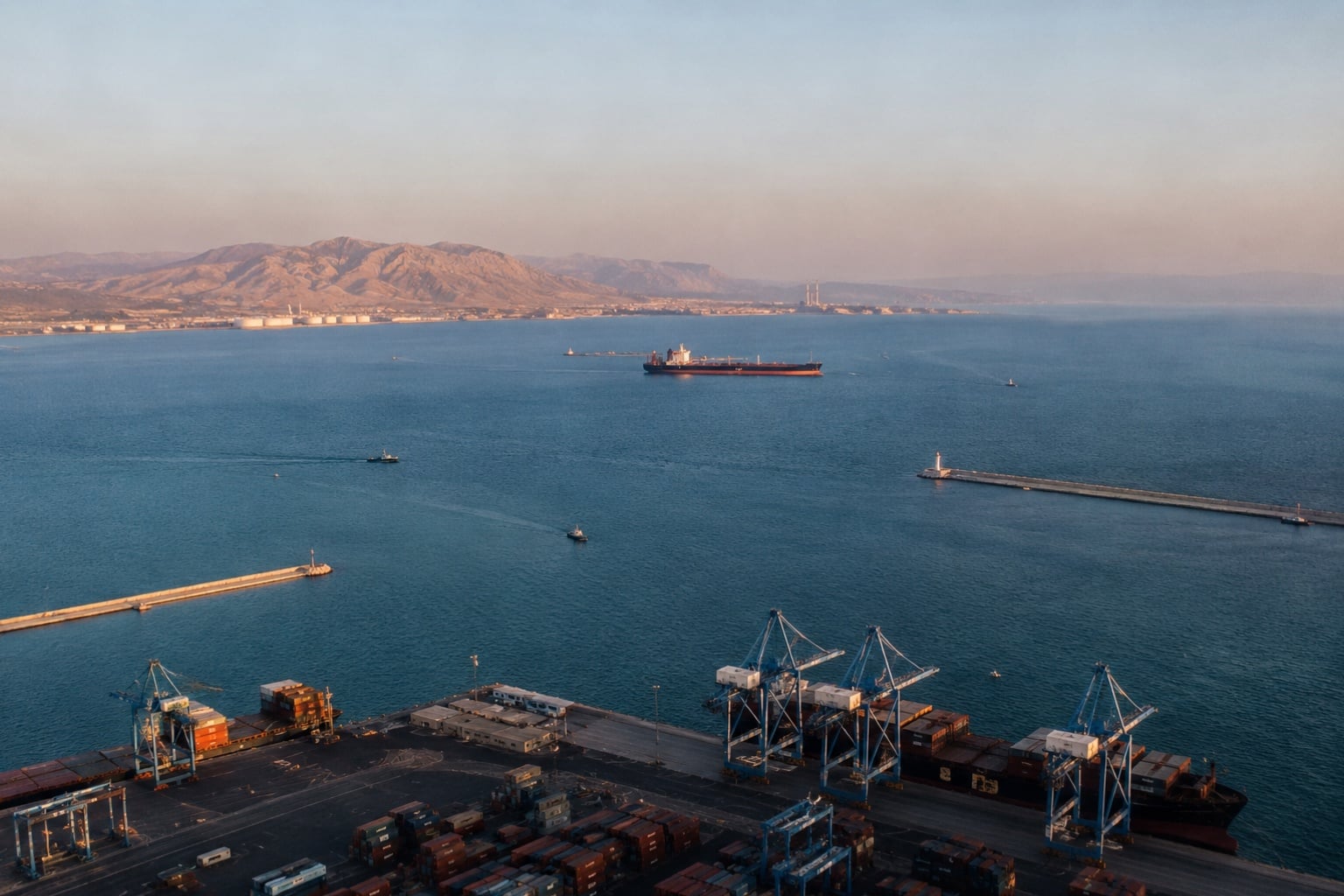
Conceptual illustration: A strategic maritime trade hub representing the India–Middle East–Europe Economic Corridor (IMEC). Image: AI-generated (free for commercial use).
The ink on the newly signed memorandum of understanding between the United States and Iran is barely dry. President Trump and Iranian officials have agreed to terms that promise to instantly reopen the Strait of Hormuz. Global markets are breathing a sigh of relief as tankers prepare to resume normal operations. The diplomatic establishment in Washington views the agreement as a successful deescalation of a conflict that recently triggered a $25 billion global trade crisis. That sense of relief represents a profound strategic mistake.
The temporary blockade of the Persian Gulf demonstrated the terrifying fragility of the global supply chain. A single geopolitical dispute successfully choked off a waterway that handles roughly 25 percent of the world’s seaborne oil trade and 20 percent of its liquefied natural gas. For India, the stakes were truly existential. With approximately 50 percent of its crude oil and up to 85 percent of its LPG arriving through that narrow passage, the disruption threatened to paralyze the domestic economy.
Signing a document in Switzerland or Washington guarantees absolutely nothing. An agreement holding the global economy hostage to the goodwill of a regional power merely delays the next inevitable crisis. Indian policymakers recognize the immense danger of returning to the status quo. The panic surrounding the Hormuz closure proved that relying on traditional maritime routes constitutes strategic negligence. New Delhi learned the hard way that passive dependence on American naval policing and Iranian compliance offers zero long-term security. The immediate response from India has been a ruthless pivot toward infrastructural independence. The solution taking shape is a massive revitalization of the Golden Route to Europe.
When the India-Middle East-Europe Economic Corridor, known as IMEC, was initially announced at the G20 summit in September 2023, skeptics quickly dismissed it as an ambitious geopolitical fantasy. Regional animosities and the subsequent outbreak of the Gaza war stalled its momentum. The plan sat mostly on paper while the world debated its feasibility. The $25 billion trade shock changed the calculus overnight, serving as the ultimate catalyst for immediate action. Today, India is aggressively pushing a massive reboot of the corridor. The original vision mapped a path from western Indian ports like Mundra and Mumbai to the UAE, moving cargo across Saudi Arabia and Jordan by rail, and terminating at the Mediterranean. The strategy is currently expanding and adapting to the harsh realities of 2026.
Indian strategists are actively exploring integrated alternative routes through Oman and Egypt. The primary objective is to bypass the volatile Persian Gulf entirely. By anchoring the eastern leg of the overland network in Oman, shipments can avoid the Strait of Hormuz and transfer directly onto the Arabian Peninsula railway system. Planners are simultaneously working to circumvent hostile Turkish airspace, ensuring that cargo moving toward Europe faces zero interference from adversarial governments. The entire architecture of this revised corridor revolves around eliminating chokepoints and stripping regional actors of their ability to blackmail the global economy.
Israel plays an indispensable role in this new logistical spine. The entire overland route culminates at the Mediterranean port of Haifa. The Adani Group acquired a 70 percent stake in Haifa Port in January 2023 for approximately $1.2 billion, a move that now looks remarkably prescient. Having an Indian company operate the most strategically significant Mediterranean hub guarantees frictionless access for Indian goods entering Europe. Israel provides the secure, technologically advanced exit node that makes the overland journey viable. The corridor physically links the economic aspirations of Mumbai directly to the docks of Haifa, cementing Israel’s position as a vital overland bridge.
This rebooted corridor directly reflects India’s broader shift toward minilateral diplomacy. The era of navigating the Middle East exclusively through isolated bilateral agreements has passed. The I2U2 framework, bringing together India, Israel, the United States, and the UAE, provides the exact coalition needed to finance and protect these massive infrastructure projects. The coalition aligns capital from the Gulf with technological expertise from Israel and execution capabilities from India. They are building a physical trade highway that translates diplomatic alignment into concrete economic integration.
A treaty can be violated at a moment’s notice. A railway line embedded in the desert and a port facility operating on the Mediterranean coast offer permanent leverage. IMEC functions as the ultimate insurance policy against the chaos of the Middle East. It promises to reduce shipping time from India to Europe by up to 40 percent and cut logistics costs by up to 30 percent. Those metrics provide an overwhelming economic incentive for every nation along the route to ensure its security. The financial benefits easily outweigh the ideological disputes that traditionally paralyze the region.
The recent standoff in the Gulf of Oman forced India to confront the illusion of perpetual maritime safety. Washington may have temporarily paused the conflict with Tehran, but the fundamental vulnerabilities remain untouched. New Delhi refuses to wait for the next blockade. The accelerated push for the Golden Route proves that India is actively designing a new economic architecture for West Asia. By physically bypassing the Strait of Hormuz, India reclaims its strategic autonomy and guarantees its economic rise remains immune to the turbulent politics of the Persian Gulf. The work of building the corridor has begun in earnest, and it represents the most consequential geopolitical shift of the decade.
Related Topics
Related Posts