Humble with a declining sense of humor.
The Haredi Exemption: Entitlement Masquerading as Faith
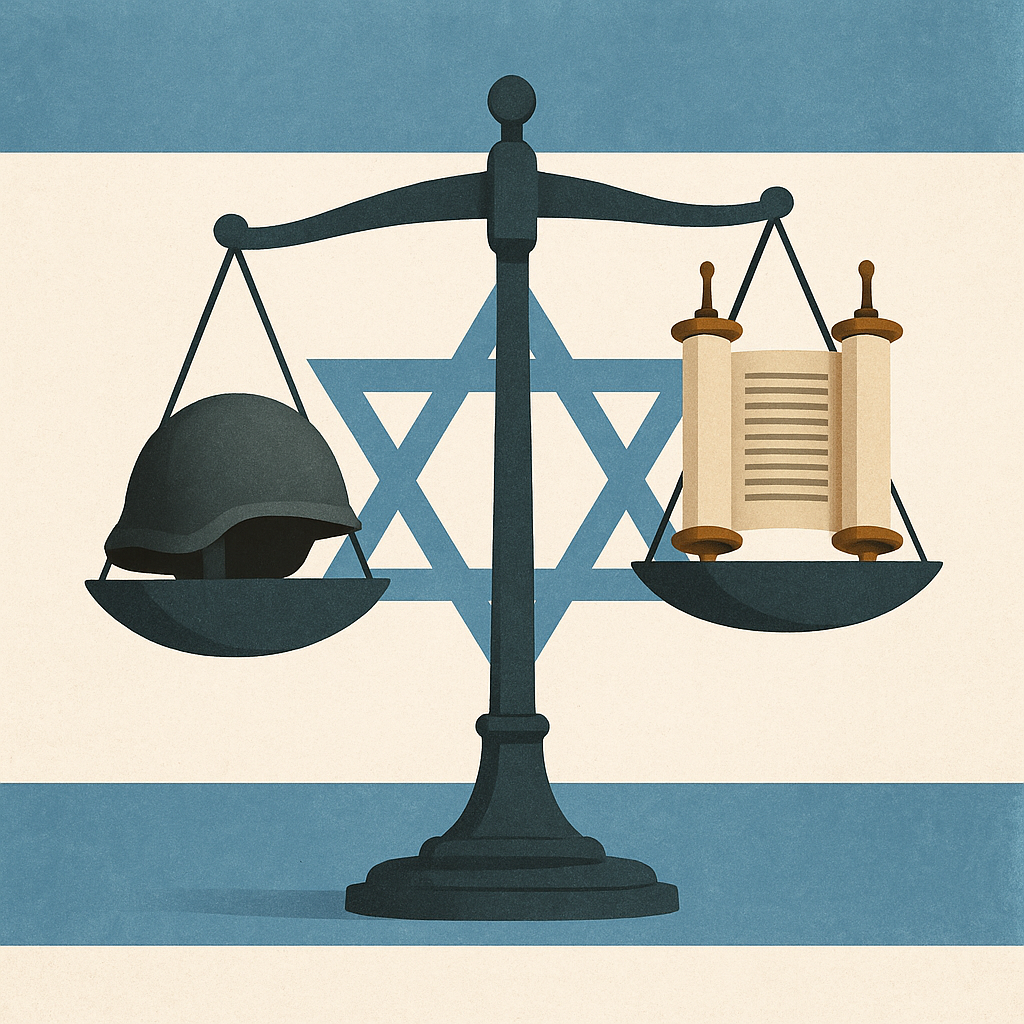
AI-generated by Alan P. Gross
If Israel is to remain both Jewish and democratic, it must reaffirm a simple but sacred principle: every citizen shares responsibility for the nation’s defense. The founding generation—secular and religious alike—understood that freedom demands sacrifice. The ongoing exemption of most Haredi men from national service betrays that legacy. What began as a temporary accommodation has calcified into an ideology of entitlement.
Yes, some Haredim do serve. In the IDF, in hospitals, in classrooms—they show that faith and service can coexist, and that devotion to Torah need not mean exemption from duty. But they remain exceptions. Within the broader Haredi public, non-service has become less a matter of religious conviction than of moral complacency.
This is not a fight between religion and secularism. It is about whether citizenship itself is universal or negotiable. A society cannot endure if one group prays while another bleeds, nor can a democracy allow piety to replace responsibility. Faith may inspire service—but it cannot substitute for it.
Israel’s Supreme Court has said as much, repeatedly striking down blanket exemptions as unconstitutional and discriminatory. Yet every government in recent memory has kicked the can down the road. Coalition arithmetic, not principle, dictates policy. Dependent on Haredi parties for survival, successive prime ministers have allowed a system of permanent exception to persist.
The costs are mounting:
1. Security: The IDF faces growing manpower shortages while tens of thousands of draft-age men are absent by design.
2. Economy: Too many Haredi men remain outside the workforce, sustained by subsidies that reward dependency over productivity.
3. Society: The exemption fractures the social contract, eroding the shared belief that defense and freedom are collective obligations.
The recent mass protest of more than 200,000 Haredim in Jerusalem made their position unmistakable. This was not a rally against discrimination—it was a rally against equality. Its message was clear: we want the benefits of citizenship without the burdens of it. That is not religious conviction; it is self-conferred privilege.
The claim that Torah study alone protects the nation, or that military life is incompatible with faith, has become less a theological argument than a political shield. No serious democracy can function if a large segment of its population declares itself exempt from the responsibilities of statehood.
This is not a marginal debate. It is a distortion at the core of Israel’s identity—a test of whether the country can remain both Jewish and democratic without privileging one group’s comfort over another’s sacrifice. Every Israeli benefits from the protection of the state; every Israeli should help provide it. Whether through military, civil, or national service, the duty must be universal. Anything less entrenches inequality and rewards avoidance.
The Haredi exemption is not a matter of faith. It is a matter of fairness. And Israel’s future as a cohesive, credible democracy depends on ending it.
Related Topics
Related Posts