Relics from the Responsa Literature
The Heavenly Horizon: A Spaceman’s Shabbat
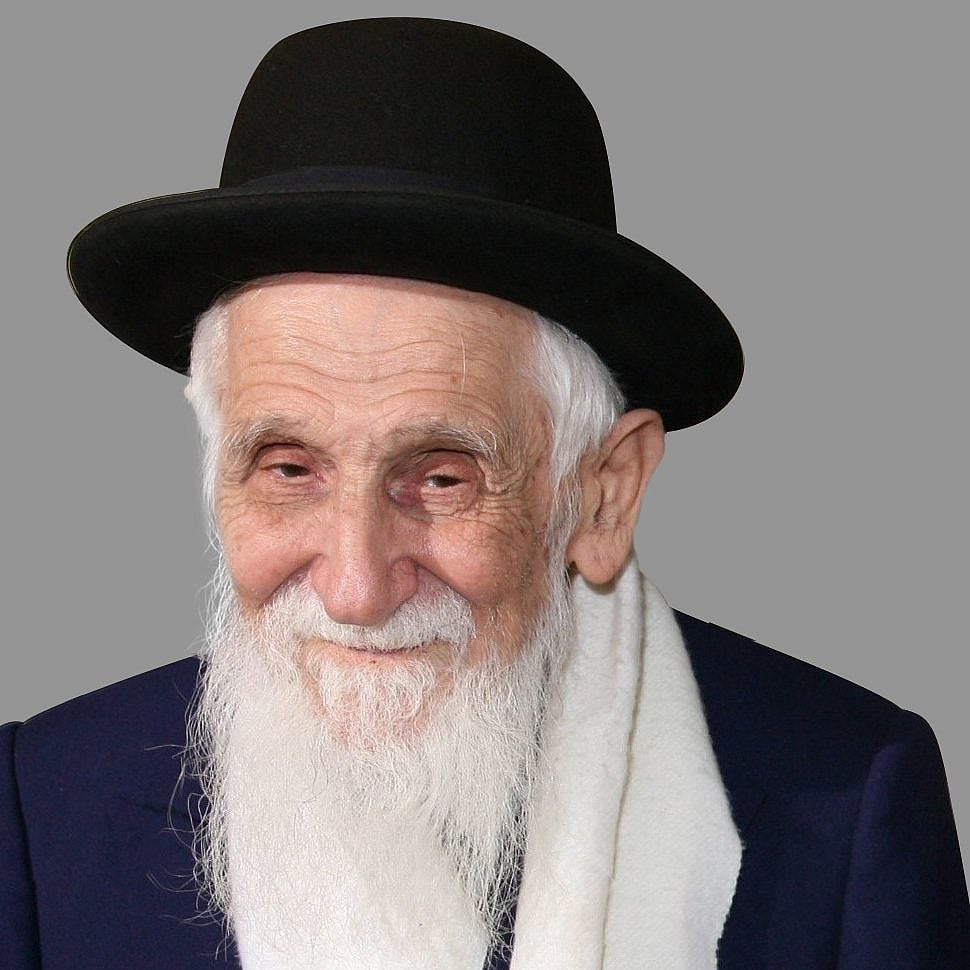
Rabbi David Shloush, 2008 (Wikipedia, Public Domain)
On 1 April 2026 – the eve of Passover 5786 – NASA launched a crewed spacecraft on a flyby trajectory around the Moon and back to Earth. This was the first crewed flight near the Moon since Apollo 17 in 1972. The four astronauts reached the farthest point in Space ever attained by human beings, 406,771 km from Earth. The astronauts splashed down in the Pacific Ocean on Friday evening, 10 April 2026. The mission called Artemis II was part of a long-term Space programme: Artemis III will be an orbital test flight, and then Artemis IV and V are planned as crewed landings at the lunar south pole in 2028.
For many, it was difficult to give full attention to the voyage of Artemis II. Jews the world over were busy preparing for the Passover Seder. In Israel, Operation Sha’agat Ha-ari against Iran and its regional allies was continuing. Ballistic missiles from Iran continued to strike the region. The missile attacks ceased on 8 April 2026 – the Seventh Day of Passover – as a fragile ceasefire was brokered (the northern border of Israel was still under attack, with a dubious ceasefire taking effect on 16 April 2026).
Ironically, Space travel is intertwined with the development of ballistic missiles: both rely on rocket engines that can break through the Earth’s atmosphere and enter Space. So, while this technology was thrusting Artemis astronauts into Space, it was wreaking havoc in Israel and elsewhere in the Middle East.
With uncertainty, apprehension, and fear swirling, it was challenging to pause and consider the Jewish perspective on ambitious Space exploration and what NASA termed “Moon Joy” – the feeling of intense happiness and excitement that only comes from a mission to the Moon.
* * *
The Cosmos and the Crucible
The first person to reach outer Space was Soviet cosmonaut Yuri Gagarin (1934-1968), who completed one orbit of Earth on 12 April 1961. Shortly thereafter, on 5 May 1961, American astronaut Alan Shepard (1923-1998) reached Space. A few weeks later, on 25 May 1961, United States President John F. Kennedy (1917-1963) addressed the US Congress on “Urgent National Needs.” He declared:
“I believe that this nation should commit itself to achieving the goal, before this decade is out, of landing a man on the moon and returning him safely to the earth.”
It was in this climate that the Chief Rabbi of Netanya, Rabbi Hayim David Shloush (1919-2016), was at the forefront of science when he addressed the question: “How should the Spaceman conduct himself on Shabbat and Yom Kippur?” Shloush’s responsum appeared in a journal published by the Religious Council of Tel Aviv—Jaffa in September 1962. This appears to be one of the earliest responsa devoted to Space travel.
* * *
Earthly Souls in Heavenly Spheres
Rabbi Shloush explained that there were two options to be considered, depending on how we envisage Shabbat:
“Perhaps the obligation of Shabbat is to count six [periods] of twenty-four hours of weekday, and [then] to rest during the seventh [period] of twenty-four hours. And according to this, the astronaut would observe Shabbat as though he were at his point of departure, according to a calculation of hours, and when the time of Shabbat arrives in his city – he will rest.”
According to this option, NASA astronauts would keep Shabbat according to Florida time, while Soviet cosmonauts would follow the times of Baikonur, Kazakhstan.
Rabbi Shloush continued to the second possibility:
“Alternatively, perhaps the Torah intends that one count six sunsets and sunrises, with the seventh sunset and sunrise marking Shabbat, in which case the astronaut would count six sunsets and sunrises, and he would rest on his seventh.”
Before addressing the question, Rabbi Shloush backtracked to state his assumption – humans were expected to observe Halakha even while in Space:
“Although the Torah was given to those who dwell upon the earth, and it is not in the heavens, and the astronaut hovers in Space above Earth’s atmosphere, nonetheless the astronaut remains bound by his very nature to terrestrial life, and he lives according to the law of life that governs existence on earth: whether in the spacecraft itself and its instruments that are fashioned from earthly materials; or in the food and stored air that he breathes within the vessel – they too are from Earth. And since a human cannot exist without them, therefore, as long as a soul remains within the Jewish person, the commandments of the Torah apply to him in all conditions and places he may find himself.”
According to Rabbi Shloush, the applicability of Halakha is tied to Earth, but so is an astronaut’s life. The Netanya Chief Rabbi did not seem to consider the possibility of a self-sufficient colony on a moon or a planet, surviving solely by using local materials. In such a case, would Shloush have been so confident that Halakha still applied?
* * *
Searching the Archives of Analogy
Given that there was Halakha in Space, the only question was how to observe Halakha. This was a question that had never been asked before. Shloush scoured the responsa literature for analogous cases. He offered two such cases and rejected a third.
Rabbi Shloush suggested that a parallel could be drawn from cases where people were not in contact with civilisation and had lost track of the days of the week. In such scenarios, they were to count six sunrises and sunsets wherever they found themselves and then keep Shabbat. Even if it later turned out that the people had observed the wrong day, they are not considered to have sinned because they did indeed rest on the seventh day (albeit the wrong seventh day).
Rabbi Shloush argued that astronauts fell into a similar category: in a sense they had disengaged from civilisation, so they should keep Shabbat after six sunrises and sunsets, sanctifying the seventh “day” in commemoration of the seven days of creation.
* * *
From Divine Names to Spacecraft
Rabbi Shloush appeared not to be entirely convinced by his own argument, so he conscripted a further source. The great orator and Kabbalist, Rabbi Yosef Hayim of Baghdad (1835-1909), had been asked about a person who employed a mystical technique using God’s name for instantaneous transport to another location.
If that traveller departed on Shabbat in one location and arrived in a location further east, sunset and nightfall in his new location would occur after less than 24 hours after he began Shabbat in his original location. Should this mystically adept traveller end Shabbat after 24 hours or after nightfall in his new location? Rabbi Yosef Hayim ruled that Shabbat is to be commemorated “in all your dwelling places” (Exodus 35:3), meaning that Shabbat times are a function of location. The traveller ends Shabbat after nightfall in his location and need not continue to observe Shabbat just to complete 24 hours.
Rabbi Yosef Hayim went further, dismissing the notion of keeping Shabbat irrespective of the Sun:
“And if we tell him to rest on a weekday in order to complete twenty-four hours, this would appear as mockery and foolishness. And this would be like someone who did not observe Shabbat on the seventh day and comes to rest on Sunday as retroactive fulfilment for Shabbat, which is certainly absurd. And the same applies here in this case.”
* * *
Cosmic Loose Ends and Rabbinic Boldness
Before summarising his conclusion, Rabbi Shloush dismissed another possible analogy: keeping Shabbat at Earth’s poles where daylight or darkness can last for months. In that case, time should be divided into 24-hour blocks and after six such periods, Shabbat should be observed. This made more sense than waiting months for the sun to set, yet it did not translate well for the astronaut’s experience.
Rabbi Shloush concluded:
“Since the day of Shabbat is nothing other than a commemoration of the act of creation, and the essential principle is to count six and rest on the seventh – someone living in Space should count six sunsets and sunrises and rest on the seventh, for the Torah made [Shabbat] dependent on your region. For if he were to count by hours, it would turn out that on his Shabbat there would be many sunsets and sunrises, and this would not be a commemoration of the act of creation, since the Shabbat of creation had only one sunset and one sunrise.”
It seems that Rabbi Shloush did not fully consider the implication of his ruling. A spacecraft orbiting Earth experiences sunrise and sunset approximately every ninety minutes. After nine hours, astronauts have seen six sunrises and six sunsets and must then keep Shabbat – albeit for a mere ninety minutes.
This might be an attractive proposition when it comes to fasting on Yom Kippur, because the day would be much shorter. Yet Shloush dismissed this possibility, suggesting that Yom Kippur was dependent on Earth time and was to be commemorated for twenty-four hours. Here too Rabbi Shloush did not reckon with the ramifications of his position: A twenty-four-hour Yom Kippur in Space would include sixteen sunrises and sunsets, including a ninety-minute Shabbat after every six sunrises and sunsets! How was that to work? Shloush also said that Space Yom Kippur should be determined by “the point on Earth directly below” the astronaut. How was that to be calculated?
While Rabbi Shloush’s responsum leaves significant loose ends, it is important to recognise his contribution as the first rabbinic respondent to tackle the issue. In a sense, Rabbi Shloush was flying solo in Space.
* * *
Seek and Probe
Rabbi Shloush later expanded his exposition and included it in the first volume of his responsa, Hemdah Genuzah, printed in 1976. To be sure, the discussion begins with a question, and the entire essay was printed in a volume of responsa. Nonetheless, this was not a classic responsum, since there was no independent questioner: Shloush was quite open about being the one who was vexed by the issue. In both the original 1962 version and the expanded 1976 version, the examination opened with the following words:
“I resolved in my heart to investigate the matter of spacecraft orbiting our globe many times each day, how should the astronaut conduct himself regarding the observance of the Shabbat, Yom Kippur, and so forth, given that the sun rises and sets for him many times within a single [twenty-four hour] day?”
The 1976 version examined additional sources and considered more Jewish practices in Space: wearing tzitzit and donning tefillin, times for daily prayers and reading Shema, and commemorating other Festivals on the Jewish calendar.
Despite the expanded analysis, Shloush’s conclusions were essentially the same: Shabbat was to be determined by the Sun, Festivals were to be commemorated by the date on Earth, and other aspects of Jewish practice were to be preserved but adjusted for the circumstances. Shloush did not deviate from his original rulings, nor did he take stock of the corollaries of his conclusions.
The Netanya Chief Rabbi did, however, add a postscript that served as a personal reflection on the entire responsa enterprise:
“And finally, I will note two things that we must learn from our Sages of previous generations:
-
- The desire to seek out and probe questions even when they are not practically relevant, such as the question of R[abbi] Y[osef] H[ayim] concerning the Shabbat of a person who miraculously travelled instantaneously by means of a Divine Name, and from which we were able to draw lessons for the resolution of a question in our own generation, the generation of [Space] orbit.
- The boldness to rule even on a foundational question of Judaism such as Shabbat observance, based on proofs and according to reasoned logic. And they did not leave the question doubtful, unresolved, and standing. Rather, they always knew how to prohibit what must be prohibited and to permit what may be permitted, for the force of leniency is preferable. And we must learn from them in resolving the problems that have arisen, and those that will arise in the future, with the ingathering of the exiles and the renewal of our sovereignty.”
* * *
When drawing an analogy to fill a lacuna in law, the choice of premise is key. Rabbi Shloush decided that being in Space was not like being at one of the Earth’s poles. Rather, Space travel was like being disconnected from civilisation and losing track of time; it was like being magically transported to another place by the mystical use of the Divine Name. When Rabbi Shloush wrote his responsum in 1962, Space exploration certainly seemed to be something magical.
With the successful journey of Artemis II and the promise of further Space exploration, a generation strained by war and anxiously longing for peace might look to the heavens for such wondrous moments of solace and hope.
Related Topics
Related Posts