
The Hollowing: A Lament for the Forgotten Captives
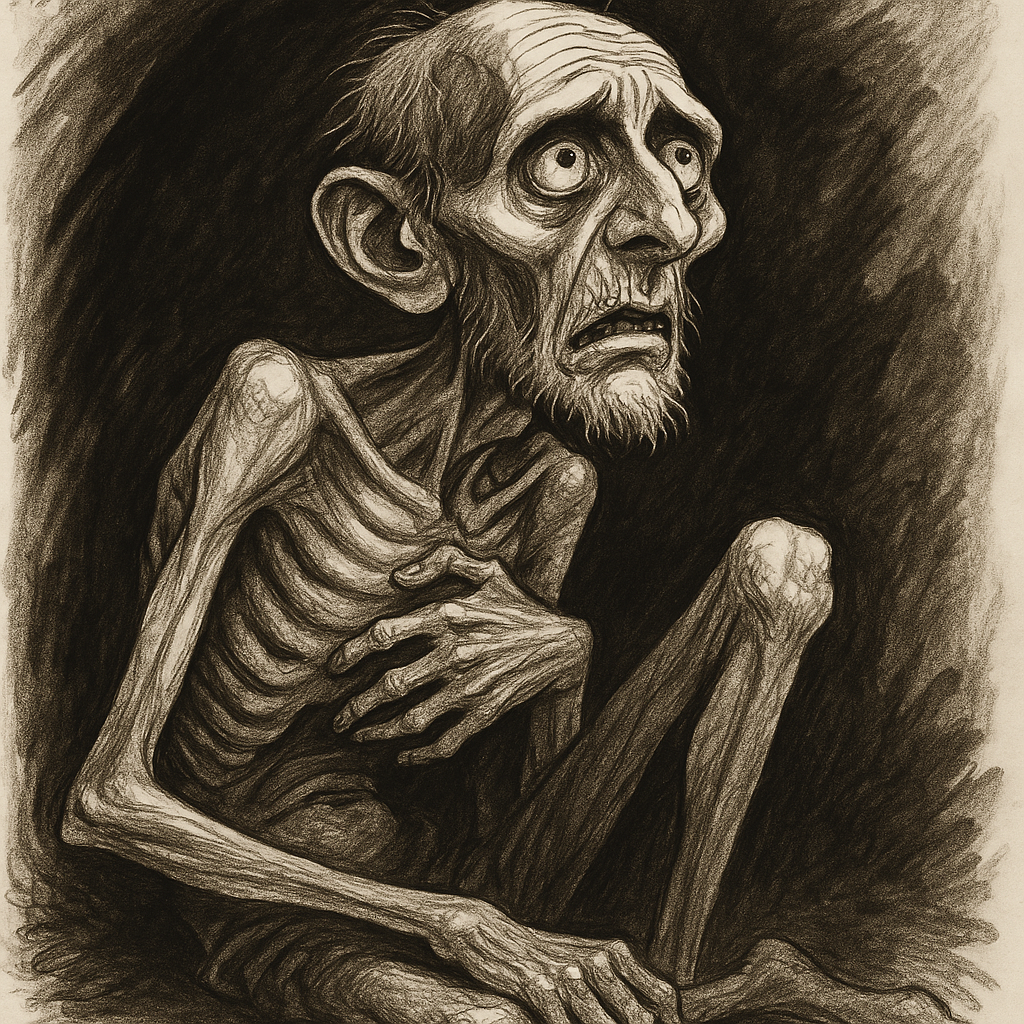
There are stories too terrible for song, too raw for the softness of newsprint. They are not tales, nor legends, nor scrolls to be opened by candlelight in the halls of scholars. They are present. They are flesh. They are wasting away in real time.
Somewhere beyond the reach of sunlight, where air grows sour and time forgets itself, there are hostages — Israeli civilians, kidnapped from hearth and home, dragged into the underworld of Hamas. We know their names, or we did. Some were children when they were taken. Some were elderly, too frail to flee. Some were wounded. And now, some are starving.
This is not rhetoric. This is not metaphor. Their bodies, filmed by their captors in some ghoulish display of domination, show the collapse of the human form — gaunt cheeks, hollow eyes, skin clinging to bone like parchment stretched too tight. One man, barely clinging to life, is paraded before the camera as if to whisper, “We can do this. And you will let us.”
And thus far, the world has.
For what greater shame is there than for democracies — proud of their charters and their courts, flush with food and freedom — to know that a man is starving not from famine, nor plague, nor drought, but by design, and still say nothing?
The starvation of hostages is not an unfortunate by-product of war. It is a tactic. It is cruelty distilled, premeditated and prolonged. It is a kind of evil that does not rage with fire or explode with noise, but diminishes its victim until he is neither alive nor dead, seen nor buried — just erased.
And the world, oh the world. How efficient it has become at averting its gaze. International organizations that once held emergency sessions for every perceived slight against the so-called oppressed now stammer awkwardly, or vanish into the bureaucratic mist. Human rights groups, ever eager to tweet their outrage, have gone unusually quiet. The media, that great chronicler of suffering, suddenly finds its vocabulary missing when the victim is an Israeli Jew.
Instead, we are offered the same weary script: “It’s complicated.” “Both sides.” “Context.”
But no context justifies this.
In the lore of darker ages, they used to speak of hollowings — acts so grievous that the soul is said to shrink from the body, leaving behind something not quite living. The starvation of hostages is just such a hollowing. It is the bodily manifestation of abandonment. It is what happens when humanity is reduced to a talking point, when a Jew in chains evokes not empathy but suspicion.
Tolkien wrote that some evils grow in secret, festering in silence until they burst into the daylight, demanding attention too late. What is happening to these hostages — men, women, and even children — is such a festering. It is a wound left untreated, because to treat it would mean admitting its cause. And the cause is not occupation, or resistance, or grievance. The cause is hatred — plain, primordial, unvarnished.
There are still those who speak in hushed tones about “proportionality.” But what is proportional about starving a civilian in a basement while filming his collapse for public display? What symmetry exists between a government trying to free its people and a terror cult that hides them, starves them, and then weaponizes their hunger?
Let us say it clearly, without caveats: This is a crime. A war crime. A moral crime. A crime against humanity. To deny food, medicine, or sunlight to the defenseless is not resistance. It is barbarism.
And worse still, it is being rewarded.
The international chorus that now sings the ballad of “Palestine” with such harmony seldom finds a verse to spare for the Jews held underground. They are, it seems, inconvenient to the narrative. They do not fit the script. And so, like so many inconvenient truths before them, they are buried — not under rubble, but under rhetoric.
But they are not forgotten. Not by their families. Not by those who still believe in justice unfiltered by fashion. Not by those who remember that evil is not always loud — sometimes it is slow, silent, and starves you while the world feasts.
We are nearing a threshold. If the world cannot find its voice now — if it cannot say plainly that starvation is wrong, even when the victim is Jewish, even when it upsets a narrative — then it is not merely failing. It is collapsing.
To the hostages: You are not unseen. You are not alone. Your wasting has not gone unwitnessed, nor will it be unavenged. You are not symbols. You are not bargaining chips. You are human, and your suffering indicts us all.
To the captors: No cause will cleanse you. No spin will save you. What you have done is not resistance. It is rot.
And to the watchers of the world: Know this — one day, when the doors are opened and the names are read, history will remember not just who starved, but who watched.