

The Home We Are Building Together
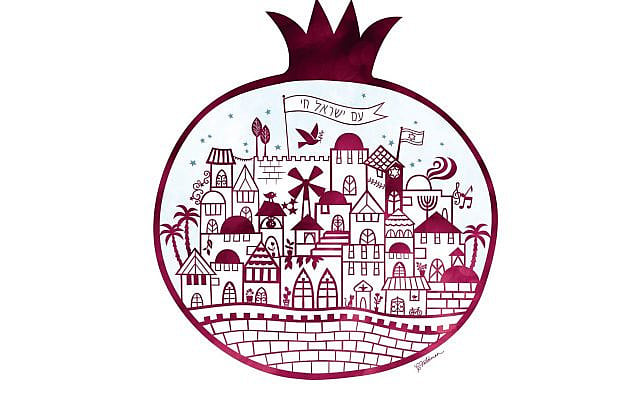 Over Shabbat, I was sitting with a friend of mine, an Israeli artist, and her brother when our conversation turned to the way Jews outside of Israel responded after October 7.
My friend told me that following the massacre, she experienced a significant influx of purchases from North America. People were deliberately seeking out Israeli artists, wanting to support Israeli businesses and strengthen the Israeli economy during an unimaginably difficult time.
Her art had not changed. Her talent had not changed. Her need to earn a living had not suddenly appeared.
What had changed was the desire of Jews around the world to find a tangible way to stand with Israel.
Her brother, who produces benchers, then shared his own story. Before October 7, a customer had specifically asked him to remove three Harachaman passages relating to the State of Israel from an order.
Then October 7 happened.
Although the benchers had already been sent to print, the woman asked him to put the passages back in.
The words had not changed. Their meaning had not changed. But something had shifted. Israel was no longer a distant subject that could be removed from the page. She had become personal again.
Both stories stayed with me.
The solidarity that emerged after October 7 was extraordinary. Jews around the world donated, volunteered, prayed, sent supplies, visited Israel and deliberately purchased Israeli products. For many who felt helpless from afar, supporting an Israeli artist or business became a tangible way of saying, “I am with you.”
Those gestures mattered. They still matter.
I do not want to diminish that awakening or criticize the people who responded. Quite the opposite. It revealed the depth of the connection that exists throughout the Jewish world, even when it is not always visible.
But it also made me wonder how we can carry that connection beyond moments of crisis.
During quieter times, Israel can become an abstract subject—a political debate, a complicated headline or a country whose decisions are discussed and judged from thousands of kilometres away. Then tragedy strikes, the distance disappears and Israel becomes family again.
But Israel is family on ordinary days too.
I do not say this from a place of superiority. Until just over a year ago, I was also living in the Diaspora. I know what it means to love Israel from thousands of kilometres away. But since making aliyah, I have come to see both the holiness and the struggle behind the Israel that rarely makes international headlines.
Life here is not easy. I see people working to support their families, trying to keep small businesses alive and facing the ordinary pressures of life alongside realities that are anything but ordinary. Whether they were born here or chose to come, they continue building their lives here despite the difficulty.
They are not simply waiting for the next crisis. Every day, they are working, creating and helping to build and sustain the Jewish homeland.
At the same time, there is something here that cannot be measured economically. This is the Holy Land, one of the greatest centres of Torah learning in the world—a place where Torah is not confined to the walls of a synagogue or beit midrash. It is in the language, the calendar and the rhythm of the week. It is in the streets we walk, the air we breathe, the earth beneath our feet and the stones of the buildings in which we learn. At times, it feels as though Torah and holiness are woven into the land itself.
Perhaps the relationship between Israel and Diaspora Jewry should resemble, in some way, the partnership between Yissachar and Zevulun.
According to our tradition, Zevulun engaged in commerce and helped sustain Yissachar, who devoted himself to Torah. Each carried a different responsibility, but they were partners in one sacred purpose. It was not simply charity flowing from a giver to a recipient. Each recognized the value of what the other carried.
I do not mean that everyone in Israel learns Torah while everyone outside of Israel conducts business. There is extraordinary Torah learning throughout the Jewish world, just as Israelis work, create, build and contribute in countless ways. But the model teaches us that different parts of the Jewish people can sustain one another while remaining invested in a shared destiny.
Jews outside of Israel are not distant benefactors helping someone else’s country. They are partners in the continued life of the Jewish homeland.
Supporting an Israeli artist, business owner or farmer is not simply an act of pity when Israel is suffering. It is a way of participating in what is being built here. It is recognizing that those living in Israel are carrying something for the Jewish people—and that it was never intended to belong to them alone.
That partnership can be woven into the ordinary choices of Jewish life: purchasing from Israeli artists and businesses, recommending their work to others, visiting when possible, investing in Israeli innovation, learning about the people who live here and keeping Israel present in our tefillot.
This does not mean that every Jew must agree with every decision made by an Israeli government. Love does not require the absence of questions, and belonging does not demand political uniformity.
But disagreement should not erase connection.
Israel is not merely a government, a conflict or a cause that becomes urgent whenever tragedy strikes. Israel is a living country filled with people who are creating, struggling, working, praying, raising families and contributing to the Jewish future every day.
October 7 awakened something profound across the Jewish world. Perhaps it did not create a new connection so much as reveal one that had been waiting beneath the surface.
The opportunity now is to transform that emergency response into an enduring partnership.
Buy the painting because an Israeli artist created something beautiful and because supporting her helps sustain the home we share.
Keep the prayers in the bencher because Israel belongs within our Jewish consciousness every day.
This should not be a recurring relationship of, “Israel is in trouble; let us help.” It should be a constant recognition: These are our brothers and sisters. This is our land. This is our collective future.
Israel is the land toward which Jews have directed their prayers for generations. Whether our return comes through aliyah today, sometime in the future or with the geulah for which we pray, Eretz Yisrael is not somebody else’s home.
It is ours.
Some of us are already here. Some of us may arrive later. But the Jewish life being built here belongs to all of us.
Let us build it together.