The Horror Experienced by Miklos Kahan: From War to Reconstruction in Brazil
Between Horror and Reconstruction: The Journey of Miklos Kahan
In an interview conducted by Sarita Mucinic Sarue, with the presence of Pricila Kahan Heliszkow (Daughter), Holocaust survivor Miklos Kahan revealed not only his own story but also that of his father, who faced the same tragedy in the concentration camps.
Miklos was only 16 years old when he was taken by the Nazis. He recalls the forced march of more than a thousand kilometers, from the Warsaw ghetto to Dachau, sleeping on the ground in the rain and cold, alongside hundreds of prisoners.
We slept on the ground, in the rain. That memory never leaves my mind, he said.
Beside him was his father, who, weakened, could no longer walk and was left behind in one of the labor camps.
The account of his father is filled with pain. Miklos remembers working as a slave unloading cement for the construction of airplane factories. There, his father did not survive the inhumane conditions.
My father stayed there. He could no longer walk, he recounted, with restrained emotion.
The memory of his mother also emerges: she died when Miklos was only 10 years old, leaving him still a child to face the horrors of war alone. The early loss of his mother and the suffering of his father in the concentration camps deeply marked his life.
At the end of the war, Miklos was saved by American planes that were about to bomb the train he was in. He raised a uniform to show that they were prisoners and not enemy soldiers.
The Americans began to cry when they saw our condition. They threw bread to us, he recalled.
After twenty days traveling by ship, Miklos arrived in Brazil with his brother and a friend. He rebuilt his life as a street vendor and later in the garment industry in Bom Retiro, São Paulo. Despite the hardships, he never accepted reparations from Germany, stating that “no money could ever pay for what happened.”
His daughter, Pricila, emphasized that her father always conveyed values of dignity and simplicity. “He used to say that education was a silent example. He never told us the sad things about the war, only the funny ones, like when he stole potato peels to survive.”
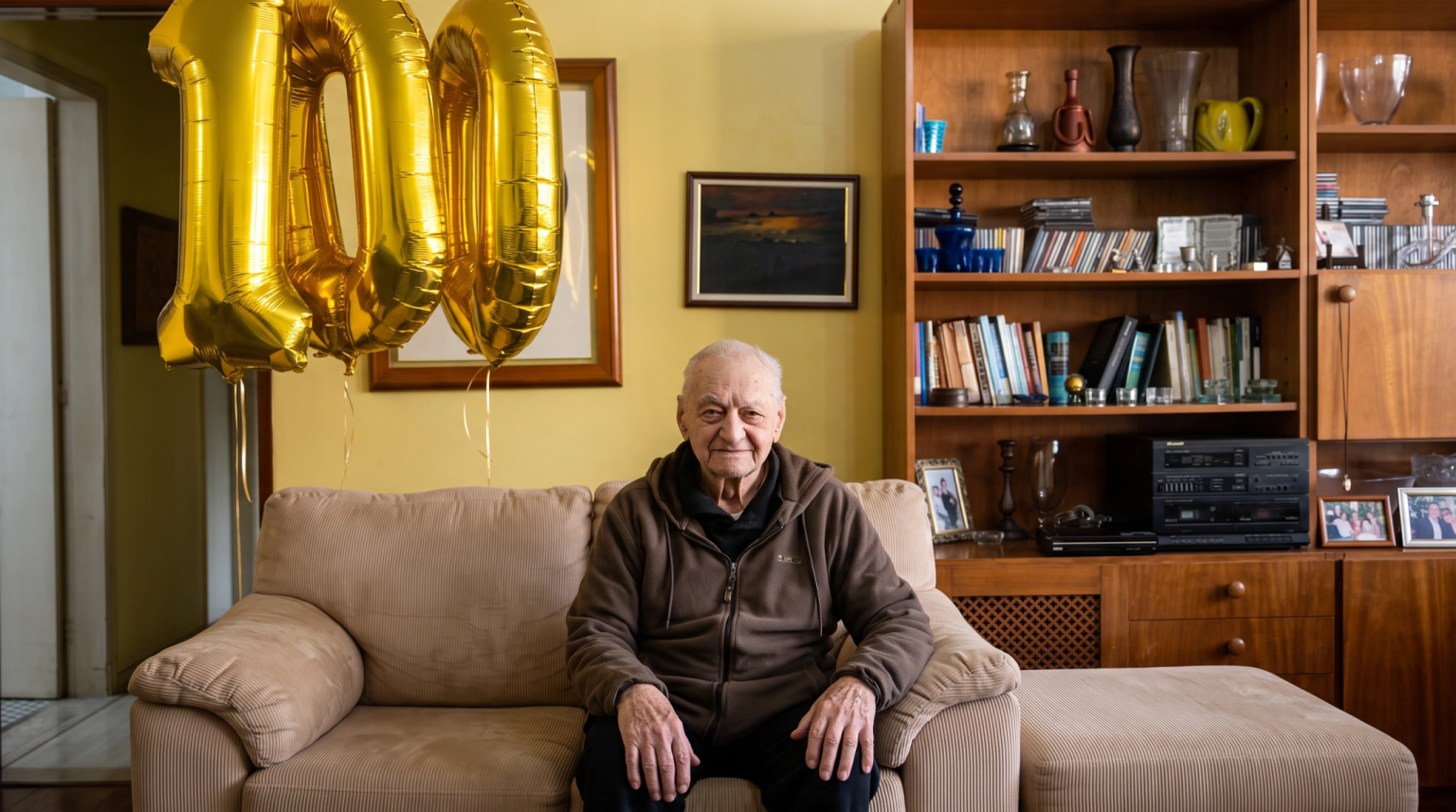
Today, at 100 years old, Miklos remains a symbol of resistance. His story, preserved and recorded through Sarita’s interview, is a living testimony to the importance of memory.
The testimony of Miklos and his father is more than memory: it is a warning. Their story shows how prejudice can lead to the extreme of inhumanity. By sharing his journey, Miklos Kahan reaffirms that remembering is essential to prevent humanity from repeating its greatest horrors.