
The Houthis Cannot Afford a Draw
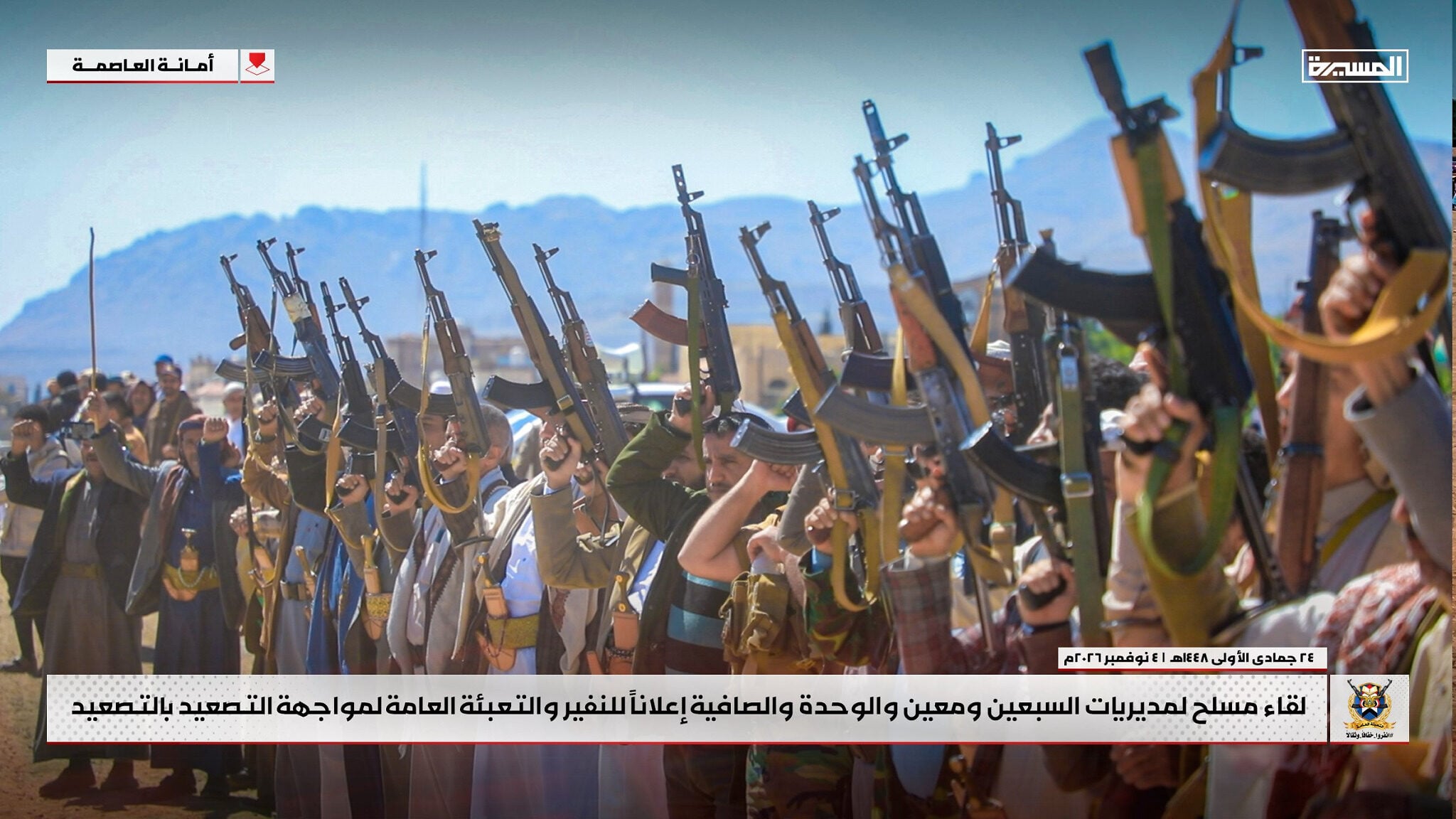
Over the last four months the Houthi have advanced down the Red Sea coast to the Bab al-Mandab, encircled Taiz, and brought Riyadh under missile fire. But those gains have come at a steep price, and a movement that has invested this heavily cannot settle for a draw. If the coalition can bring the Houthi advance to a halt, time could begin to work against the regime. That prospect should shape how Saudi Arabia’s partners approach the question of joining the fight.
The current conflict follows a period of relative calm that began in October 2025. In the two preceding years, the Houthis had fired on Israel and on commercial shipping in the Red Sea and had absorbed sustained punishment in return, from US and Israeli strikes.
In October 2025, the Houthis opted into the Gaza ceasefire. Nothing obligated them to do so, and the decision is best read as an admission that the group needed time to rest and rearm rather than as a change of direction.
But the Houthis cannot tolerate quiet for long, and by the summer of 2026 they were ready to fight again. On July 3, an Iranian airliner landed in Sanaa and carried a Houthi delegation to Tehran, and the Houthis announced that Sanaa-Tehran service would continue. For the past decade, Saudi Arabia had blocked such a corridor precisely because it would allow operatives and weapons to flow freely between the two capitals.
From the Houthi perspective, the move was a win-win. If Riyadh backed down, the group would have its corridor. If Riyadh disrupted the flights, as it ultimately did on July 13, the group would have the confrontation it sought and a ready-made narrative for a “campaign to break the Saudi blockade on Yemen.”
That narrative is largely fiction. Commercial vessels carrying food, fuel, and consumer goods dock at Houthi-controlled ports; more than 300 of them did so in the first half of 2026. Goods cross by land from government-held areas. Oversight of international transit is not a siege: a territory with working ports and open land crossings is not blockaded. Yet the narrative survives because the Houthis perpetuate it in order to shift blame for a ruined economy away from the regime and portray a weapons corridor as a humanitarian cause.
The war the Houthis instigated in July has been costly for them. The toll likely runs to thousands of their fighters killed and many thousands more wounded. Based on available reporting, a notable share of the Houthi fighters killed have been senior officers from the movement’s most prominent families. They include Mohammed Yahya al-Daylami, who reportedly commanded the elite al-Hussein Brigades; Brig. Gen. Majd al-Din al-Hamzi, the operations chief of a missile brigade; and Mohammed al-Houthi, who reportedly oversaw training for the Ansar Brigades. These are not all expendable conscripts or cannon fodder; the Houthis are losing people they regard as valuable.
The group has placed a large stake on the table, and, ideology aside, that stake demands a return. A stalemate, while far from ideal for the coalition, would constitute a failure by the Houthis’ own standards. They went to war to mobilize the population and extract concessions from Saudi Arabia. A campaign that costs thousands of lives and ends with no concession, no corridor, and no money is a campaign that failed. The Houthis will certainly attempt to portray any outcome as a victory, but that claim will be difficult to sustain when the facts on the ground do not support it. The myth of a perpetually victorious movement will fall apart without tangible results to back it up.
The corollary is that the Houthis will try to keep fighting until they win. If they do win, they will be entrenched twice over: on the map through expanded territorial control, and in the public perception through the reinforced belief that resistance is futile.
While the Houthis gained the upper hand in their stalemate with the coalition from 2015 to 2022, this time could be different if the Houthi economy runs out of road. In the last war, the group financed itself by looting the institutions it controlled: the central bank, the state-owned companies, the pension funds, and the humanitarian aid pipeline. Those sources are largely exhausted. Nothing about Houthi rule invites new outside investment, and the group’s designation as a foreign terrorist organization makes any such investment a risk that no major firm will accept.
The one renewable revenue stream the Houthis retain is remittances. According to the World Bank, Yemenis working in Saudi Arabia send $2.3 billion home each year. This is why Riyadh’s recent move to regularize the status of Yemeni workers in the Kingdom deserves more attention than it has received. It presumably gives the Saudi government a clearer picture of who those workers are and how they send money home, and with it greater leverage over a major flow of cash into Houthi-controlled territory.
Remittances are not the only way Saudi money could reach the Houthis. A settlement could send it as a direct payment, as public-sector salaries in Houthi territory, or as reconstruction aid. But Riyadh would accept such terms only under extreme pressure, and a stalemate in which the Houthis are also feeling the pressure makes that outcome less likely.
Nor can the Houthis necessarily count on Tehran to provide financial cover indefinitely. The Islamic Republic is in no position to underwrite a second endless war in addition to the one it is fighting at home: its oil exports have fallen sharply, and it has its own reconstruction to finance.
The caveat is that support for the Houthis is relatively cheap, and the Houthis are the one Iranian proxy still actively bleeding a US ally. That is why the IRGC has reportedly added lifting the “blockade” on Yemen to its demands in the wider regional negotiations. So long as Tehran views Houthi pressure on Riyadh as leverage for its own problems and the Houthis look like winners, it may keep paying. But keeping the air corridor closed and severing the smuggling routes raises Iran’s costs precisely as its means are shrinking. Holding the Houthis to a draw turns Tehran’s investment into a more expensive one; pushing them back turns it into a lost one. Houthi depletion and Iranian constraint together constitute a window of opportunity that has so far gone largely unnoticed.
Support for Saudi Arabia has been slow to arrive. But it would be a mistake to conclude that assistance that did not come in July has lost its value in November. The Houthis appear to have front-loaded this war and are likely expending fighters and advanced weapons faster than they can replace them. Support that arrives to fight a depleted adversary is likely to accomplish more than the same support at the very start of a conflict.
Interceptors can prevent Saudi Arabia from losing, but they will not help it win. The Kingdom needs its partners and allies to enable an offensive campaign with precision-guided munitions and the intelligence to put them on critical Houthi assets. Houthi supply lines must stay closed, with the Tehran-Sanaa route kept shut and Oman pressed to crack down on the smuggling it has tolerated for years. And the target list should include the ports, fuel terminals, and other infrastructure that allow the Houthis to maintain centralized control of their economy and import what they need to keep their army running.
The interest in stopping the Houthis is not Riyadh’s alone. A movement that spent two years attacking Israel and international shipping, and that exists to keep its population mobilized against an external enemy, will continue to push further each round. The Houthis need a victory. Denying them one is essential for regional security.