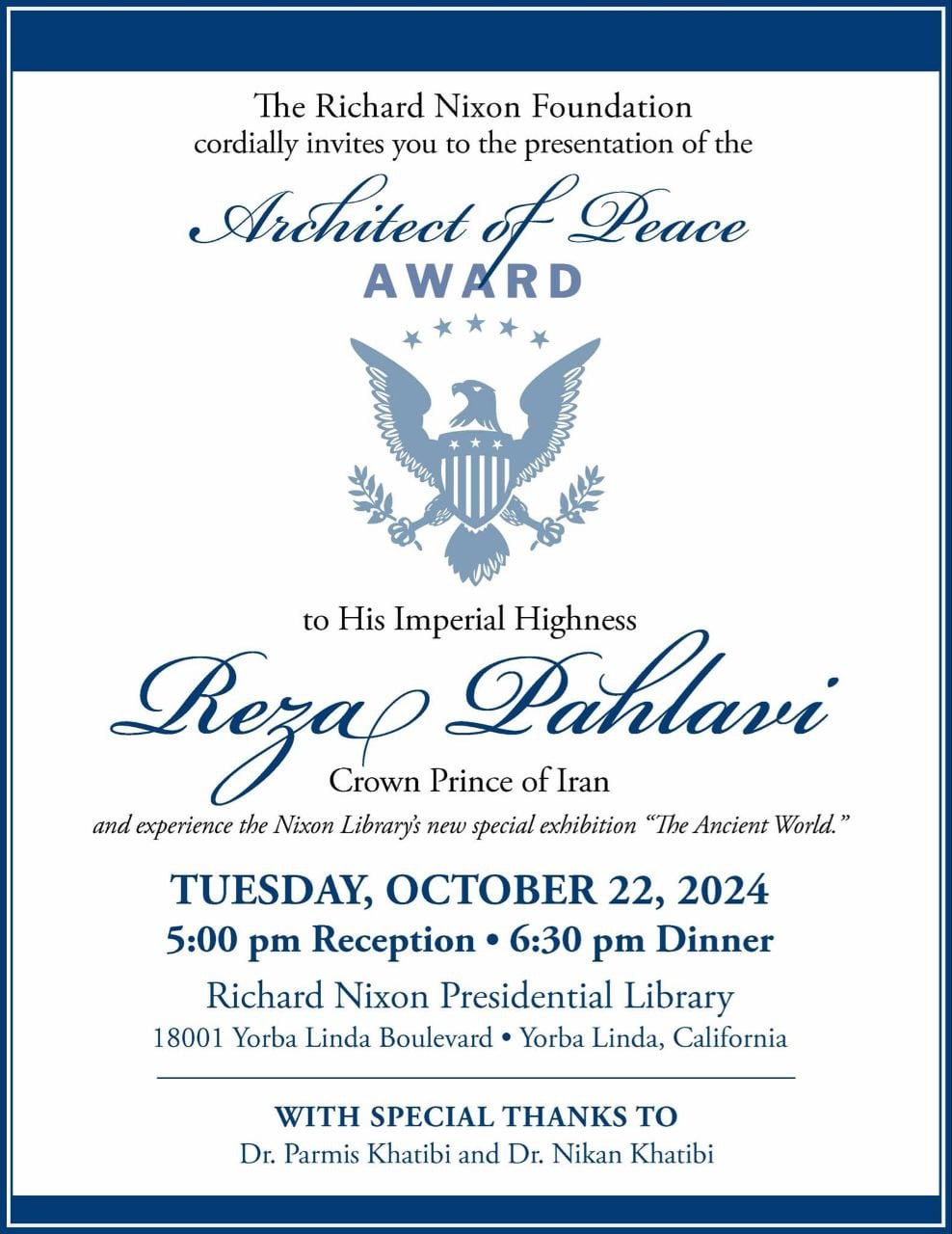
The HRH Pahlavi and Iran’s Path to Regime Change
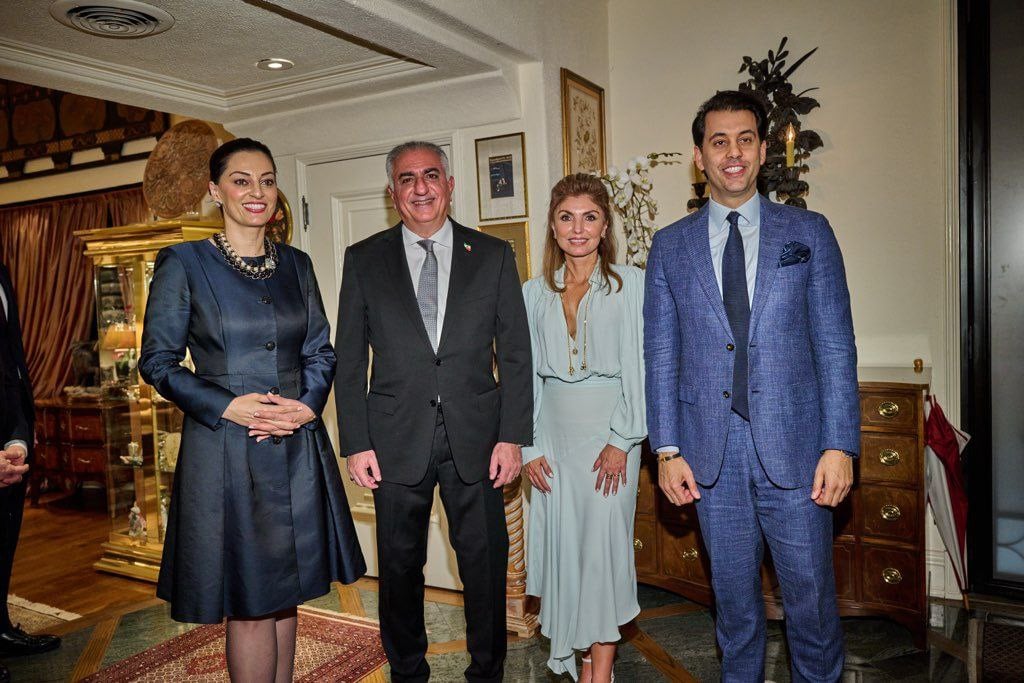
The Middle East teeters on the brink, awash with tumult and transformation. Across this vast region, seismic shifts and cunning power plays unfold, shadowed by the specter of brutal terrorism. Terrorists and warmongers alike tremble at the prospect of losing their grip on power to the clamor of wars or the surge of popular uprisings. Khamenei’s perilous wager, his dance with a transnational network of terror, has thrust the Middle East onto this treacherous precipice of change—a change far removed from any he had dared to dream or dictate.
At the very heart of these upheavals stands the Islamic Republic of Iran—a regime teetering on the brink of legitimacy, feeble yet bellicose, without the anchor of popular support. This rogue regime, birthed from a volatile concoction of terrorist, leftist, and Islamic ideologies, has derailed the venerable train of Iranian civilization. Today, amidst the ruins, delusional and narrow-minded souls dare to concoct remedies for the same shattered Iran
Clearly, the mullah’s regime in Iran casts a long, sinister shadow, its tendrils deeply entwined with mafia-esque terrorist factions. This dark alliance drags the lands of Iraq, Syria, Yemen, Lebanon, and beyond beneath the suffocating veil of the Shia Crescent, asserting dominance over the Middle East with a blend of terror and archaic superstitions. Yet, this perceived reality is but a facade.
The contemporary world has awakened to the stark reality that the beleaguered and shadowed people of Iran harbor no yearnings for war, chaos, or ruin. Meanwhile, the entrenched regime in Tehran languishes in its deluded fantasies, recklessly depleting Iran’s wealth and natural endowments for over four decades, utterly disregarding the will of its citizens. It has become apparent that the mullahs maintain their grip on power through the insidious tools of terror and oppression, ensnaring Iranian society in a relentless stranglehold. Amidst the global cacophony, oblivious and grandiose politicians blur the lines, mistakenly conflating the Islamic Republic with the Iranian populace. Yet, the truth diverges sharply from this narrative.
The modern world has come to recognize the tale of 1953 and the alleged U.S. meddling as a disingenuous and disgraceful fabrication, endlessly parroted. A populist, in a bid to extend his tenure, plunged the nation into turmoil, pushing it into the welcoming arms of the Russians, while silencing the press and dissolving the parliament, thereby ushering the nation toward economic ruin. Ever since, indebted leftists have perpetuated the myth of a U.S. and CIA-engineered coup, portraying the populist as a champion elected by the people—yet, curiously, the details of any public election referendum have faded into obscurity.
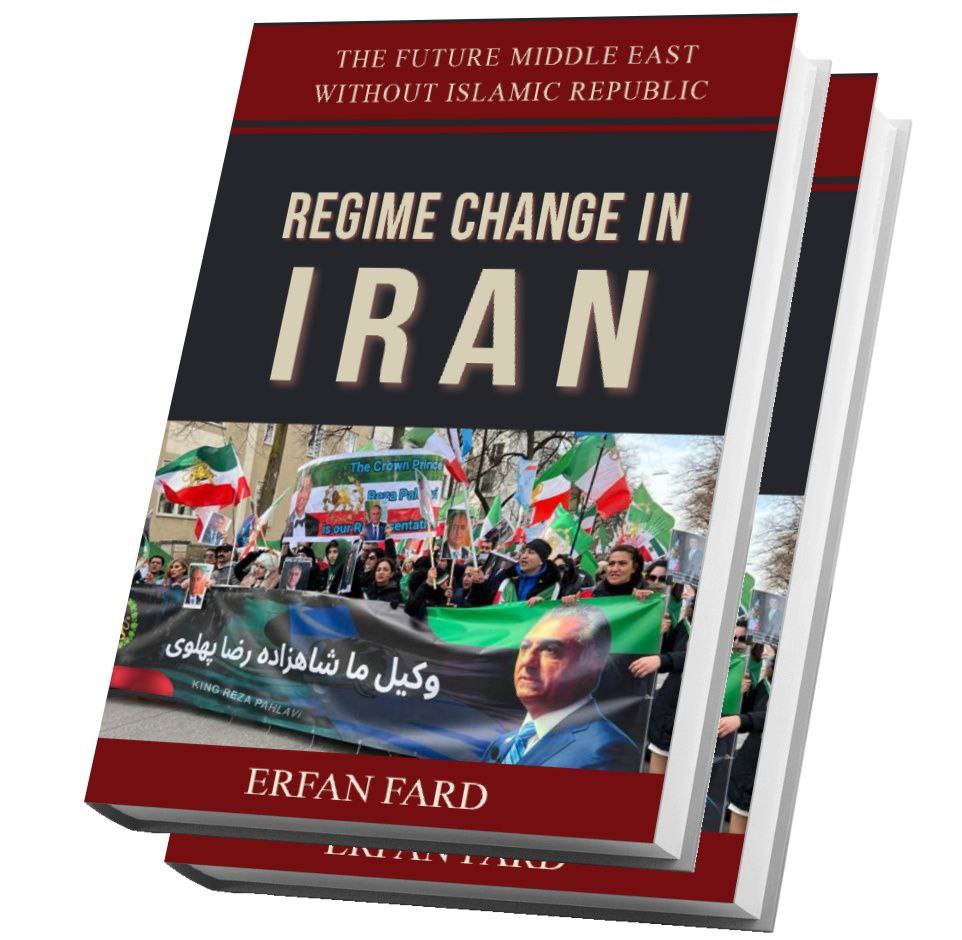
The forces shaping Iran’s internal evolution and profoundly transforming its domestic and international stances do not stem from the tightening noose of economic sanctions. Instead, it is the slow and systematic dismantling of Tehran’s sprawling network of Islamic terrorism, meticulously disarmed piece by piece by Israeli counter-terrorism efforts. Should the trigger mechanism be engaged against Tehran’s faltering, indebted regime, this decline will only hasten.
The global community has come to recognize that Israel was not the instigator of the catastrophic conflicts, nor did it marshal terrorist factions around Iran. Israel has not ignited the Middle East with the incendiary doctrines of Khomeinism. Rather, it is the bellicose Shia mullah, culpable for a myriad of crimes against humanity and civilization, who orchestrates daily machinations in Yemen, Syria, Iraq, and Lebanon against Israel. At the helm of this sinister agenda is a relentless, merciless figure, a vindictive opportunist named Khamenei, committed to the ruin of Iran and the broader Middle East.
Yet, amidst these intricate convolutions in the Middle East, the direct face-off between Khamenei and Netanyahu has profoundly agitated the world’s powers. On one side, there is the relentless drive of warmongering and regional terrorism, coupled with the palpable dread of the mullahs’ downfall in Tehran; on the other, stands Israel’s unwavering resolve to confront the malevolence of Islamic terrorism tied to the IRGC thugs. Together, these dynamics are steering the region towards sweeping, irreversible changes.
Furthermore, it is beyond doubt that the sovereign states of the Middle East, having endured the malignant blight of the Shia Crescent for nearly half a century, harbor no desire to see the Islamic Republic of Iran’s belligerent and ruinous influence widen. Despite enduring relentless harassments, interventions, and threats from Tehran, these nations are now earnestly probing for truths and striving for substantial shifts in their foreign policies—a quest aimed at liberating themselves from the prolonged affliction wrought by the Islamic Republic’s four-and-a-half decades of dominance.
Herein lies a shared vision among the peoples of Iran and the broader Middle East, a united call for the overthrow of the mullahs’ regime to reclaim the serenity, stability, and harmonious coexistence that once graced this ancient cradle of civilization—a region steeped in history, where, it is said, some 124,000 prophets once walked, bearing messages from the divine.
It is a striking and unexpected revelation in today’s world: Iranian society finds a grim satisfaction in the humiliation and downfall of the despised and isolated regime of the mullahs. Viewing the lunatic and criminal mullahs and the IRGC terrorist thugs as more nefarious than ISIS and al-Qaeda, Iranians harbor 45 years of vivid, painful memories of the regime’s brutalities. For nearly half a century, through flesh, skin, and bone, they have endured the oppressive yoke of religious tyranny – Theocracy, cursed by the darkness of an Islamic caliphate under the Guardianship of the Islamic Terrorist Jurist.
Iranian society, while gratified to witness the mullahs’ regime tremble at the prospect of an Israeli strike, harbors a deep-seated worry and anxiety about what lies ahead. Amidst this desolate landscape of dread, they spy a faint glimmer of hope—a beacon in the form of Crown Prince Reza Pahlavi. He stands ready to guide the wounded, the afflicted, and the downtrodden through the treacherous journey towards democracy, paving the way for a new era after the fall of the regime.
The tangled web spun by the uncivilized, cowardly, and malevolent mullahs is unraveling at last. While the people of Iran yearn for a peaceful and bloodless transition, the Shia mullah masquerades as the earthly envoy of a mythical and fabricated figure, the Imam Zaman, positioning himself as a divine representative. This web of lies, deception, and superstition is a clear harbinger of their desperate intent to incite a bloodbath and civil war. Yet Khamenei, in a final act of defiance reminiscent of Yahya Sinwar‘s last desperate throw of his walking stick, deploys his last terrorist, his last bomb, and his last missile in a futile display of warmongering, driven by a foundation of enmity, folly, and savagery.
Nevertheless, we stand at a pivotal juncture in Middle Eastern history. Yet, at the heart of this transformative era, the 65-year-old crown prince emerges as a beacon of peace and democracy for Iranians. Just as the 20th century saw the demise of Nazism, Communism, and Apartheid, so too will the 21st century bear witness to the downfall of Khomeinism and the scourge of Islamic Terrorism.