The Husk, the Spark, and the Critic’s Shadow, Part I
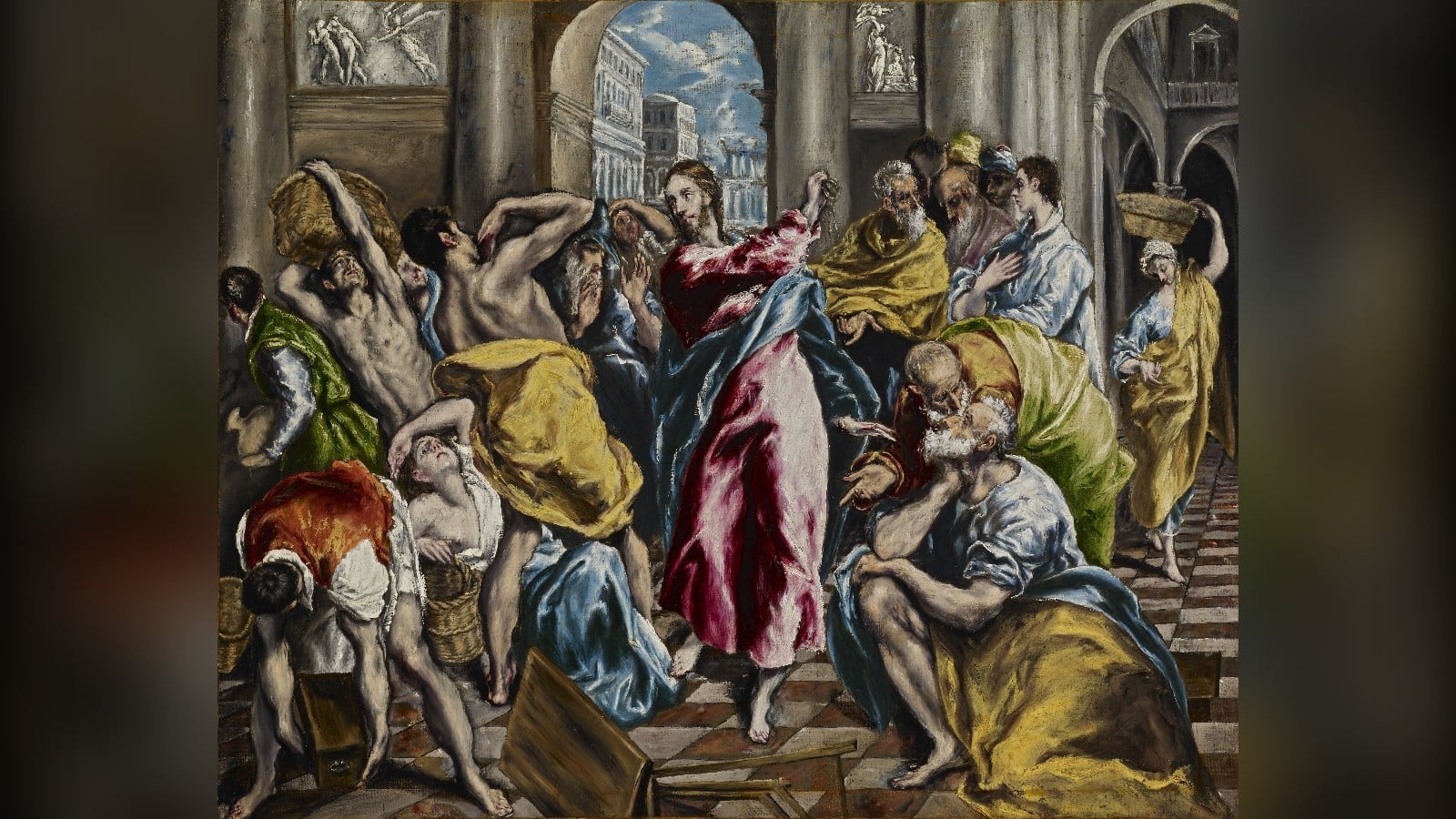
FRUM: Fil Rishes un Veynik Mitsves
I. A Joke with an Etymology
There is a Yiddish joke that reads FRUM as an acronym: fil rishes un veynik mitsves, much wickedness and few commandments. Like the best Yiddish jokes, it is a theology compressed into a wince. It is told by the pious about the pious, and that is why it bites.
The word itself sharpens the joke. Yiddish frum and German fromm descend from Middle High German vrum: useful, capable, good of benefit. Behind that stands Old High German fruma, advantage, profit [1]. The word first described what a person was for another. Only later did it come to name a religious manner: a way of dressing, praying, keeping, and being seen to keep.
That drift is the subject of this essay. A word that once pointed outward now points inward. The good that was for another has become a property of the self, displayed and defended. The acronym does not invent a contradiction. It names what happens when vrum curls back on itself.
I want to begin honestly. Frumkeit troubles me. Not the law, not the discipline, not the long beauty of a life shaped by commandment. What troubles me is a certain quality of piety I have met many times and recognized at moments in myself: a piety that knows too much, guards too much, and loves too little. I want to understand that discomfort before I trust it. The tradition, it turns out, has been asking the same question for two thousand years.
II. The Talmud’s Diagnosis
The Mishnah (Sotah 3:4) [2] lists those who “wear out the world.” Among them are the chasid shoteh, the foolish pious man, and the makkot perushim, the blows of the separatists. The rabbis did not locate the danger to the world only in the wicked. They located it in a certain kind of devotion.
The Gemara defines the foolish pious man in a single image (Sotah 21b) [3]. A woman is drowning in a river. He says: it is not proper for me to look at her. And he lets her drown. Nothing in his act is insincere. He is protecting something he truly holds sacred. That is exactly the horror: his piety is real, and it is aimed at his own purity rather than at the person in the water.
Sotah 22b [4] then offers a typology of seven perushim. There is the shikhmi, who carries his commandments on his shoulder where they can be seen. There is the nikpi, who shuffles his feet in performed humility. There is the kizai, who bloodies his head against walls rather than risk seeing a woman. There is the one bent double like a pestle. There is the one who asks, “What more is my duty, that I may do it?” as if he had completed all the rest. Only the last two are genuine: the one who serves from love and the one who serves from fear.
The most terrible text is Yoma 23a [5]. Two young kohanim race up the ramp of the altar, and one stabs the other. While the boy still convulses, his father declares that the knife has not yet become impure. The Gemara draws the conclusion without softening it: the purity of the vessels weighed more with them than the shedding of blood. Here the category has fully replaced the human being.
The Yerushalmi names the mechanism behind it (Nedarim 9:1) [6]: “Is what the Torah forbade not enough for you, that you seek to forbid yourself other things?” Stringency becomes a private competition with God, and the competitor is always the self.
I read these texts through Erich Neumann’s Depth Psychology and a New Ethic (1949) [7]. Neumann argued that the “old ethic” seeks perfection. It achieves it by suppressing whatever does not fit the ideal, identifying with a righteous persona, and projecting the rejected material onto an outer scapegoat. The “new ethic” seeks wholeness instead: it requires a person to recognize and carry his own shadow.
Frumkeit is the old ethic in its purest religious form. The frum persona is a garment of light, and fil rishes is not hypocrisy in the ordinary sense. It is the shadow that the persona produces. The more completely the self identifies with its purity, the more darkness must be pushed somewhere else. The chasid shoteh needs the drowning woman to be the danger so that he can remain clean. The kizai’s bleeding forehead is the visible wound of a battle fought entirely inside himself, displaced onto the wall. Read this way, the seven perushim are not a list of frauds. They are a catalogue of defenses.
III. The Border of Law and Conscience
Where does halakha end and morality begin? The tradition gives several answers. They do not fully agree, and the disagreement is instructive.
The first answer is that ethics comes before the law. “Derekh eretz preceded Torah” (Vayikra Rabbah 9:3) [8]. R. Yochanan says that had the Torah not been given, we would have learned modesty from the cat, honesty from the ant, and fidelity from the dove (Eruvin 100b) [9]. Revelation does not create the moral sense. It presupposes it, addresses it, and refines it.
The second answer is that the law points beyond itself. Ramban [10], on “You shall be holy” (Lev. 19:2) [11], warns that a person can be a naval birshut haTorah, a scoundrel with the Torah’s permission, keeping every rule while living coarsely. On “You shall do the right and the good” (Deut. 6:18) [11], he explains that no code can anticipate every situation. So the Torah added a general command to do what is upright beyond the enumerated laws. The law is deliberately unfinished, and it hands the remainder to conscience.
Bava Metzia 83a [12] turns this into a story. Porters break Rabbah bar bar Chanah’s barrels, and he takes their cloaks as compensation. Rav orders him to return the cloaks. Then the porters say they are poor, have worked all day, and are hungry. Rav orders him to pay their wages. Rabbah asks, “Is that the law?” Rav answers, “Yes,” and cites Mishlei 2:20 [11]: “that you may walk in the way of the good and keep the paths of the righteous.” Going lifnim mishurat hadin, inside the line of the law, becomes the law.
The negative image is Bava Metzia 30b [13]: Jerusalem was destroyed only because its people judged by Torah law, standing on the strict din and never going beyond it. The catastrophe did not come from transgression. It came from correct observance without mercy.
The third answer concerns purpose. “What does the Holy One care whether one slaughters from the throat or from the nape? The commandments were given only to refine human beings” (Bereshit Rabbah 44:1) [14]. Makkot 23b–24a [15] compresses the 613 commandments into David’s eleven, Isaiah’s six, Micah’s three, and finally Habakkuk’s one: “the righteous shall live by his faith.” Hillel’s “what is hateful to you, do not do to your fellow” (Shabbat 31a) [16] belongs to the same impulse. If observance coarsens the one who observes, something has gone wrong with the observance.
Modern Jewish thought made the question explicit. Aharon Lichtenstein asked whether Jewish tradition recognizes an ethic independent of halakha (1975) [17]. His answer was yes and no: an ethic beyond the formal din exists, but it lives inside the halakhic universe as lifnim mishurat hadin, not outside it as a rival authority.
Yeshayahu Leibowitz [18] took the opposite line with ferocious consistency. For him halakha has no moral foundation and serves no human need. Its worth lies precisely in being service of God and not of man; a religion justified by ethics is, to him, the worship of humanity. His model is the Akedah. But Leibowitz has no defense against Yoma 23a [5], and the Torah itself gives another model: Abraham at Sodom, demanding, “Shall the Judge of all the earth not do justice?” (Gen. 18:25) [11]. The same Abraham who binds Isaac argues with God for strangers. The tradition keeps both scenes and refuses to let either swallow the other.
Rav Kook gave the clearest rule I know. It is forbidden, he wrote, for yirat shamayim, fear of Heaven, to push aside a person’s natural morality, for then it is no longer pure fear of Heaven [19]. The sign of its purity is that natural morality grows and rises through it. By this measure the father on the altar ramp was not too pious. He had stopped being pious at all.
IV. Husk and Spark
So far, the argument has run along a familiar line: form against heart, letter against spirit, frumkeit as the corruption of piety. Lurianic Kabbalah does not allow that line to stay so clean.
In Luria’s myth [20,21], the first vessels shattered because they could not hold the light poured into them. The shards became kelipot, husks. But a husk is not simply the enemy of holiness. It cannot live on its own. It survives only because a spark of the original light is trapped inside it and feeds it. Evil, in this system, is parasitic on the holy. The work of the world is birur, sifting: releasing the spark so that the husk, deprived of its life, falls away.
Applied to frumkeit, this changes the verdict. Frumkeit is not counterfeit piety. It is real light held in a husk. The man on the riverbank truly fears God. The father on the altar ramp truly loves the Temple’s purity. That is why the husk is so durable: it lives on something genuine. To discard frumkeit wholesale would be to throw away the spark with the shell. The task is tikkun, not contempt.
Luria offers a second distinction. The world of Tohu, chaos, had great lights and weak vessels, and it broke. The world of Tikkun, repair, is built differently: from partzufim, faces, configurations that stand in relation to one another. Here two kinds of failure appear.
- Formless spirituality is a failure of Tohu: immense light, no vessel able to bear it. It floods, exalts, and shatters.
- Frumkeit is the opposite failure: a vessel grown so rigid and self-enclosed that it no longer receives light at all.
Authentic piety, in the language of Tikkun, is neither vessel alone nor light alone. It is face.
The Lurianic texts [20] describe the divine configurations as standing either achor be’achor, back-to-back, or panim be’panim, face to face. This is the most exact image I have found for the border between law and conscience. In frumkeit they stand back-to-back. Each faces outward, each guards its own frontier, and they never look at one another. In true piety they turn. The commandment investigates the face of the human being it addresses, and conscience investigates the face of the commandment that formed it.
Jacob names the place where he wrestled Peniel, “for I have seen God face to face, and my life was preserved” (Gen. 32:31) [11]. He comes away limping. The face is not a comfortable place to stand. But it is the only place where piety stays alive.
The Zohar puts the same insight in its own terms (III, 152a) [22]. The Torah’s stories are its garment, the commandments are its body, and within the body is its soul. Fools see only the garment. The wise look at the body. The wisest look at the soul. Frumkeit mistakes the garment, or even the body, for the whole. Yet the Zohar never suggests the soul walks naked. It needs its body, as the spark needs its vessel. The aim is not to undress the Torah but to see who is wearing it.
Part I of a three-part series. References appear at the end of Part III.