Nonprofit Parasha - Leadership, Philanthropy & Community
The Impact of Aliyah, Then Like Now
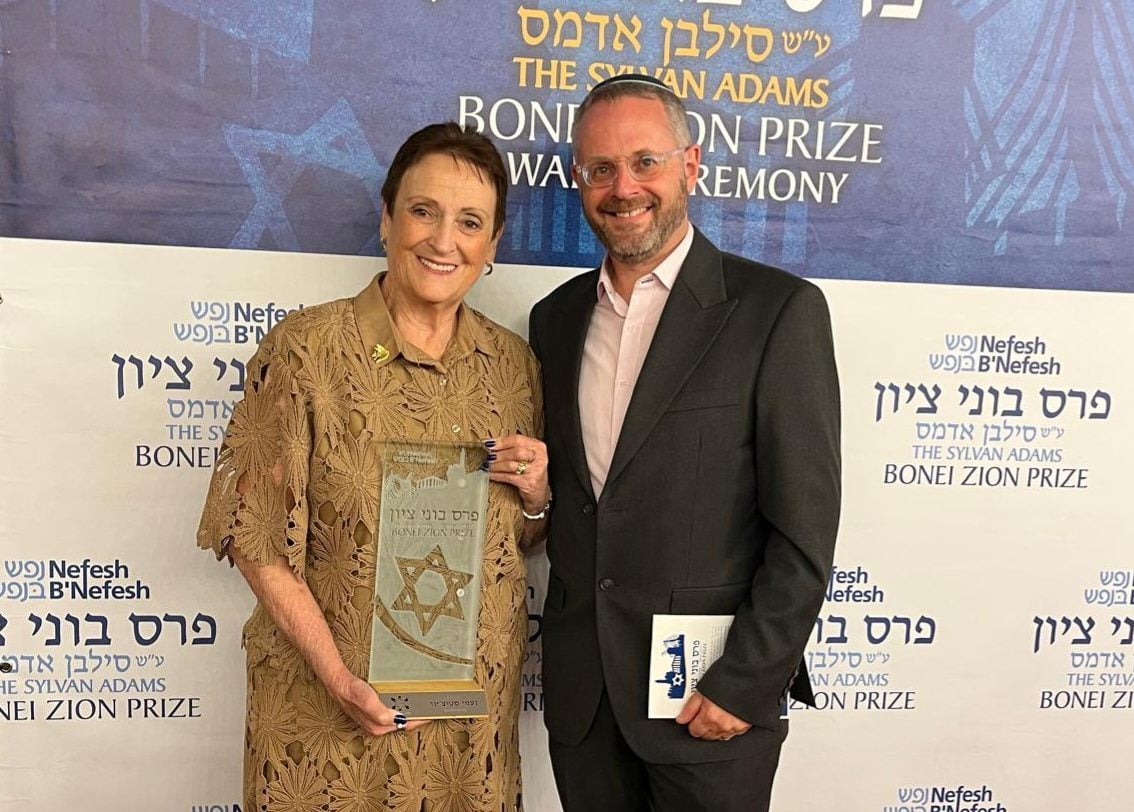
Naomi Stuchiner, founder of Beit Issie Shapiro with Michael Lawrence, Chief Partnerships Officer (Courtesy)
My great-great-grandparents Yehoshua and Esther Zabludovsky made Aliyah from Zabludow (now in Poland) to Jerusalem in 1889.
My great-grandfather Yosef Kaluzna came from Zhmerynka (now Ukraine) via Manchester, England in 1913 and settled in the Galilee.
There, Yosef met Mina Zabludovsky and my grandfather was born to them in 1919 in Jerusalem, where all my children would be born, starting 85 years later following my Aliyah in 2000.
“Go for yourself, from your land, from your relatives, and from your father’s house”.
God’s instruction was for Abraham to do this for himself – Lecha Lecha – for your own benefit, the suggestion that leaving “to the land that I will show you” will be, or should be good for him.
It came with heavenly promises – “I will bless you, and make your name great, and you shall be a blessing”. On entering the land Hashem appeared and promised further – “To your offspring I will give this land”.
The look of the Aliyah journey has changed dramatically over the millennia but Jewish people have continued to walk in the footsteps of Abraham, seeking out a new beginning, spiritual enrichment, a safe haven from antisemitism, a release from poverty and disease or the fulfilment of the promises and dreams of generations.
The journey and the settling into a new home and culture is dotted with challenges and unexpected turns, as a collective and each person in their own lives. Abraham and Sarah’s aliyah was no different, themselves facing famine early on, thus leaving the Land of Canaan again for a period. Family tension over possession and ownership, war and military campaigns against mighty nations, struggles around pregnancy, competition between wives and siblings…
This past Sunday, on Aliyah Day marked on the 7th day of Cheshvan in Israeli schools, Aliyah organization Nefesh B’Nefesh hosted its now annual Sylvan Adam Bonei Zion (Builders of Zion) Prize Ceremony in Jerusalem.
The special nature of modern-day journeys home to Israel were highlighted this year in the stories of eight award recipients who were born in English-speaking countries and put their futures in with Israel.
Like Abraham then, these olim could not have known what lay ahead for them and the needs and challenges that they would be blessed to mold into opportunities and impact – in Torah learning, sports, diplomacy, leadership, science, medicine, agriculture, resilience, defense, social change and inclusion.
I was privileged to celebrate there with Naomi Stuchiner, the founder of Beit Issie Shapiro and with whom I’ve partnered for the past six years in our development and scaling of educational, therapeutic and programmatic innovations to enhance the lives of people with disabilities, and most recently with seriously wounded Israeli veterans.
For me, the remarkable contributions of immigrants to this country was encapsulated from what I heard this week from Rabbi Efrem Goldberg of Boca Raton Synagogue this week as he spoke to the commentaries of Rabbi Shaul Alter on the Abraham’s journey.
“Says God to Abraham – I’m not giving you the destination. I’m not telling you the date. I’m not telling you when, where or how… Come on the journey and know I’m by your side… And trust me, we’re going to get to the promised land, whatever the promised land is for you because the promised land is not the same for everyone… Hashem says ‘I’m not giving you the destination, just like Abraham… the reward for waiting is when you don’t know, when it’s unresolved, when it’s uncertain, and you don’t have clarity but you still have confidence… you can’t begin to compare taking a step when you don’t know where you’re going and taking a step when you know exactly where you are doing”.
Parashat Lech Lecha coming alive, in a week where we marked the contribution of those who left their homes, unsure of what life in Israel would bring but navigated their way to make game-changing, life-changing contributions to Israel, the Jewish people and humanity as a whole.
In the footsteps of Abraham and Sarah.
Related Topics
Related Posts