Life Member, Hadassah Louisville, Hadassah Writers' Circle
The Importance of Judaism, Music and History in My Life
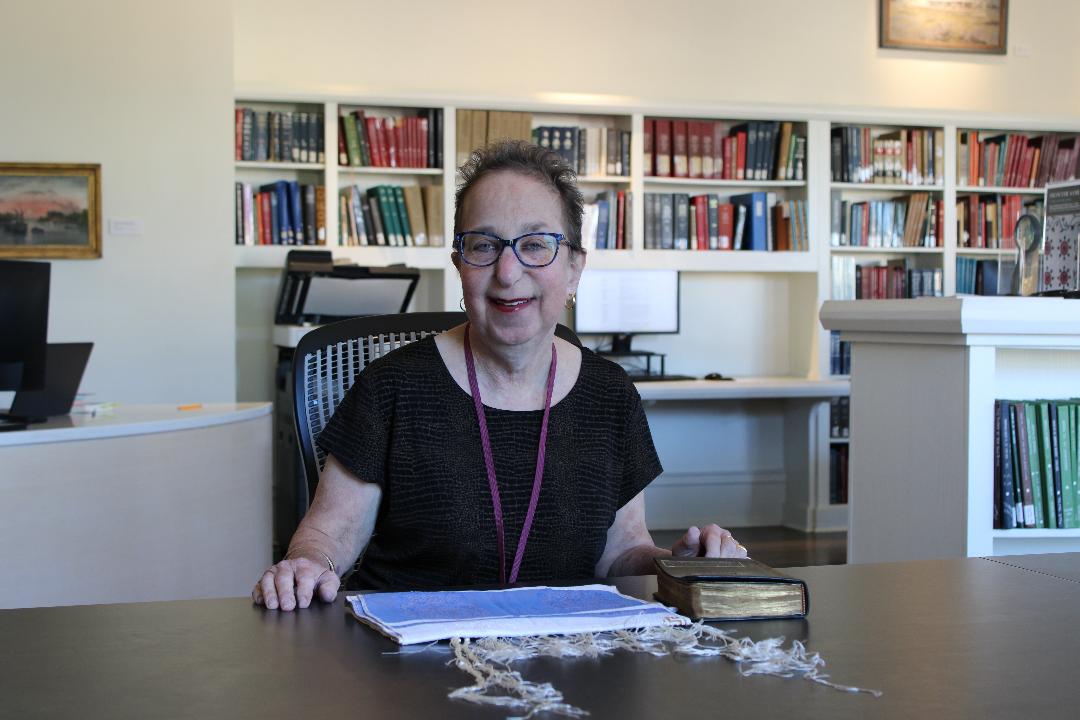
The author at Filson Historical Society. Photo courtesy of the author.
Judaism, music and history have been three important components of my life since childhood. They reflect my academic training, current and past jobs and the passions that define me.
Judaism is very much a part of my soul, my n’shamah. Whether it is attending a religious service, speaking a bit of Hebrew or Yiddish, watching a Jewish comedy or even simply eating bagels and lox, I love our entire Jewish culture.
Part of the reason for my philosemitism is the endurance and perseverance of our people. Much of Jewish life exists because of and in spite of the adversity we face, including so much that is happening right now.
For millennia, we have met those challenges head on, often with humor and wit. My personal involvement with Judaism through the course of my life includes being a regular shul (synagogue) goer, singing in two synagogue choirs and directing another choral group. In addition, I spent many years going to Hebrew School, Hebrew High School and Jewish camps (both day and sleepaway) and I have visited Israel.
On the flip side, I have been a musician since the age of seven and I have never stopped. My primary instrument is the piano; I play and love all styles of music, though I am classically trained. I also sang and played guitar and violin, although the latter instrument not so well. When I came home from college with my violin and began playing, my dog gave me a dirty look and left the room!
I have three degrees in different aspects of music: composition, theory and music history. I truly love everything about music — the variety of sonic combinations, the possibility of listening by oneself or in a packed concert hall and, especially, the myriad ways that music can make us feel!
If you are having a bad day, the right type of music can turn your mood around, or it can effectively say, “I feel your pain. You are seen.” When I was a child, my mother knew what kind of a day I had from the type of music I played when I came home from school. Sometimes, it was Grieg’s Piano Concerto in A Minor – a loud, raucous piece with dense chords and lots of notes. When I played that work, my mother knew it had been a rough day, and she gave me some much-needed space. In the meantime, performing that piece helped me work through some of my heightened emotions and calmed me down.
When one shares music with other people, it can be an effective communal communicator. No matter the genre, be it classical, rock, pop or jazz, experiencing music together creates an unspoken emotional bond among audience members. I have laughed, cried and sighed in numerous concert spaces throughout my life. Music is as much a part of the fabric of my essence as Judaism.
I came to love history a bit later than the other two. I had always enjoyed social studies in elementary school, but it was not until my sophomore year of high school that it occurred to me what an important tool history could be. I took general history courses as an undergraduate student, but it was when I became a PhD student in music history that I realized also how enjoyable history could be. We all know Santayana’s famous quote, “Those who cannot remember the past are doomed to repeat it.” All of us would do well to heed those words – especially right now. History is more than great stories, although it certainly has those. It has the potential to connect us to our heritage, to remind us of who we are and what we stand for.
It made perfect sense for me to combine these three passions of my life—Judaism, music and history – in my PhD dissertation, where I examined the important influence that Leonard Bernstein’s childhood synagogue, Mishkan Tefila, had on his life and music. I frequently give talks and write articles about this topic.
Leonard Bernstein, as you may know, was a polymath musician who was the conductor of the New York Philharmonic Orchestra while composing, playing piano and also serving as a professor and television personality, philanthropist and activist. Unfortunately, I never had the opportunity to meet him, although I came close. He was a scholar in residence at Indiana University in the 1980s, just a semester before I arrived there to pursue my bachelor’s degree in music composition.
For over three decades, I was an adjunct professor of music at a regional campus of Indiana University, teaching piano, music history and music appreciation. I told people that I got paid to talk for a living, which is ironic because, growing up, my report cards frequently noted that I talked too much! The small class sizes at this institution were great because they not only allowed me to get to know my students’ writing, but also, more importantly, to work with them as individuals.
Despite the joy that teaching brought me, after multiple decades in academia, I began to grow a bit restless, to have shpilkes (nervous energy). In our post-COVID19 world, so much had changed, and the classroom experience no longer brought me the same nachas (sense of pride and enjoyment) that it previously had.
Just over two years ago, I saw a job posting for a curator of Jewish collections. It was from the Filson Historical Society in Louisville, Kentucky, where I reside. The job seemed tailor-made for me — it had all of the best parts of the professorate and none of the less-fun aspects: no syllabus preparation, no test creation and grading and no emails from students inquiring as to what would be on the upcoming exam! I still get to talk to people for a living by giving presentations and hosting programs, and my audience is consistently interested in what I have to say. Also, there is not too much weekend work, except for the occasional event.
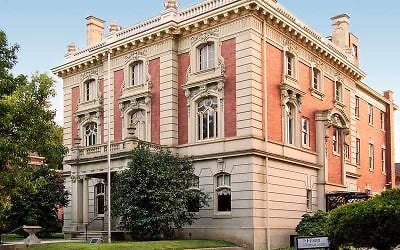
This position is every professor’s dream! It is not hyperbolic to state that this job has been lifechanging! And I am fortunate to work with an amazing team of intelligent, kind and funny individuals.
Judaism is obviously central in this job—through our growing collections (the Jewish Community Archive), programs (I am responsible for four per year) and general outreach in the city. I get the opportunity to speak about Judaism and local Jewish history, topics near and dear to my heart. I converse with a variety of Jewish and non-Jewish groups, frequently donning my professorial “hat” in the process—once a teacher, always a teacher!
Music is part of my job at the Filson, too. For example, last year, to commemorate the 80th anniversary of the end of World War II and the Holocaust, three of our local arts companies – the ballet, the orchestra and the opera – held performances relating to this topic. I worked with each of them to present parallel events at the Filson, wrote program notes and offered to host talk backs.
One of my favorite parts of the job is digging into old boxes of people’s treasures, learning about their family history and lore. I feel honored to be entrusted with someone’s important papers and possessions and I have had the opportunity to meet some very lovely and interesting people.
I am very fortunate to have been granted a “Second Act” that I love, which allows me to combine my three passions. I have no delusions of grandeur that I am employed in a profession that cures cancer, solves world hunger or brings peace. Indeed, our planet is a pretty scary place right now.
However, a dictum from Pirkei Avot (Ethics of the Fathers) cautions us, “You are not obligated to complete the work, but neither are you free to desist from it.” In other words, just because the world is broken and the task is quite large, we are not free to sit around doing nothing! Placing this maxim in the context of Hadassah’s mission of tikkun olam (repairing the world), everyone has a gift to offer. Even small gestures make a difference.
In future columns, I will share more about the Filson Historical Society, offering a deeper dive into my position as the curator of Jewish collections and the Judaica in several of our holdings, as well as topics on Jewish music, writ large, including renowned Jewish composers such as Ernst Bloch, one of our most prolific.
I also look forward to sharing more personal stories about directing congregational choirs, composing Jewish music and serving as a Temple musician for over three decades.
The author does not speak on behalf of Hadassah and the views expressed herein are the author’s own and not necessarily those of Hadassah.