


Mathematics Teaching Professor, Author
The Jewish Museum of Buenos Aires: A Journey Through Jewish Heritage
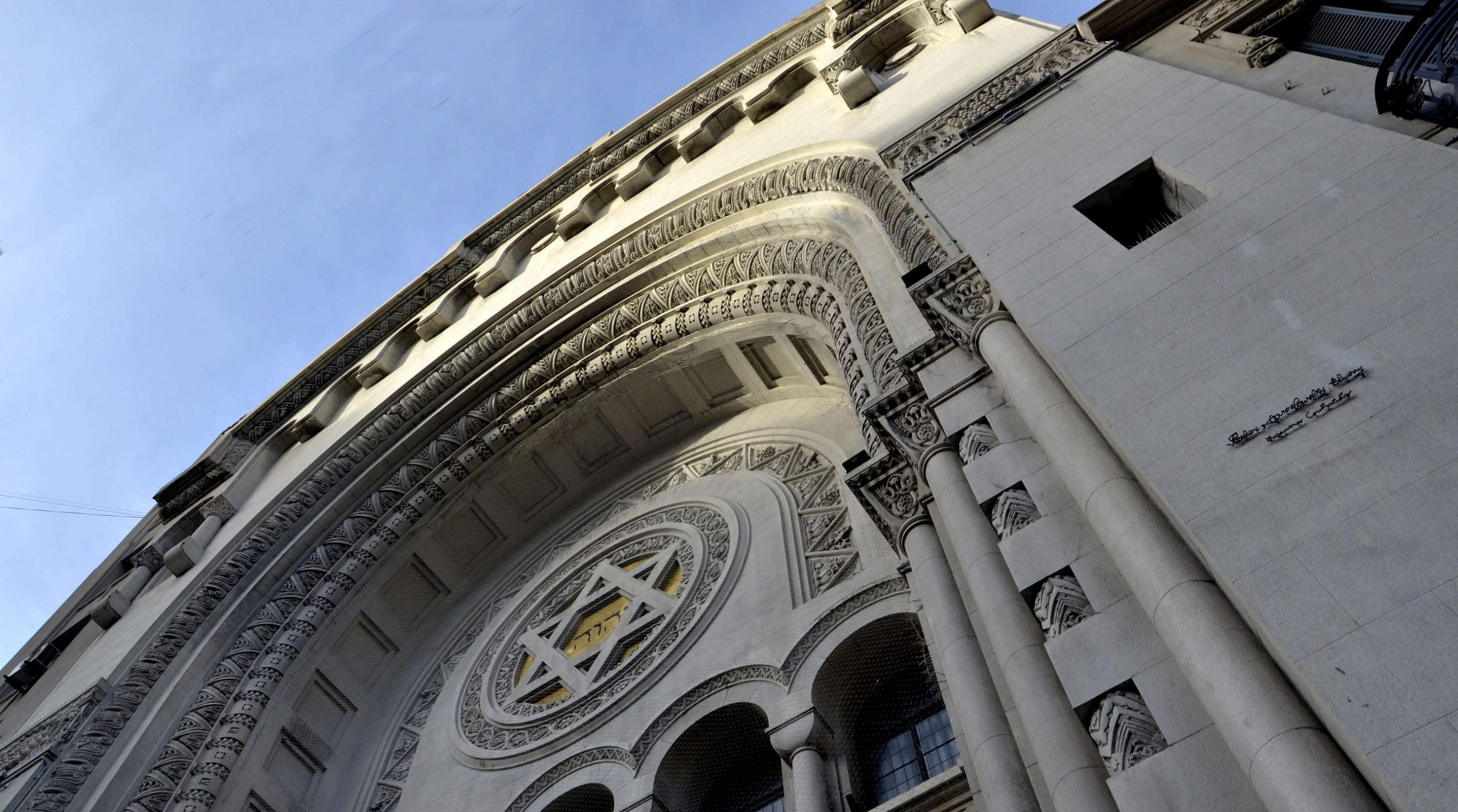
Jewish Museum of Buenos Aires (Source: Jewish Museum of Buenos Aires)
Located in the historic Jewish quarter of Buenos Aires, the Jewish Museum of Buenos Airesstands beside the emblematic Templo Libertad, declared a National Historical Monument in 2000. Together, they offer visitors a glimpse into both the history and living traditions of Argentina’s Jewish community.
The Museum traces Jewish immigration to Argentina, the rural colonies established by immigrants, and the traditions that have shaped Jewish life in the country. Its collection brings together material and intangible heritage, including Torah scrolls and ornaments, ritual objects, life-cycle traditions, institutional records, passenger lists, letters, photographs, and everyday objects.
Together, The Jewish Museum and Templo Libertad are a node of Fundación Judaica, a broader network of Jewish organizations that includes synagogues, Hebrew day schools, and other community institutions.
A visit to the Museum can therefore include access to Templo Libertad, one of Buenos Aires’ emblematic buildings, offering a deeper understanding of the community and traditions represented throughout the Museum.
I would like to thank the esteemed Delfina Averbuj, from the visitor center and education department, and Dr Tammy Kohn, Director & Chief Curator, for their support and guidance.
Museum: The 4 Galleries
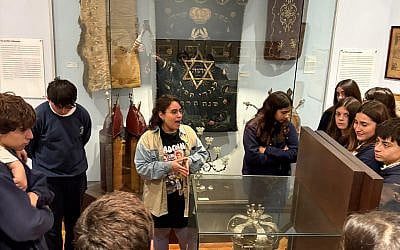
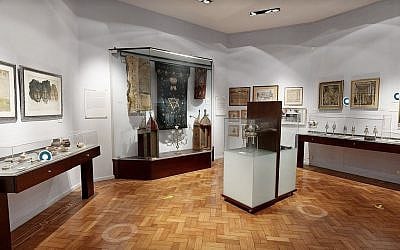
The permanent exhibition is organized into four galleries: the Gallery of Books, Being Jewish, Immigration, and Jewish Holidays.
Gallery 1: Gallery of Books
The Gallery of Books focuses on the Torah, the central symbol of Judaism, along with the Tanakh and Talmud. It highlights Jewish traditions of learning, debate, and interpretation, as well as different ways of protecting Torah scrolls, such as the tik and decorated fabric covers.
The gallery also features historic Jewish books and paintings about religious life. Pedro Roth, known as a “Guardian of Memory,” is represented by Rabinos. His works explores Jewish tradition, memory, and the Holocaust, connecting Jewish history with contemporary art.
Gallery 2: Being Jewish
The “Being Jewish” gallery explores Jewish identity through family, community, traditions, ritual objects, and important stages of the Jewish life cycle. It includes ancient coins from the Maccabean and Second Temple periods, as well as Torah ornaments such as rimmonim, a yad, and Torah binders. The gallery showcases the life cycle from birth and naming to Bar and Bat Mitzvah, marriage, and death, reflecting on how Jewish traditions are practiced throughout life.
The gallery also features Argentine artists Mirta Kupferminc and Yente, whose works connect Jewish identity with memory and family history. Kupferminc’s Sobre tu brazo, sobre tu frente depicts her son at his Bar Mitzvah wearing a tallit, tefillin, and kippah. Yente’s collages depict a Menorah and a Torah with golden painting and discarded materials. Together, the objects and artworks show how Jewish identity is preserved through rituals, family memories, art, and traditions passed from one generation to the next.
Gallery 3: Immigration Gallery
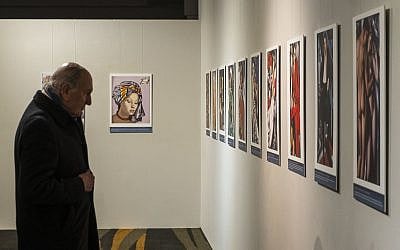
The Immigration Gallery explores the arrival of Jewish immigrants in Argentina, many of whom fled persecution and pogroms in Eastern Europe during the late 19th century. Argentina attracted immigrants with policies that encouraged European settlement. This gallery features Mauricy Minkowski’s Immigrants, which portrays Jewish families leaving Europe, and a replica of the steamship Wesser, which brought hundreds of Jewish immigrants to Argentina in 1889.
The gallery also highlights the creation of Jewish rural colonies, including Moises Ville, and the development of Jewish communities, schools, synagogues, newspapers, and cultural organizations. Yiddish books and objects, such as a Yiddish typewriter and schoolbook, show how Jewish and Argentine cultures became connected.
At the end of the gallery, there are works by avant-garde Jewish artists such as Noemi Gerstein’s bronze menorah and Gyula Kosice’s luminous sculpture, which show the integration of the immigrant and upcoming generations into Argentine society and culture.
Gallery 4: Jewish Holidays
The final gallery, “Jewish Holidays,” presents ritual objects connected to major Jewish holidays and traditions, including Hanukkah, Purim, Sukkot, Rosh Hashanah, Yom Kippur, Passover, and Shabbat. The collection includes hanukkiot, shofars, Haggadot, Kiddush cups, and other ceremonial objects from Jewish communities around the world. A recreation of a Shabbat dinner also shows how these traditions continue in Jewish homes today.
The gallery features the work of Abel Pann and Bernard Picart, who used art to document Jewish history, religious ceremonies, and daily life. Pann’s artwork reflects Jewish history and biblical themes, while Picart’s engravings show Jewish rituals in synagogues and homes. Together, the objects and artworks demonstrate the diversity of Jewish customs and how holidays and traditions continue to connect Jewish communities across time and place.
Temporary Exhibits
The Museum also presents two galleries presenting temporary exhibitions, creating an ongoing dialogue between Jewish heritage, history, art, and contemporary life. These exhibitions provide an opportunity for the Museum to introduce new themes, artists, historical materials, and perspectives while complementing the permanent collection.
Judaica Foundation
The Jewish Museum of Buenos Aires and Templo Libertad are part of Fundación Judaica, which grew from the Jewish community’s response to the destruction caused by the 1994 AMIA attack. Founded through Rabbi Sergio Bergman’s initiative, the organization focuses on rebuilding and strengthening Jewish community life through education, family, and cultural engagement.
Fundación Judaica promotes a diverse and pluralistic vision of Judaism, combining education, study, prayer, and community.
Synagogue, Templo Libertad
Templo Libertad, or Libertad Temple, takes its name from Libertad Street. The current synagogue was built between 1929 and 1932, combining Neo-Romanesque and Neo-Gothic styles inspired by European synagogues. It became an important center of Jewish life in Argentina and was declared a National Historic Monument in 2000.
The congregation’s history reflects a balance between tradition and modernity. Originally liberal Orthodox, with separate seating for men and women, it gradually developed into a Reform congregation with egalitarian services. Today, it offers both traditional and modern prayer services and it is part of the World Union of Progressive Judaism.
One of the synagogue’s most important features is its historic Walcker pipe organ, built in Germany in 1931 specifically for Templo Libertad. Because many German synagogue organs were destroyed during the Nazi era, this organ is one of only three preserved in synagogues worldwide. Its survival adds important historical and cultural significance to the synagogue.
Historical Backgrounds
Jewish presence in Argentina dates back to the Spanish colonial period, when conversos, or crypto-Jews, arrived in the region during the 16th century. These were Jews who had converted publicly to Christianity, often under pressure, while some secretly maintained Jewish practices to escape persecution by the Spanish Inquisition. Over the following centuries, individuals and families of converso or crypto-Jewish background settled in different parts of what is now Argentina. However, the country’s first large-scale, organized wave of Jewish immigration began in the late 19th century.
On August 14, 1889, approximately 130 Jewish families, around 824 people, arrived in Buenos Aires aboard the steamship Weser. Most were fleeing poverty and violent pogroms in the Russian Empire and sought greater security and opportunities in Argentina. The arrival of the Weser marked the beginning of a much larger movement of Jewish immigration and community formation. Argentina’s immigration policies and extensive agricultural territory made it an attractive destination for Jews seeking to establish new lives, including in agricultural colonies such as Moises Ville.
At the same time, Buenos Aires became the center of an increasingly diverse and organized Jewish community. Synagogues, schools, mutual-aid societies, cultural organizations, newspapers, publishing houses, and other institutions emerged to support Jewish religious and social life. By the mid-20th century, Buenos Aires had developed into a major center of Yiddish culture, with Yiddish-language newspapers, literary societies, and a thriving theater scene.
Which brings us to 1967.
By 1967, Buenos Aires had become an important center of Jewish cultural, religious, and communal life. The city was also undergoing major political and urban changes under the military dictatorship of Juan Carlos Onganía, who had taken power the previous year. Despite these broader challenges, Buenos Aires continued to grow as a diverse and internationally connected metropolis.
It was in this context that the Jewish Museum of Buenos Aires was founded in 1967 at the initiative of Dr. Salvador Kibrick, a member of the Congregación Israelita de la República Argentina (CIRA), founded in 1862 as Argentina’s first Jewish institution. The Museum was established to preserve and share Jewish history, culture, and heritage.
Located next to Templo Libertad, the Museum remains closely connected to the congregation and its history.
The Jewish Museum of Buenos Aires offers a journey through the history of Jewish immigration to Argentina, the rural colonies, and the traditions that shaped Jewish life in the country. Through its permanent collection and connection to Templo Libertad, the Museum brings the past into dialogue with the present, inviting visitors to explore the cultural, historical, and spiritual richness of Argentine Judaism. Ultimately, the Museum is not only a place of preservation, but also a living space where memory, heritage, identity, and community come together.
Contact Information:
Jewish Museum of Buenos Aires, Libertad 769, CABA, Buenos Aires,
Phone: +54 11 41230832
Email: contacto@museojudio.org.ar
Website: https://museojudio.org.ar/