
The Jewish Pakistan I Never Knew
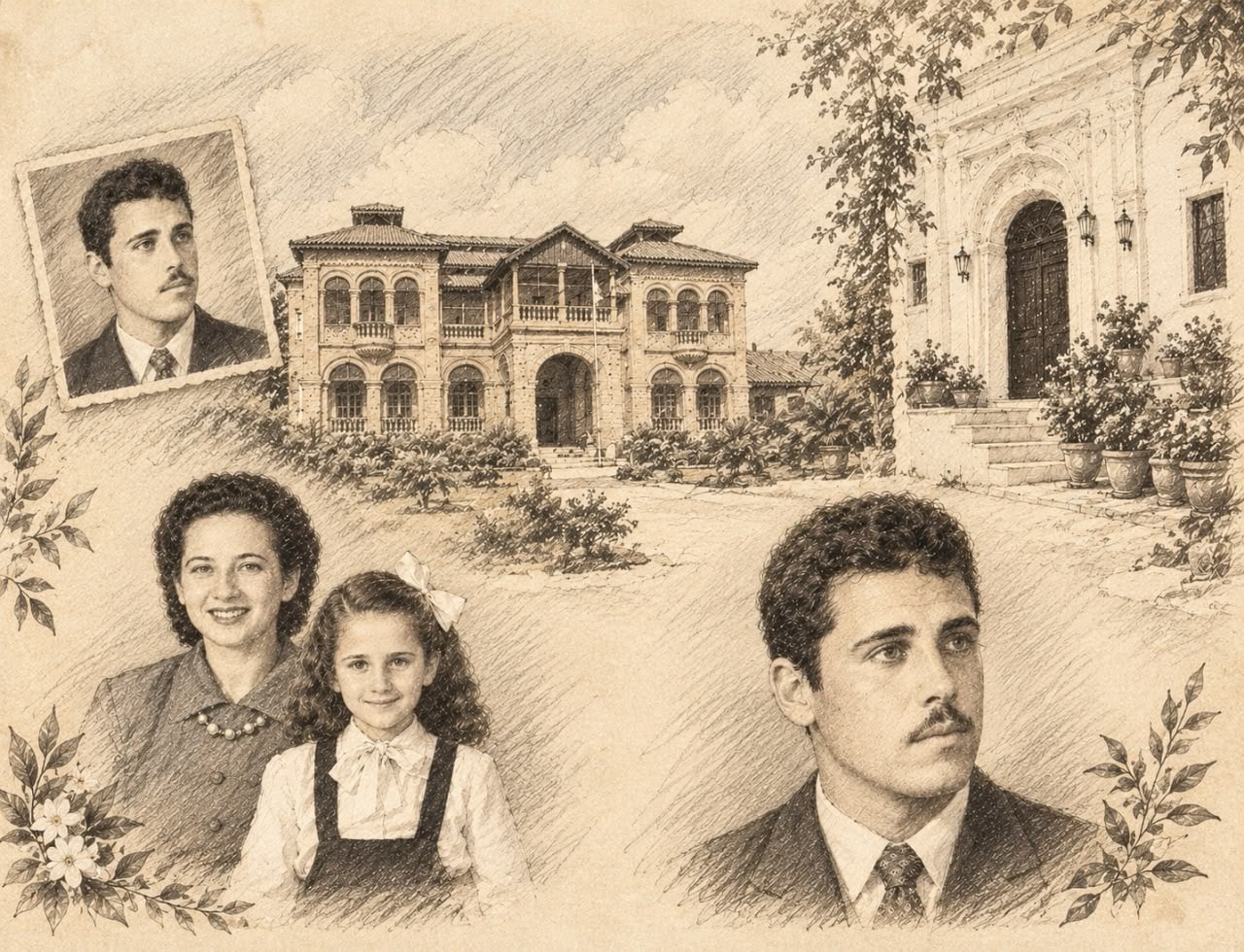
It was much later in life that I discovered how deeply Pakistan’s history was intertwined with Jewish heritage and, in ways I had never imagined, with the history of Israel.
Throughout my childhood and youth, the narrative we were exposed to was remarkably one-dimensional: Israel was portrayed as an oppressor of the Palestinians, and Jews were presented as the enemies of Muslims. We grew up in an atmosphere where such perceptions were rarely questioned, let alone challenged. So people have no idea that once Lahore was home for Jews. Yet, what thousands, perhaps millions, of Pakistanis who harbor resentment toward Israel may still not realize is that Jewish individuals made remarkable contributions to the architectural and cultural heritage of Pakistan.
I am sure millions Jews in Israel are unaware of this extraordinary historical connection. Cities such as Karachi, Peshawar, and Rawalpindi & Lahore owe part of their architectural beauty and enduring character to the vision, craftsmanship, and artistic brilliance of Jewish architects, designers, and artisans. Their magnificent creations became landmarks that continue to define the identity of these cities.
While some people may be aware that Karachi was once home to a Jewish community, far fewer know that Jews also lived in Lahore, leaving behind traces of their presence and a heritage that remains largely forgotten.
Lahore is the city of my birth, the place where I grew up, and the city that shaped my life. I have wandered through its streets, explored its historic neighborhoods, and discovered its colonial era structures and yet I remained completely unaware that Lahore had once been home to Jewish residents. The Lahore I thought I knew so intimately had been quietly preserving a Jewish past that I had never been taught to recognize.
The memories of Hazel Selzer Kahan, woven to 55 Lawrence Road, Lahore, have now been recorded in the pages of a memoir “A House In Lahore”. Fleeing Hitler’s persecution in Germany, Hazel’s family left their homeland in search of refuge. Their journey first took them to Bombay, from where they intended to make their way to America. They eventually found themselves in Lahore. It was in this historic city, in a house at 55 Lawrence Road, that Hazel was born in 1939. This road is also known with Lawrence garden road due to Lawrence garden and Lawrence refers to Lieutenant Governor Punjab and later the Viceroy of India. Now days Pakistan’s influential political family owns that Hazel Sezler’s house 55 Lawrence road
I had passed through 55 Lawrence Road and visited the place on several occasions, yet little did I know that this familiar address had once been home to a Jewish family. Hazel Selzer Kahan, her parents, and her younger brother spent many peaceful years in their Lahore home. It was a different Lahore altogether—a city whose spirit of coexistence, tolerance, and cultural diversity seems almost unimaginable in the Pakistan of today.
Arab–Israeli War of 1967 marked a turning point. Anti-Jewish sentiments were increasingly gradually one by one, Jewish families began bidding farewell to the city. Finally, in 1971, Hazel and her family, too, were compelled to leave Lahore behind and make their way to the United States.
During British colonial rule, and in the decades preceding the creation of Pakistan in 1947, Jewish communities were part of the diverse social and cultural fabric of the region. Their contributions, particularly in commerce, civic life, and architecture, form a fascinating yet often overlooked chapter of its history in Pakistan.
One of the most prominent examples is the historic Flagstaff House, now known as the Quaid-e-Azam House Museum. Thousands of Pakistanis visit this building because of its association with Jinnah, yet how many of them know about its connection to a Jewish architect? That architect was Moses Somake, born in Lahore in 1875, whose architectural legacy became particularly prominent in Karachi. His work contributed significantly to the distinctive character of the city’s colonial-era architecture. Another architectural landmark Mules Mansion commissioned by the prominent Parsi businessman Fakirji Cowasji. The building represents an era when Karachi was emerging as a thriving commercial port. For a period, Mules Mansion also served as a headquarters for the Pakistan Navy. Then there is another architectural creation Edward House associated with Moses a Jewish icon. The building was named after his son, Ellis Edward, and remains an important reminder of Karachi’s cosmopolitan past. At one time, its ground floor housed the celebrated Grand Café, a popular gathering place that reflected the social elegance and urban sophistication of an earlier Karachi.
How could a society inherit so much from a community and unable to recognize them?
Aaliya Shah