
The Jews are Back… and Not Just in the Parking Lot
 Seville is a magnificent city – one of those cities in Southern Spain that sparkle with summer sunshine, a majestic river, stunning old buildings bursting with history, a central Cathedral of enormous proportions and golden splendour. And if that’s not enough there’s the gorgeously ornate palace of the Real Alcazar with its endless rooms of vaulting beauty and its sumptuous, well-proportioned gardens and pools where the contemporary royal family of Spain still has some apartments. But it wasn’t this that caught my heart in Seville. It was the basement parking garage in central modern Seville.
You get to the parking lot down a seedy, steep and narrow staircase. You emerge into the gloomy nondescript parking area, dodge between the cars and there just off the sign pointing to the public toilets you spot it in the wall: something like a shopfront display window. Behind the glass is not the latest iPhone but an old stone coffin resting on the exposed earth. It’s the remnant of a 13th-15th century Jewish cemetery that was uncovered when the parking lot was being built.
There’s not much of a Jewish community in Seville today. Once thousands of Jews populated this grand and ancient city; some say you can trace a Jewish presence back 2000 years and maybe even back to Solomon! Before the pogrom of 1391, Jews had lived and thrived in the old walled city, separated by their own wall. The Juderia, as it’s still called today, is reputed to have housed 23 shuls. There’s little left of them today; in fact there are few remnants of the once glorious Jewish past of this country. There are about a hundred Jews mainly from Morocco and no organised community in the town (and several thousand in all of Spain) but we met one young man who studied for a year in Israel and together with his business partner organised a Seder in Seville last year – perhaps the first public one in 500 years? Public, because there were probably some covert ones over the years and especially by the conversos (also known pejoratively as Marranos).
There’s a poignant eeriness in the absence of Jewishness across Spain. Once this land was a home to Talmudic scholars, mystics and Hebrew poets; ‘affluential’ business leaders and powerful public figures. Rambam was born in Cordoba and deeply influenced by its Islamic scholars; Judah HaLevi, Moses de Leon, Abarbanel walked its cobbled streets and enjoyed the quiet indoor courtyards. The Ramban and Rashba wrote their illuminating commentaries and incisive responsa in these gorgeous cities. You can read their words and sing their songs but for the most part you can’t find their houses and community centres except through ancient documents or deductions from Church decrees confining Jews to particular areas or forbidding them from certain practices like wearing Christian clothing.
Now, only the presence of absence, the legacy of deliberate erasure. The Expulsion of 1492 was followed by the extinction of the next centuries: Shuls converted into churches, their Jewish identity covered up, mikvaot destroyed, cemeteries desecrated, their headstones used in building projects. There’s a topography of terror in this land of sunshine and olives, monuments and manyana.
Earlier this year, being on a Jewish study tour of Spain under the superb and thoughtful guidance of Melbourne academic, Paul Forgasz, got one to grieve about the absence but more importantly to reflect on the presence of the past, to celebrate those Rabbis – mystics and legalists – poets and politicos who shaped the Sephardic Tradition and the Jewish imagination. We also got to interrogate assumptions about how golden was the Golden Age, the relationship between Jews and their adopted culture, the heartbreaking choices of forced conversion and frightening exile, the way a modern European state should acknowledge its dark past. And then we explored the rich and perplexing interplay between Judaism, Christianity and Islam and the implications for us.
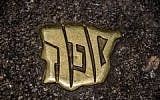
Which takes me back to the carpark: The small and nascent community of Spain has set up a Sefarad Association to encourage and recover the Jewish history of the country. They have designed an ingenious brass symbol which has the word Sefarad and Zachor within it as well as map of Spain. You can find this symbol at places that acknowledge their Jewish past and have done something to preserve it. It’s cemented into the ground much like the ‘stoppel stones’ in Berlin which remind you of the Jews who once lived on those streets before they were dragged away to their almost inevitable deaths. There’s something hopeful and defiant in these plaques. We got a peculiar pleasure in spotting them in the old Jewish quarters, the place where a Shul had once stood, a Jewish merchant lived ….But then we also pondered about a failure on the part of modern Space to fully own its past, to look beyond the Jewish tourist dollars, to acknowledge its dreadful cruelty to its Jewish citizens. In Seville they placed most of the ancient coffins from that parking lot in the museum despite the protests of the local Jews…
It was on our last night in Spain in the old Jewish quarter of Barcelona that I found some hope and comfort. In the middle of this area with its winding alleys and buildings so close they almost touch each other there’s a Jewish house. The attic walls of the lowest level speak of rocks from Roman Times, the stunning upper levels tell of an exquisite renovation and addition. Today it’s the site of Mosaica, a new Jewish organisation run by young Jews who put out a journal, host gourmet meals and teach about Judaism. The young chef blended her Mexican Morrocan roots into a mouth-watering meal for us, a young Israeli Jew played the guitar and oud a fusion of flamenco and Middle Eastern- you could believe with almost perfect faith in the stunning survivability of our people. Israel is our rock, our resounding ‘today’ and our place of eternity, but the roaming Jewish spirit is our reminder to the world of our past and our resilience.
Like it or not, they’re proud to be back in Barcelona, they’re passionate about reclaiming the Jewish past, they’re defiant Catalans with a Judaic twist. They’re young, they’re enthusiastic, they’re raising Jewish families here – five shuls, two kosher restaurants, a Jewish centre….One tour participant Sharon said -descendants of the Expelled are back but Queen Isabella and her Aragon kingdom are no more…
They may have paved up the Paradise that once was Jewish Spain, they may have put up a parking lot …but the Jews are back and not just in a dead parking lot!
Shabbat Shalom,
Rabbi Ralph