


The kind of unity that can save Israel
The word “unity” has become one of the most overused words in Israeli discourse recently. Anyone who seeks to avoid a moral decision, blur divisions, or cavort with racist and anti-democratic forces hastens to wrap their position in a call for “unity of the nation.” Unity that will always, even at the theoretical stage, be only among Jews.
This is the empty unity that the Israelis of “The Fourth Quarter” social movement and likeminded compatriots offer us: not to debate values, not to set red lines, and not to decide what direction the state will go in. In the name of reconciliation, they ask us to accept extremism, as if merely sitting together as part of a coalition government could erase the danger.
But there is also another kind of unity. In the past two years, I have had the privilege of being part of “The London Initiative” (TLI). The TLI network was established by Sir Mick Davis, former CEO of Britain’s Conservative Party and chairman of the Jewish community in the UK, and Mike Preshker, a former British-Israeli social entrepreneur who founded “Merchavim” to advance equitable citizenship among all citizens of Israel.
The network currently comprises over 200 women and men from Israel, the Jewish diaspora, and other prominent international changemakers and is set to expand to 360 members. 45 percent of the network’s members are citizens of Israel, of whom 20%, in accordance with their proportion in Israeli society, are Arab Palestinian citizens. An additional 45 percent of the network’s members come from the Jewish diaspora, while the remaining 10 percent are neither Israelis nor Jews, but individuals who bring with them diverse expertise, resources, and networks. They also uphold values that align with the principles of democracy and equality enshrined in Israel’s Declaration of Independence.
TLI’s research partners show that the concerns and goals of The London Initiative are shared by “an endangered majority” of citizens of Israel and global Jewry. As Mike Prashker says: “it is high time that the endangered majority concerned by Israel’s current disastrous direction of travel unite to advance its moral and strategic propositions and stop deferring to and appeasing all those who for different reasons want less liberal democracy, societal fairness, secure peace, equitable partnership, and strong relations between like-minded Israelis, world Jewry, and international allies.”
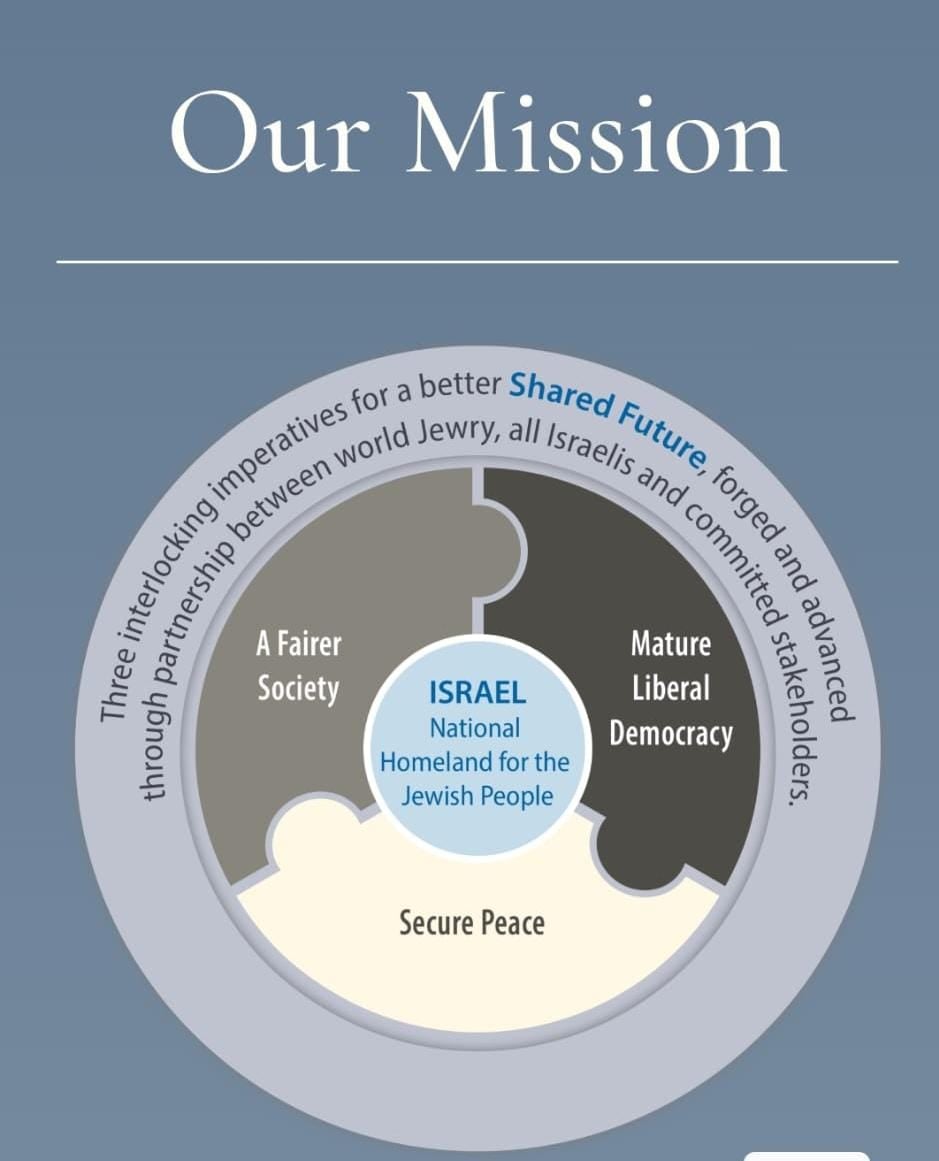
The London Initiative’s theory of change is to build a broad alliance, but not one that is formed around worn-out slogans of unity that serve as a cover for compromising on values. Instead, it aims for an alliance of action between Jewish and Arab Israelis, Jews of the diaspora, and international allies, based on three inseparable foundations: substantive liberal democracy, fair and equitable society, and secure peace.
The connection between the three foundations is not coincidental. A democracy that does not grant full equality to all its citizens is a flawed democracy. A society that perpetuates discrimination, poverty, and disparities cannot remain stable over time. And a country that continues to rule over another people cannot maintain its democratic character forever or ensure true security for its citizens.
TLI includes senior Israeli security officials because secure peace cannot be based on hope and trust in our dangerous world. The term “secure peace” emphasizes that security and peace go together, rather than the choice between the two that the current Israeli government presents.
As a member of the network and someone who participates in its meetings, I see the strength of this connection firsthand. In one room, Israeli leaders, both Jewish and Arab, meet with community leaders, philanthropists, academics, media figures, and other members of Jewish and non-Jewish societies around the world. People who are very different from each other yet share a common moral and political compass. Israel is important to them, and therefore they are not willing to compromise its character as the democratic nation-state of the Jewish people and as a democracy.
There is special significance to Israel’s partnership with the Jewish diaspora. Recently, the rift between Israel and large parts of the Jewish world has deepened, especially within liberal circles who find it difficult to identify in the Israeli government the values with which they were raised. TLI does not ask Jews around the world to unconditionally support Israeli policy, nor does it see them as bystanders; it invites them to be equal partners in the struggle for the future of the country they love.
The meetings do not produce just general statements; they create a common language, trust, connections, and action plans. The network has already promoted joint calls against Jewish terrorism in the West Bank, which helped center the issue in the media and political agenda in Israel, and has called on the Jewish diaspora to voice a clear stance in favor of preserving Israel as a liberal democracy.
This is the role of the Leadership Network: not merely to build a new politics, but to shift the Overton Window that sets the boundaries of discourse and to provide backing to those who are active on the ground. This means being a civic and ideological vanguard. Not an elite network disconnected from the public, but a group that connects communities and centers of influence and translates values into action. The basic premise is simple: if enough people with experience, connections, and influence from both Israel and the global community understand that democracy, equality, and peace are one triangle, and if they act together consistently, it will be possible to change the direction in which Israel is heading.
The unity that Israel needs is not unity with fascism and racism, but unity against them. It is not a unity based on silencing disagreements, but rather on a clear agreement regarding the boundaries of the democratic playing field and a joint struggle to preserve and strengthen them. Jews and Arabs in Israel, together with Jews from around the world and other partners, can establish an alliance that will restore the state, correct its moral compass, and bring back hope.