Connecting Israel to the world through language, culture and technology
The Language Classroom: Institutional Failure and Individual Courage
In the world of language education, we talk endlessly about cultural competence, building bridges, and social justice. These beautiful concepts fill our mission statements and professional guidelines, yet since the events of October 7th, a deep canyon has opened between the inspiring words written by international organizations and the painful reality on the ground. We are witnessing a strange and difficult contrast where individual teachers show incredible moral courage while professional leadership remains silent or, in some cases, distorts the truth in dangerous ways.
I recently returned from a month in Thailand, and while the beaches were absolutely breathtaking, the most profound experience for me was actually understanding and immersing myself in their culture. As a language educator, I found myself captivated by the way the Thai people express respect and connection through their daily interactions. It was a powerful reminder that at its core, language is not just about words, but about seeing and honoring humanity in others. This deep appreciation for the other is exactly what we strive to teach our students, which is why the current silence from our professional community feels like such a personal betrayal.
This gap became painfully clear to me a few years ago when my daughter’s public school failed to even mention International Holocaust Remembrance Day. Despite California laws requiring Holocaust education, the curriculum often feels like a checkbox where they might focus briefly on the Diary of Anne Frank as a historical chapter, but they often miss the deeper lessons of humanity and the magnitude of the tragedy. The statistics are truly alarming, as recent studies show that nearly two-thirds of Millennials and Gen Z in the United States are unaware that six million Jews were murdered, and almost half cannot name a single concentration camp. Realizing this deep ignorance, I felt I had to act to educate future generations.
Knowing the urgency and the good work that teachers on the ground are doing, the silence and political extremism from some of our largest professional organizations feels like a punch to the gut. As someone has dedicated years to teaching Hebrew and mentoring educators, I immediately wrote a serious letter to ACTFL after October 7th. I pointed out what I saw as a striking double standard, noting how quickly the organization responds to global crises like the floods in Libya or social movements like BLM, yet they chose complete silence when it came to the massacre of Jews and the subsequent rise in antisemitism. I only received a weak and delayed response after I kept pushing for a statement. When I look at their 2025 research priorities, which are all focused on social justice and equity, I have to ask where the justice is for Jewish teachers and students, because real inclusion cannot just stop when it reaches our community.
The Modern Language Association, or the MLA, took this institutional failure a step further by passing an extreme resolution that defines the war as a “U.S. sponsored genocide.” Even worse, they brushed aside legitimate fears of antisemitism by claiming those concerns are merely a tool used to silence protest. This is a blatant betrayal of Jewish academics and students who now feel marginalized by the very institution created to support them. In my letter to the leadership, I asked a simple question. How can we teach our students about a just and tolerant world when the organizations representing us turn their backs on a community under attack? We are not asking for special treatment, but rather for the same basic recognition and protection every other group receives.
Thankfully, there are lights in the darkness, such as Marie-Georgina Salazar, who is a Spanish teacher in the Los Angeles Unified School District and a recipient of the 2025 Shine A Light award. She did not stop at teaching grammar, and when she saw her Jewish students facing waves of hatred, she chose to become an active ally. She even traveled to Israel to understand the reality firsthand and returned to her classroom with deep insights. Today, she leads the Jewish Student Union and mentors other teachers on how to stand by their students during these times.
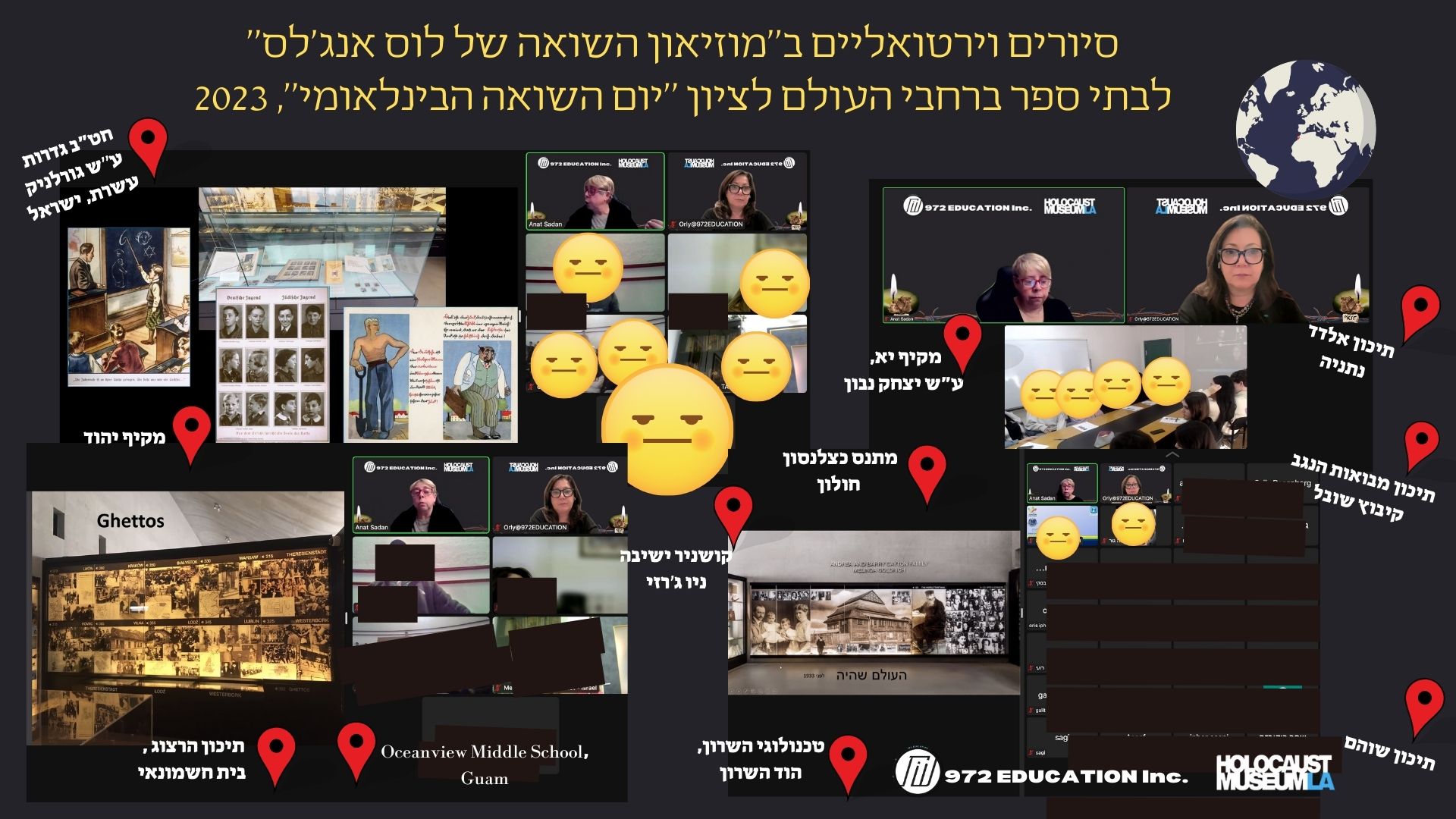
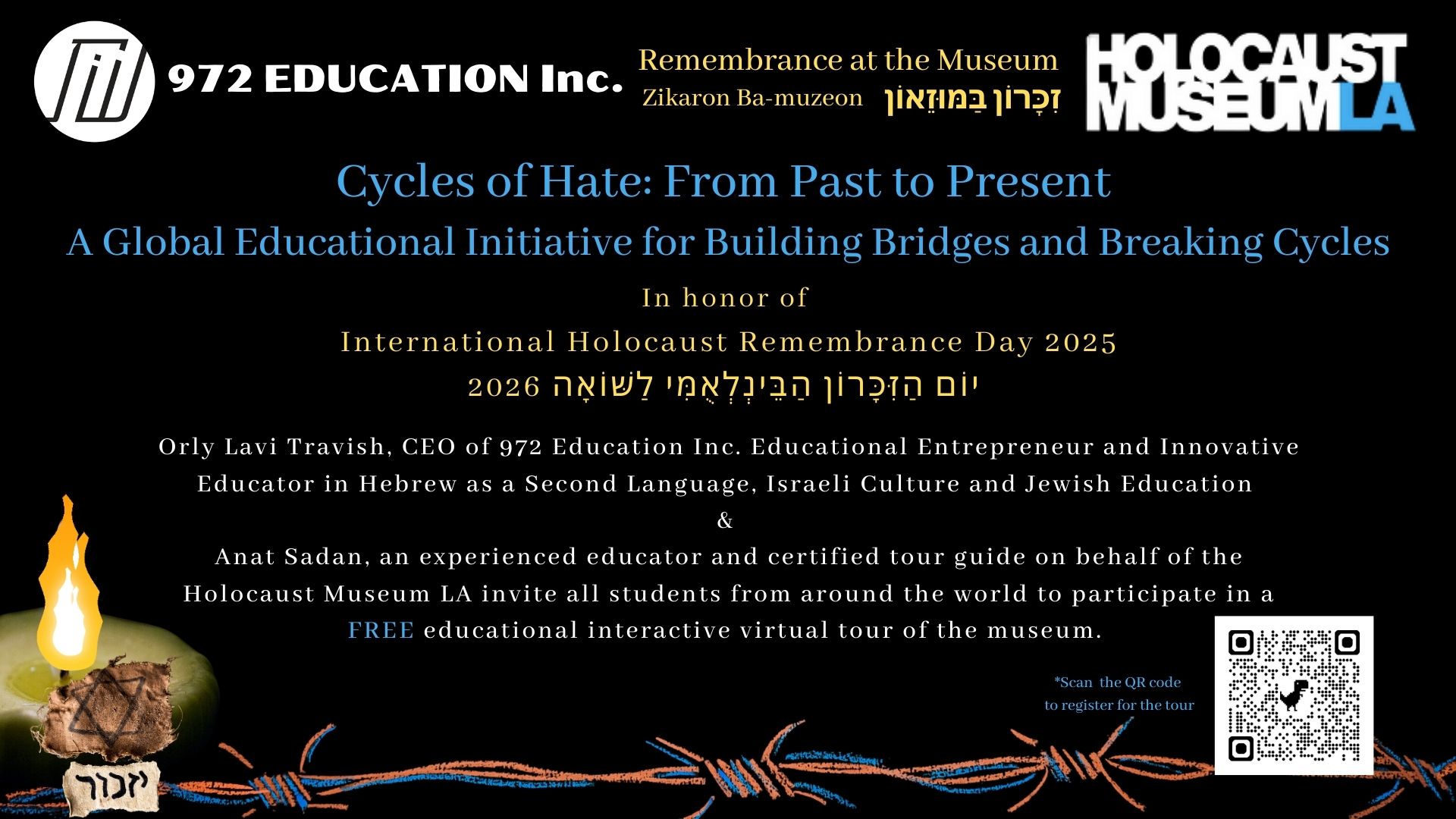
Following this path of active education, I am proud to continue my initiative, Zikaron BaMuzeon, which means Remembrance in the Museum. This project is a partnership with the Holocaust Museum Los Angeles, and for the past six years, I have worked with my friend Anat Sadan, who is a certified museum guide. Together, we work to make history accessible to students worldwide through online tours. Since October 7th, we have seen a surge in interest from public schools that are now specifically asking to learn about this painful yet vital chapter of history. As we approach International Holocaust Remembrance Day, I invite schools and educators to join us in this mission. You can register your classes for our upcoming virtual tours through this link:https://forms.gle/CDHReG44ojzAThWSA
The story of Marie-Georgina, combined with the lessons of connection I felt in Thailand and the impact of Zikaron BaMuzeon, serves as a wake-up call for all of us. Teaching a language is a human act of connection, and if our organizations have lost their moral compass, the responsibility falls on us as teachers in the classrooms. We must refuse to stay silent and continue to speak up for our students while demanding that our professional institutions live up to the high standards they preach. We should not let silence become the new norm. Instead, we can choose to be the light in our own classrooms and ensure that the values of humanity and empathy remain at the heart of everything we do.
#972education #actfl #mla #langchat #stopantisemetism #Education #HolocaustRemembrance #LanguageTeaching #TimesOfIsrael #Humanity #ZikaronBaMuzeon
Related Topics