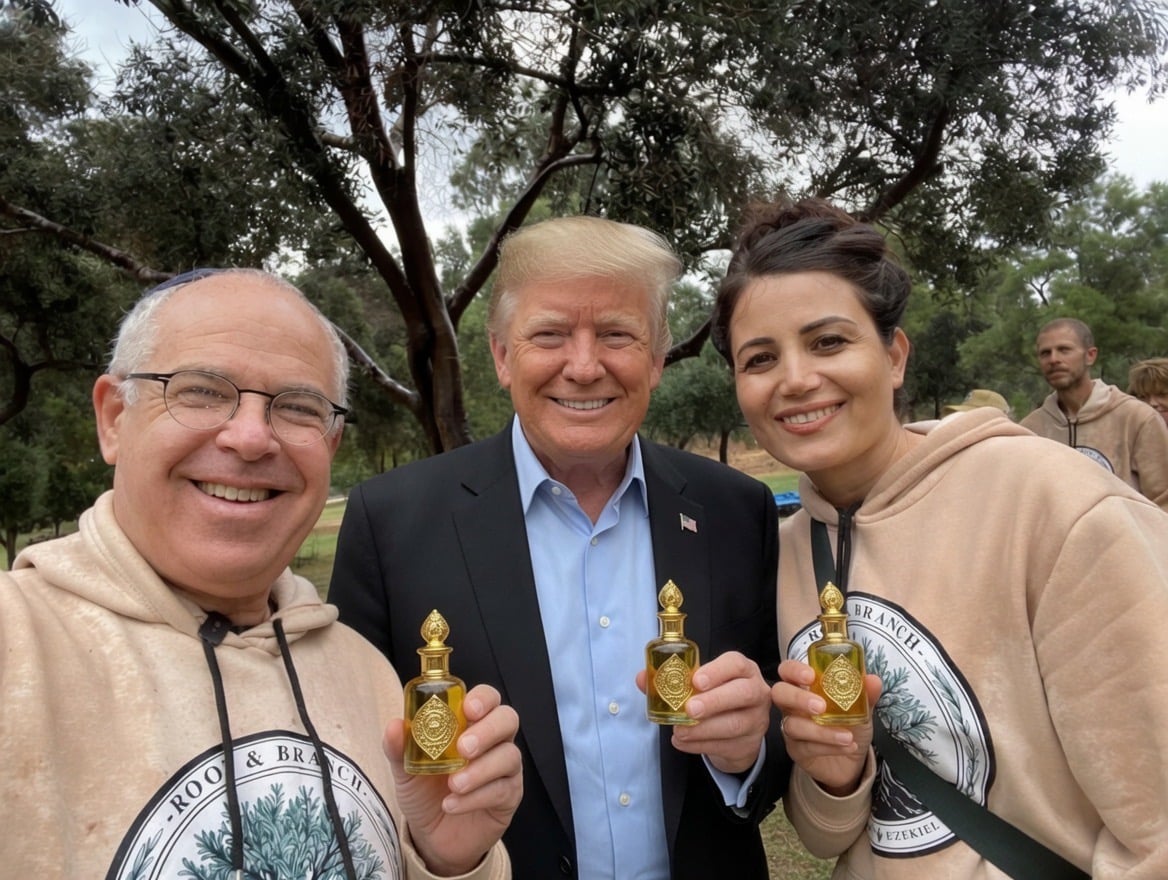
Husband, father, grandfather, bridge-builder, Zionist
The Last Biblical Harvest
Of the seven indigenous species in the land of Israel—wheat, barley, grapes, figs, dates, pomegranates, and olives – olives are the ones harvested last in the calendar year. We enter that season in October and November each year, praying for abundance and a full crop. More than the other indigenous species that are also seasonal, but whose fruit must be stored carefully and has a limited shelf life, olives require some work, but yield a product that is still able to be used the following season and beyond.
Olives are also the only fruit that cannot be eaten fresh off the tree. If you don’t believe me, try it, but don’t blame me afterward when you make a face and spit it out.
Olives must be cured or pressed, and the product can be used for a myriad of purposes.
One of the things I so love about living in Israel is the connection between biblical history and modern agriculture. For instance, when Moses sends out the spies to scout out the land and they come back bearing the fruit of the land—grapes and pomegranates—in Numbers 13:25-32, we know that account took place in the late summer months. The grain had already been harvested, and the olives were not yet fully ripe.
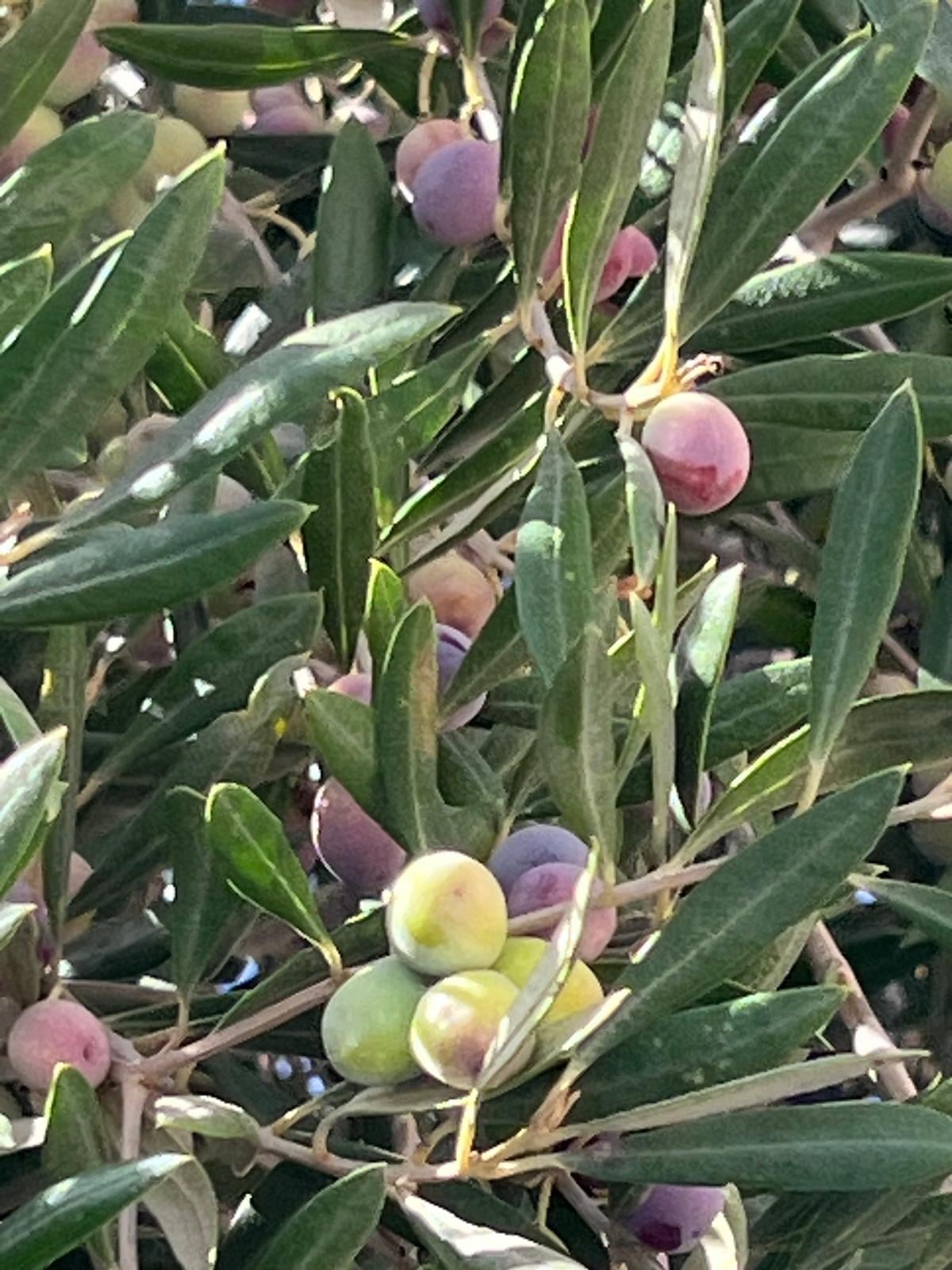
In addition to being one of the seven indigenous species, olives are probably the most significant fruit of the Land because every reference to oil in the Bible comes from olives. Whether it’s for kindling lights or anointing a new king, the olive is the smallest fruit but plays a big role.
It takes nearly 2 to 5 kilos of olives, or roughly 6,000 to 8,000 individual olives, to make a liter of olive oil. It gives literal meaning to the phrase “every drop counts.” Because in each olive there are only a relative few drops of oil.
However, together, olive by olive and kilo by kilo, the impact is significant, long lasting, and indeed illuminating.
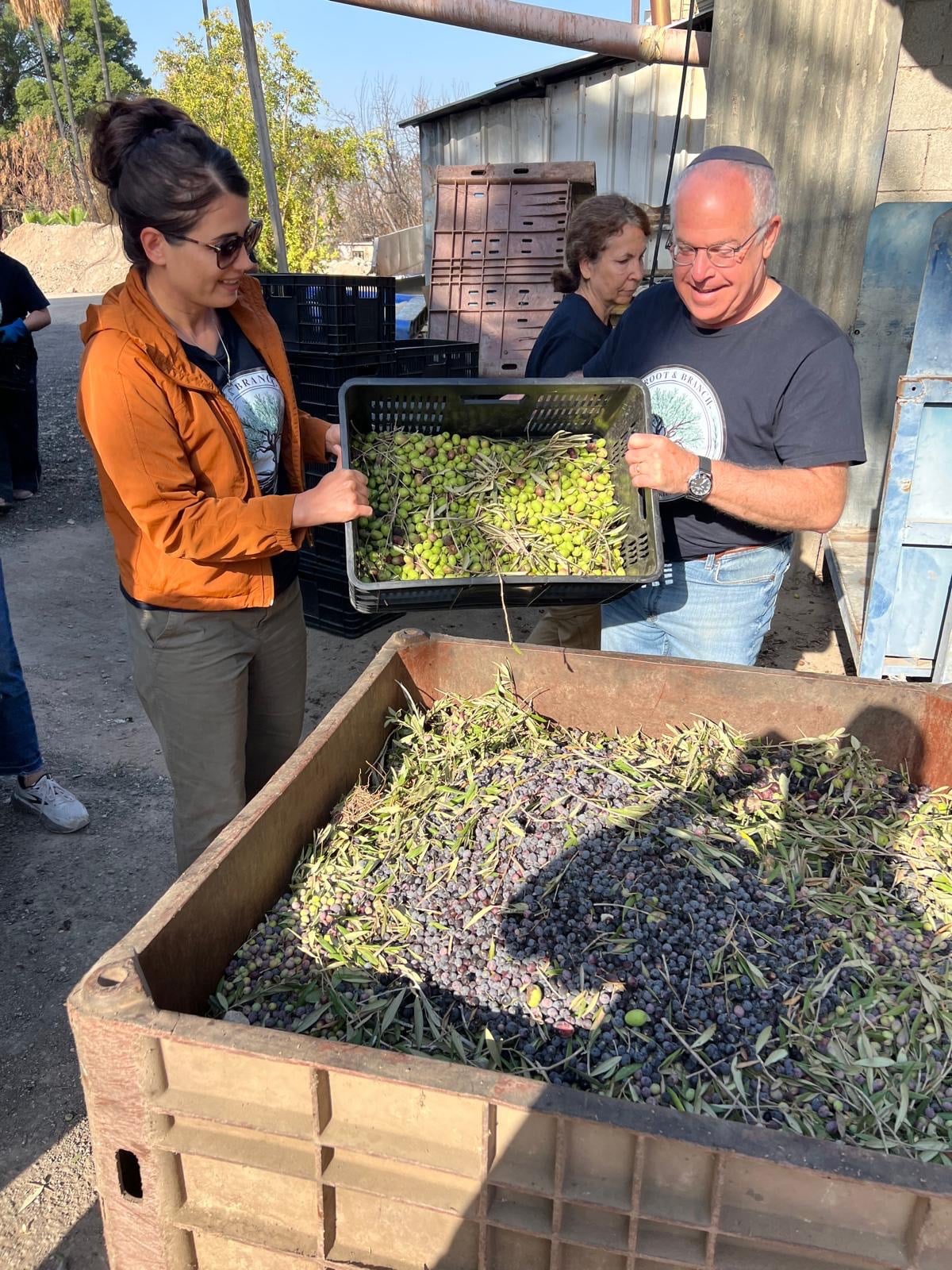
It’s not a coincidence that the Root & Branch program that I have been privileged to establish and partner with my good friend Marziyeh (Marzi) Amirizadeh represents this tangibly in so many ways.
More than just a tour, Marzi’s first visit to Israel and journey was years in the making and involved spending nine months on death row in Tehran’s notorious Evin prison. After becoming a Christian in Iran, she was arrested and sentenced to death for her faith. But she knew as a young woman that the attempted brainwashing and indoctrination by the Islamic Republic that Israel was evil necessarily meant Israel was special. Her Christian faith affirmed that and, for many years, she yearned to come and visit the Land in which Jesus lived and ministered.
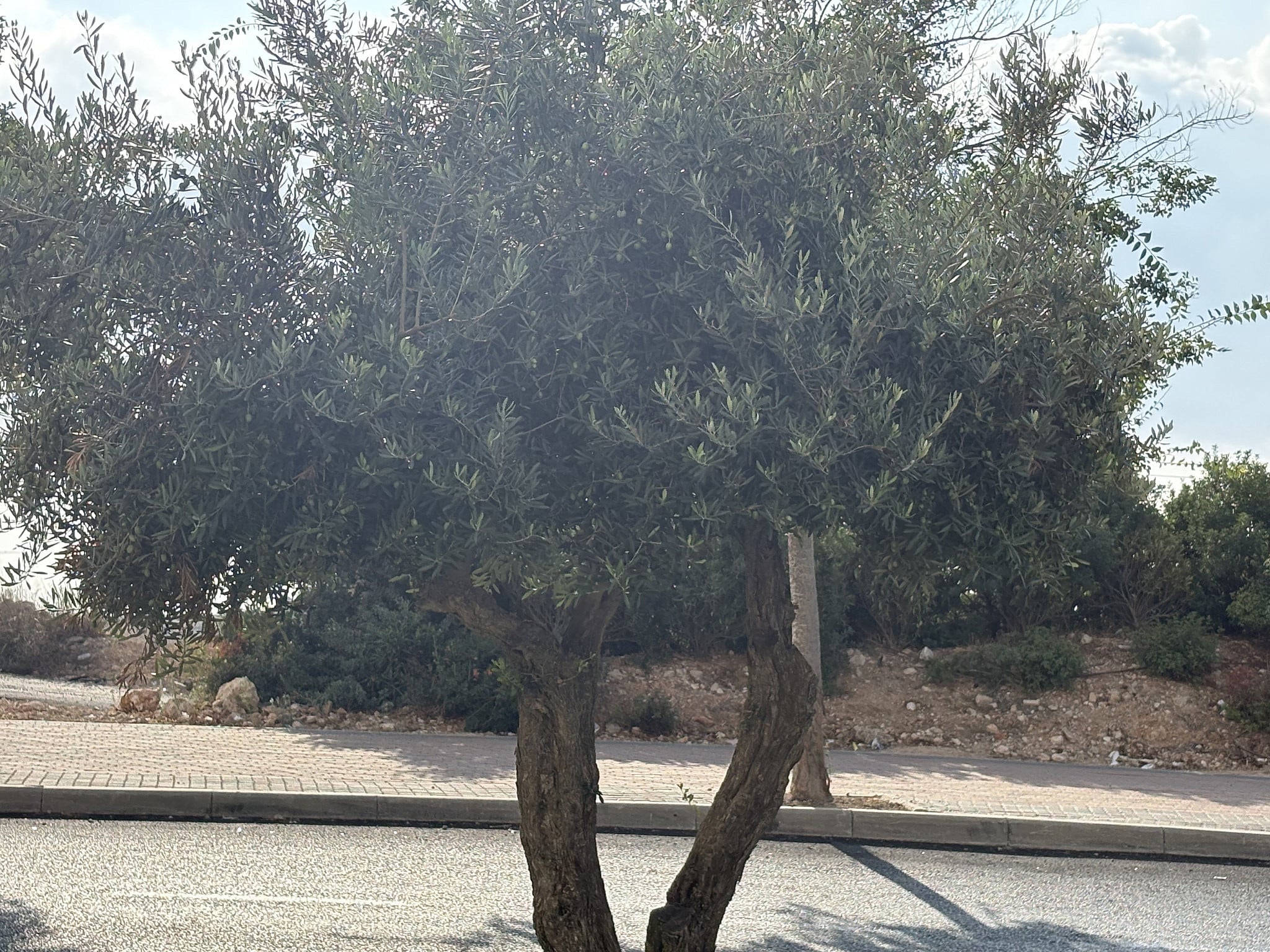
During her first visit in 2023 she also noticed something that many Israelis see every day but take for granted. Not only are they indigenous, each olive tree is genuinely unique, beautiful as if to reflect the palette of their Creator, and so common that we use them for landscaping. Olives are everywhere.
Later that year she proposed the idea of bringing Christians to harvest olives in Israel as a meaningful connection with the Land and the people. But also, she understood the significance and symbolism of the olive tree as depicted in the book of Romans. Paul uses the olive tree as a metaphor to describe the Jewish people as the root, and Gentile Christians as the branches that are grafted into the root, symbolizing a shared reverence for God and our respective roles and obligations within the covenant that he made with Abraham through Isaac and Jacob.
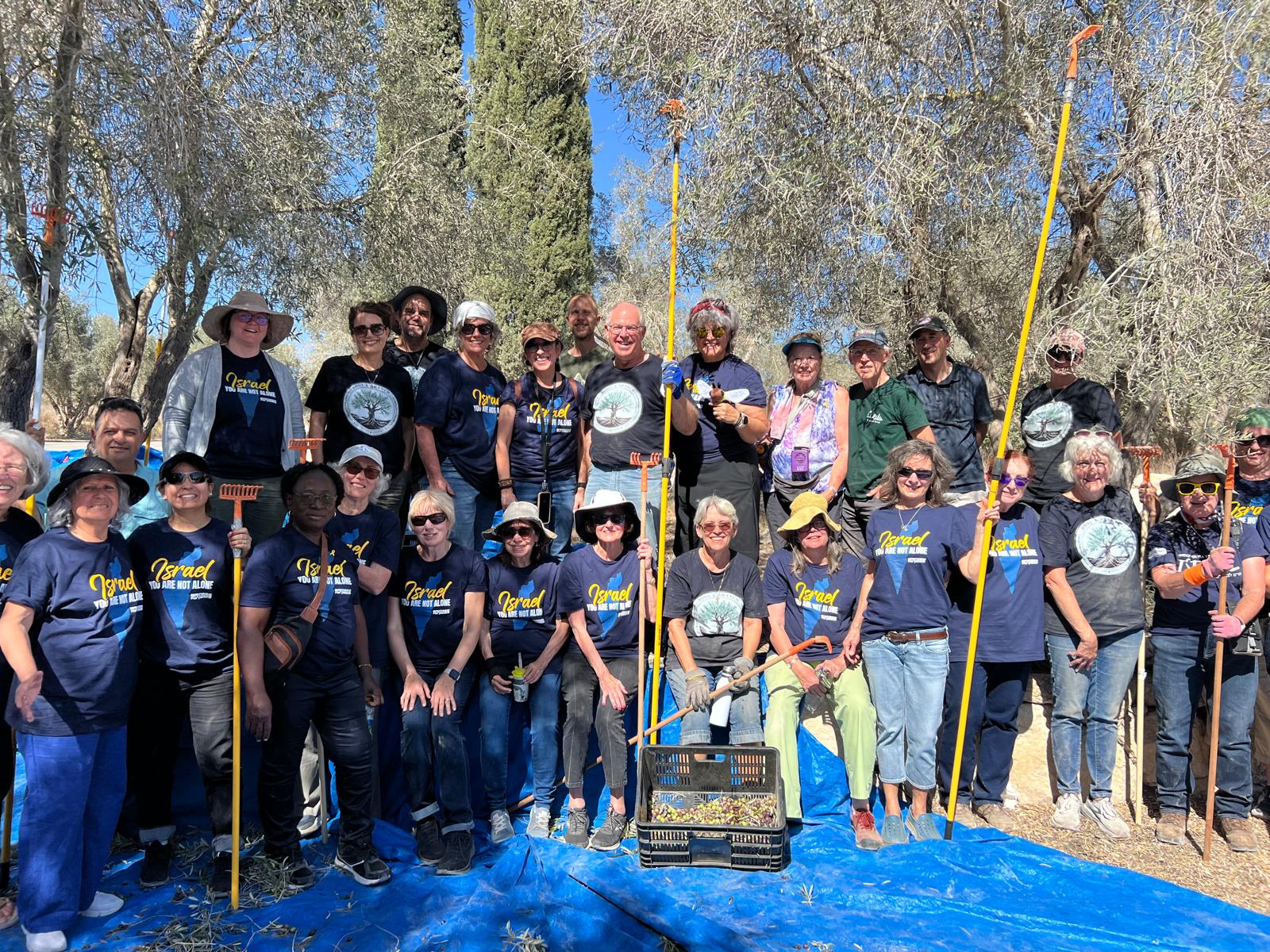
Next month we will be privileged to bring our third team to Israel to participate in the Root & Branch olive harvest pilgrimage.
It’s not been easy to recruit participants during a war. However, the dedicated volunteers who have come and continue to come do so out of genuine solidarity and aspiring to establish a deep connection, to plant their own roots among the people and the Land. This year’s team will consist of participants from across the United States, including those who have joined us in previous years. We will also have participants from the UK, Singapore, Argentina, the Philippines, and Armenia.
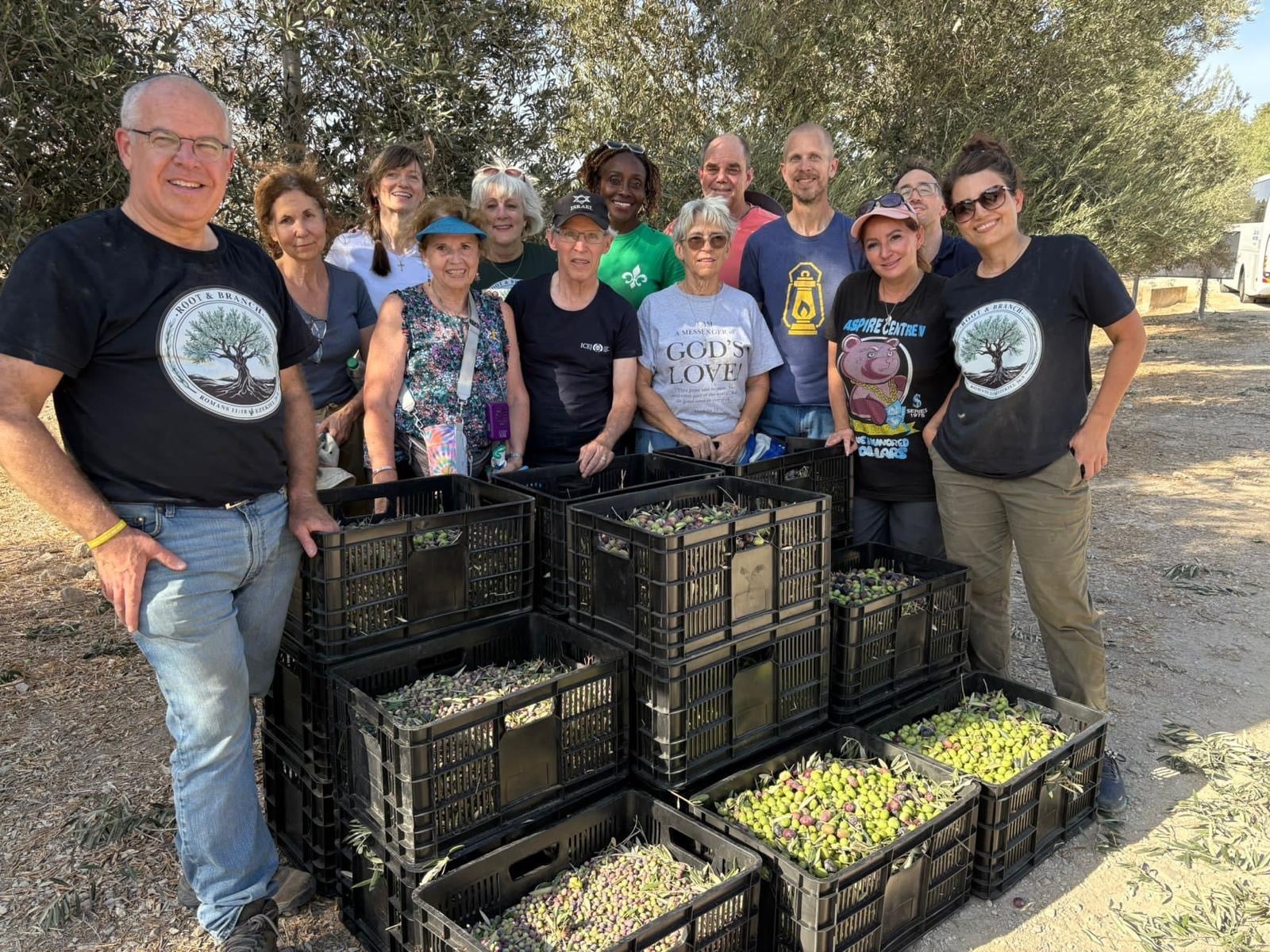
As we aspire to bring Jews and Christians together, every day we have activities that also connect participants with Israelis of all backgrounds, especially people who have been impacted by the war.
This year, however, we are making a new pitch to Jewish Israelis as well as Christians living in Israel to join us for a day or a few days and be part of the harvesting experience, but also to connect with the volunteers for whom such a connection is a deep blessing and motivating factor.
We also look to give additional meaning to the metaphor of every olive having its own unique and invaluable role. Therefore, bringing Jews and Christians together as part of the harvest throughout national parks in conjunction with the Israel Nature and Parks Authority is more than agriculture, but deeply symbolic.
In the past, when we harvested olives from hundreds of years old trees in some of the most significant national parks, even the staff working there overlooked the significance of the fruit itself, which otherwise simply fell to the ground. These are trees under whose branches they passed thousands of times a year. But until we arrived, nobody harvested the fruit.
Everyone involved also appreciates that the products made from the oil are being sold to create revenue for programs in Israel that support Israelis impacted by the war.
That makes it even more meaningful to take olives from places around the country that have literally seen the history of our people unfold before them, and to use their fruit to provide comfort and support still at a time when many Israelis are experiencing trauma.
While the holidays of Tishrei are nearly over, Chanukah is around the corner. The significance of the Festival of Lights and the olive harvest has an additional dimension. In Biblical time, the oil used to kindle lights in the rededicated Temple for Chanukah may have been pressed from the last Biblical harvest just weeks earlier and in places that we have harvested olives too!
One of the miracles of Chanukah is how a single vial of pure oil was found at the time the Temple was being restored and rededicated from the desecration of the Syrian Greeks. Of course, that oil was olive oil. The same way as we harvest olives in the two months leading up to Chanukah, we provide the material substance needed to continue to kindle the lights every year.
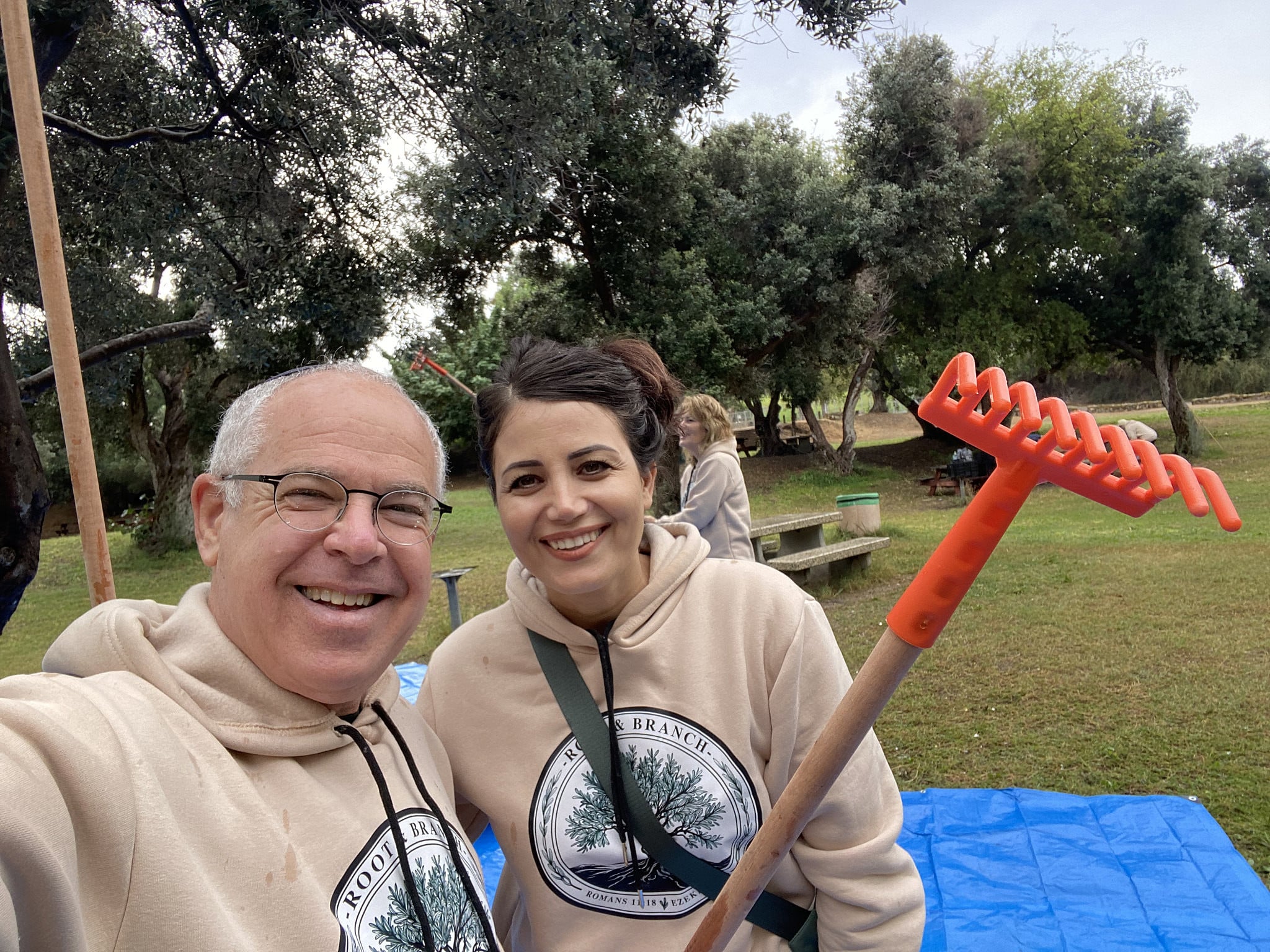
One of the things that we hope, in addition to our partnership and bringing Christians and Jews together to harvest olives, is that because of our unique backgrounds, we will be a catalyst for the restoration of warm relations between Israel and Iran, and Persians and Jews, once the Islamic Republic falls. Significantly, it was the Persian King Cyrus who enabled the Jewish people to return from our first expulsion and rebuild the Temple in Jerusalem, hundreds of years before the Chanukah story. As Jerusalem is the envied prize of many nations who have conquered the Land, Cyrus understood that the Jewish people are indigenous. Had he not enabled the Jewish people to return and rebuild, possibly the Chanukah story and its miracles would have never taken place. Or God would have had to find another vehicle to do so, as Mordechai charged Esther—the Jewish queen in Persia—before that.
This year we invite Israelis and Christians living in and among the Jewish people, representing the roots and the branches, to participate in this remarkable olive harvest pilgrimage for a day or a few days.
Please visit www.rootandbranchisrael.com for more about our story, vision, and unique partnership, or be in touch at rootandbranchisrael@gmail.com.