


The Last Strike: Who Controls the Story
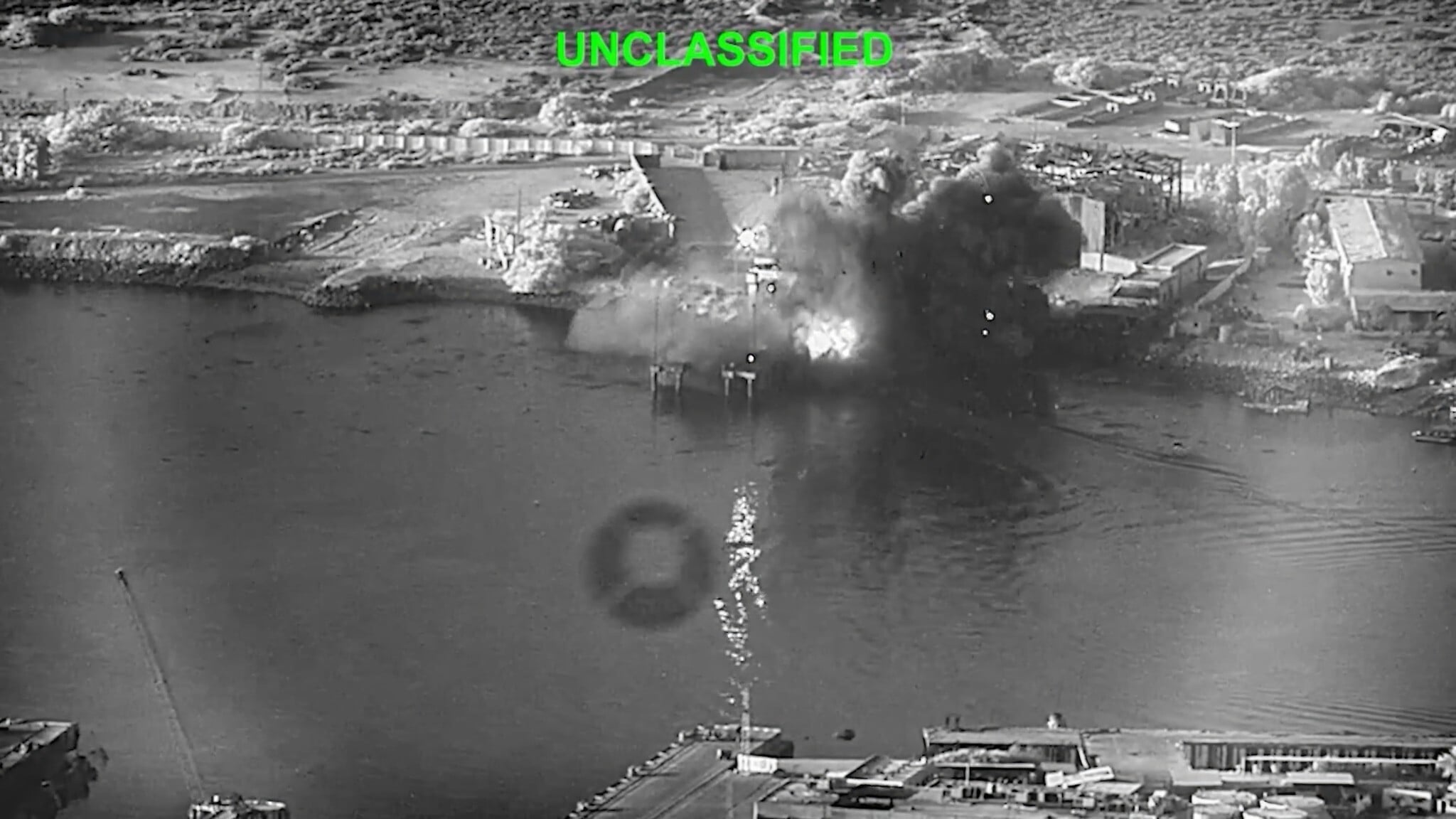
This image from video released by US Central Command shows an explosion at Bandar Abbas Naval Base, Iran, as three Corsair unmanned surface vessels, also called one-way attack surface drones, fired by the US military, hit the port July 12, 2026. (US Central Command via AP)
After American strikes resumed against Iran on July 11, 2026, the main issue is no longer just military. Now, the question is whether either side can still manage the crisis, shape the story, and protect its credibility.
Who is trying to save face? Who is shaping the story? More importantly, is the crisis still being managed by those who think they are in control?
In war, the most dangerous moment is not always at the start. Sometimes, it comes later, when both sides think they are still in control, even as the situation starts to take over.
This is the position the United States and Iran are in now.
Washington wants to show that it cannot be challenged without consequences. Tehran wants to prove that it cannot be forced into submission.
Both sides say they are defending their credibility.
But the more they try to protect their credibility, the harder it is to stop the cycle.
Washington’s Effort to Restore Its Credibility
The American strikes are not only intended to destroy missiles, drones, military bases or radar systems.
They are also intended to send a political message.
The United States cannot allow Iran to threaten shipping, attack facilities linked to American forces, or challenge Washington’s position in the region without responding.
A limited or weak response could create the impression that America is powerful in theory but hesitant in practice.
For Washington, this is therefore a question of deterrence.
The message is clear. The United States still has the military power to strike Iran quickly, with force, and from far away. It can hit more targets and use technology that Iran cannot match.
But this is also where things get harder for the United States.
Washington says it is striking Iran to restore stability, protect maritime navigation, and preserve diplomacy.
But the return of military action may also show that earlier talks, ceasefires, and agreements did not bring lasting stability.
America can prove it can strike Iran.
But it must also explain why the same crisis keeps recurring.
This is the paradox facing the United States.
The United States may be trying to save face militarily because it fears losing strategic credibility.
American aircraft can hit Iranian targets. The US Navy can protect shipping routes. American intelligence capabilities remain far superior.
But having stronger military power does not guarantee political control.
The real question is not whether the United States can strike Iran.
Of course it can.
The real question is whether these strikes can change Iran’s behavior over the long term.
Tehran’s Goal: Preserving the Image of Resistance
Iran faces a different problem.
The Iranian leadership cannot publicly accept the idea that Washington alone decides the rules in the Gulf and the Strait of Hormuz.
Such an image would weaken a key part of the Iranian regime: the belief that Iran stands up to foreign pressure and keeps its independence.
Tehran therefore needs to show that American strikes have not broken its will.
Iran’s responses are not necessarily intended to defeat the United States in a conventional military war.
Tehran knows it cannot match American air power, naval strength, or military technology directly.
Its strategy is different.
Iran wants to show that the United States cannot impose its objectives without paying a price.
It wants to show that even after heavy strikes, it can still threaten shipping, cause instability in the Gulf, pressure nearby countries, and make things harder for American policy.
Iran is not trying to prove that it can defeat America.
It is trying to prove that America cannot defeat Iran at an acceptable cost.
This is likely the main point of Iran’s strategy.
The regime tries to show it can handle pressure, survive attacks, and keep resisting.
Every Iranian response is therefore also a message.
It is a message to the Iranian population, Iran’s regional partners, and the wider Middle East.
But this strategy also comes with big risks.
If civilian ships are attacked, if Gulf countries are directly affected or if regional economies begin to suffer, the Iranian narrative of resistance could slowly become a narrative of aggression.
Iran could then lose the support, understanding, or neutrality of countries that may not back American power but also do not want a bigger regional war.
Who Is Winning the Battle Over the Story?
For the moment, neither side fully controls the story.
The United States controls the military narrative.
It can strike more targets, more quickly and with greater precision. It can demonstrate that Iran remains militarily vulnerable.
But Iran is trying to shape what that military power means politically.
Tehran’s message is simple: American superiority is not enough.
The United States can bomb Iran, but it cannot easily force Iran to surrender. It cannot completely remove Iranian influence from the region. It cannot guarantee permanent stability through military force alone.
This situation can be summed up simply:
Washington imposes power. Tehran tries to impose the meaning of that power.
The real victory in shaping the story will go to the side that makes the other change its strategy.
Has Iran forced Washington to return to a conflict it wanted to leave behind?
Or has Washington forced Iran to understand that every new escalation will bring a heavier response?
For the moment, the answer is not clear.
The United States has shown that it can strike Iran.
Iran has shown that it can continue to create problems even after being struck.
This is why both sides feel they can claim success.
And this is also why neither side can easily say they have won.
When the Crisis Starts to Take Over
The greatest danger is that both Washington and Tehran still seem to believe that escalation can remain controlled.
The United States wants to strike hard enough to restore deterrence, but not hard enough to start a full regional war.
Iran wants to respond forcefully enough to preserve its credibility, but not so forcefully as to provoke an overwhelming American campaign.
In theory, this is called controlled escalation.
But in reality, it is very difficult to control.
A missile can hit the wrong target.
A commercial ship can suffer heavy casualties.
An attack on an American base can kill more soldiers than expected.
A Gulf country may decide that its sovereignty has been violated and become more directly involved.
At that point, political leaders may no longer act according to their original strategy.
They may act because they have already promised to respond.
Every public warning creates a future obligation.
If Washington says that another Iranian attack will lead to a stronger response, it becomes politically difficult not to react.
If Tehran promises that every American strike will be answered, then silence may appear weak.
This is how the crisis begins to escalate.
The next strike is no longer chosen because it serves a clear strategic objective.
It happens because the previous strike cannot remain unanswered.
This is the point when the crisis stops being a tool and starts to control the people who started it.
The Real Victory Is Finding a Way Out
Both the United States and Iran are trying to save face.
Washington wants to preserve the credibility of a great power that cannot appear passive.
Tehran wants to preserve the credibility of a regime that cannot appear defeated.
But real strategic victory may not go to the side that fires the most missiles or destroys the most targets.
It may go to the side that finds a way to stop without looking like it is backing down.
This is now the main challenge: stopping without seeming to retreat.
The conflict is no longer only about military power.
It is also about political endurance, credibility, and control of the narrative.
The winner will be the side that ends the confrontation and convinces the world that the other side had to change course and that it had the final say.
Until then, Washington and Tehran remain trapped in the same dangerous logic, with no easy exit.
Each strike is supposed to restore control.
But each strike may also show that control is already slipping away and that ending the conflict is becoming the hardest part.