


(PEM)
The Lessons to be Learned from Lebanon that We Haven’t
Yesterday, June 6, marks the anniversary of the First Lebanon War. It says something about people in Israel that they remember June 5 as the start of the Six-Day War, but June 6 passes without anyone bothering to commemorate the day.
Sparked by the attempted assassination of our ambassador to the UK, Shlomo Argov, by members of the Abu Nidal faction of the PLO, Israel invaded Lebanon. I remember clearly the day before, when an army bus arrived on Tuval, our kibbutz, and took all our Israeli young men who were during their settlement period of Nahal service, building the kibbutz. I remember them scrambling at the last minute to take toilet rolls with them, smiling sheepishly and kind of embarrassed that this is what they were concerned with moments before they were taken off to war. We lost three kibbutz members in the first month of the war: Motti Dahan, Hana Mizrahi, and Ilan Alexandrovitch. The shock to our young, fledgling community was profound.
The goal was to end Palestinian attacks from Lebanon and bring peace and quiet to Israel’s North, once and for all, to destroy the PLO in the country, and to install a pro-Israel Christian Maronite government in the parliament. (Sound familiar?)
After the first 30 days, the IDF, together with the Christian Lebanese forces and South Lebanese Army, had seized control of the southern half of Lebanon. Israel managed to temporarily install a pro-Israeli Christian government led by President Bashir Jemayel. It lasted all of three months. In September of that year, Jemayel was assassinated, and Israel’s position in Beirut became untenable. As an alternative, Israel, together with the South Lebanese Army, established a security buffer zone in the area they controlled, which was effective, and did provide peace for our northern settlements for a period of time.
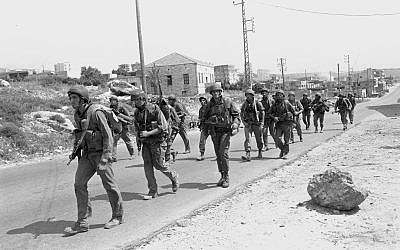
The war dragged on for 18 years. For 18 years, Israel essentially occupied Lebanese territory. Needless to say, we overstayed our welcome; at first, our troops were greeted with rice and cheers in the villages they marched through, but over time, our presence soured. The turning point was Israel’s complicity in the Phalangist massacre of the Shi’ite villages of Sabra and Shatilla. Until that point, the South Lebanon Shi’ites had no gripe with us; after Sabra and Shatilla, they grew hostile towards us. Hezbollah was founded in 1982 by Lebanese clerics in response to our invasion and continued presence in Southern Lebanon. It wouldn’t be far off the mark to say that we basically drove the Shi’ites in Southern Lebanon into Hezbollah’s arms – and we have paid the price for that ever since.
As the years of our occupation of Lebanon continued, the purpose of our presence there was lost. Our soldiers were being constantly hounded by guerilla attacks, picked off by roadside bombs, booby trapped buildings and ambushes, and our men became more concerned with getting out alive than with the military goals of their service. What started out as a justified war to bring quiet to our northern border became an obstinate refusal to withdraw, because it would amount to an admission of defeat, and would show weakness. So we sank deeper and deeper into the quagmire, and paid for it with the loss of young soldiers’ lives, which no longer had any purpose or meaning. And when we did eventually pull out, because it became increasingly impossible to justify remaining there as the costs overshadowed the benefits, it was with no dignity anyway, in the dead of night – some say with our tail between our legs.
All the politicians of the Opposition criticized then-Prime Minister Ehud Barak for the withdrawal, and in typical demagogic fashion later blamed the withdrawal and “the weak Left” for the fact that Hezbollah was emboldened and set up positions right on the fence. Interestingly, they had nothing to say about the continuing trickle of casualties we would have suffered in a war in which we had no chance of prevailing had we stayed in Lebanon. The number of Israeli casualties during the first four months of the war was 368 killed and 2383 wounded. By the time we pulled out in 2000, 654 had been killed, and 3887 wounded. We lost 286 men, and 1504 were left maimed because of national pride and obstinacy. What would the price have been, had we stayed, just to preserve our self-respect?
The reason why I am taking the time to refresh our memories about Lebanon, is because I have a feeling of deja vu. We are repeating the same mistakes we made in Lebanon, now in Gaza. Once again, we set impossibly unachievable goals. Once again, our hubris and fear of being humiliated are preventing us from ending the war. Once again, our soldiers are being picked off by sniper fire, landmines and booby trapped buildings – 13 meaningless deaths since March 18, in exchange for no tactical or strategic value. 7 in the last week. To say that they gave their lives “for all of our security” is not comfort, it is a travesty; they gave their lives so that the government can stay in power and avoid having to face the public and a state Commission of Inquiry. To say that “there are no free wars”, in callous mimicry of the common maxim “in life there are no free meals”, is an insult to the fallen soldiers and their families. Intransigent inflexibility, and refusal to countenance the protests and calls to end the war and bring the hostages home, because it sends a message of capitulation to pressure, is a central characteristic of this government. As is its attitude of expendability towards the lives of soldiers they send into Gaza, while they scramble to exempt tens of thousands of Israeli citizens belonging to a certain sector of the population from military service.
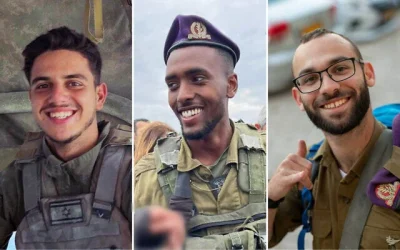
The epitome of עבד כי ימלוך.
There are 55 hostages to bring home. 20 of them are believed to still be alive. Instead of sinking deeper into the quagmire, we should end the war now, in exchange for getting all our hostages back – alive. The twisted logic in which we are sending more soldiers to their deaths, with no chance of achieving a definitive result in sight, because to pull out now would mean that all the lives of our soldiers who have died up until now, would have been for nothing, is nothing more than a false, expedient justification, by a government intent on delaying the inevitable until they can manipulate the democratic system to ensure their political survival, because they are terrified of facing the judgment of the people.
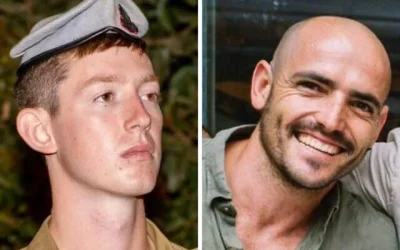
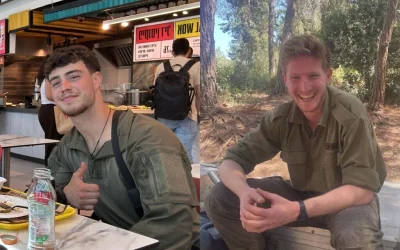
We need to learn our lessons from Lebanon, end this war, and #BringThemHome.