

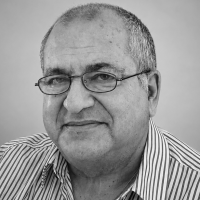
The Liberman Enigma
As Israel approaches the October 27, 2026 election, Avigdor Liberman remains one of the most difficult figures in Israeli politics to classify.
A former foreign minister, defense minister, finance minister, transportation minister and infrastructure minister, once a close political ally of Benjamin Netanyahu and the leader of Yisrael Beytenu for more than a quarter of a century, Liberman has accumulated considerable government experience.
Yet one question remains surprisingly difficult to answer: what, exactly, does he represent today?
Right-wing — but outside the “right-wing bloc”
The first difficulty lies in a distinction that has become increasingly important in Israeli politics: being right-wing no longer necessarily means belonging to the political “right-wing bloc” built around Netanyahu, the ultra-Orthodox parties and the religious Right.
On national and security issues, Liberman remains firmly rooted on the Right. For years he has advocated an aggressive military doctrine, criticized policies of restraint toward Hamas, and argued that deterrence ultimately depends on the ability to impose a clear defeat on one’s enemies.
In 2018, while serving as defense minister, he resigned in protest over a ceasefire with Hamas and sharply criticized the transfer of Qatari funds into Gaza.
His political distinctiveness lies elsewhere. Liberman today represents a national, secular Right.
Yisrael Beytenu advocates universal military or national service, the teaching of core subjects in all schools receiving public funding, civil marriage, greater municipal freedom over public transportation on Shabbat, and a reduction in the political leverage of the ultra-Orthodox parties.
The party also supports limiting the prime minister’s tenure and institutional reforms intended to establish clearer rules governing relations among Israel’s branches of government.
It is this combination that makes Liberman unusual: security hawkishness, Zionist nationalism, assertive secularism and a relatively liberal economic outlook.
The contradiction of 2021
There is, however, an obvious question.
How could a politician who identifies with the Right join the Bennett-Lapid government alongside Meretz and the Islamist Ra’am party?
The answer is that Liberman did not fundamentally change his ideology. He changed his order of priorities.
At the time, he viewed Israel’s prolonged political paralysis as a greater immediate threat than the ideological heterogeneity of the coalition. Forming a government, passing a state budget and reducing the dependence of Israeli politics on the ultra-Orthodox parties took precedence over traditional coalition alignments.
This reveals something essential about Liberman’s political method.
His ideological consistency is stronger than his coalition consistency.
His substantive positions therefore deserve to be taken seriously. His declarations that he will “never sit with” one party or another should be treated with somewhat greater caution.
Many ministries — but what legacy?
After such a long career, another question inevitably arises: what lasting mark has Liberman actually left on the ministries he headed?
The record is mixed.
At the Defense Ministry, he often encountered the constraints imposed by the cabinet, the security establishment and military leadership. The gap between the aggressive rhetoric with which he entered office and the policies ultimately pursued was considerable.
His resignation in 2018, however, demonstrated that he was prepared to leave office when he believed his political red lines had been crossed.
His tenure as finance minister from 2021 to 2022 arguably produced a more tangible record. It included the passage of a state budget after years of political deadlock and several measures aimed at increasing competition and economic participation.
Overall, Liberman is difficult to describe as the architect of one transformative reform.
His most enduring achievement may instead be political: he has preserved an autonomous constituency for a secular Right that is simultaneously nationalist, hawkish on security and deeply hostile to the political power of the ultra-Orthodox establishment.
A highly personal party
Liberman’s extraordinary longevity also raises questions about the way he governs Yisrael Beytenu itself.
Since its founding in 1999, the party has remained inseparable from its leader. It does not hold primaries, and Liberman exercises substantial influence over the composition of its candidate lists.
Political scientists would generally describe such a structure as a “personal party.”
Calling it a dictatorship would be excessive. But it does reflect a highly centralized conception of leadership: strong discipline, centralized decision-making and relatively weak internal counterweights.
That model has helped Yisrael Beytenu survive while many other Israeli parties have disappeared.
It also creates an intriguing paradox.
How does one reconcile Liberman’s advocacy of institutional limits on executive power with his uninterrupted domination of his own political party for more than twenty-five years?
Corruption allegations and judicial reality
Liberman’s political image has also been shaped by years of major criminal investigations, including allegations involving fraud and money laundering.
The principal case against him was eventually closed for lack of sufficient evidence, and in 2013 he was unanimously acquitted in another case that had forced him to step down as foreign minister.
It is therefore factually incorrect to describe Liberman as a politician convicted of corruption.
At the same time, Yisrael Beytenu itself has been damaged by serious corruption cases involving senior figures, most notably former deputy interior minister Faina Kirschenbaum.
As a result, a cloud of suspicion has continued to follow the party in the public imagination, even though it should not be confused with a criminal conviction of Liberman himself.
What can voters expect from him?
On several issues, Liberman’s consistency is genuine.
Universal service. Reducing ultra-Orthodox political power. A more secular public sphere. A hard security line.
On the question of political partners, however, his consistency is far less certain.
That may be the essence of the Liberman enigma.
He is right-wing, yet outside the traditional right-wing bloc.
A nationalist, yet uncompromisingly secular.
An advocate of institutional checks on political power, while governing his own party in an exceptionally centralized manner.
Today, he insists that Israel’s next government should consist exclusively of Zionist parties — after having participated in a coalition whose survival depended on Ra’am.
The most useful question for voters may therefore not be: “Is Liberman right-wing?”
It may be this: Which of his convictions are genuinely non-negotiable, and which will he be prepared to bargain away in order to make a government possible?
On ideology, Liberman is more consistent than his critics often admit.
On alliances, he is considerably more pragmatic.
It is precisely that combination that continues to make Avigdor Liberman one of the most difficult politicians in Israel to decipher.