
Author and Global Affairs Commentator
The Limits of Managing Iran
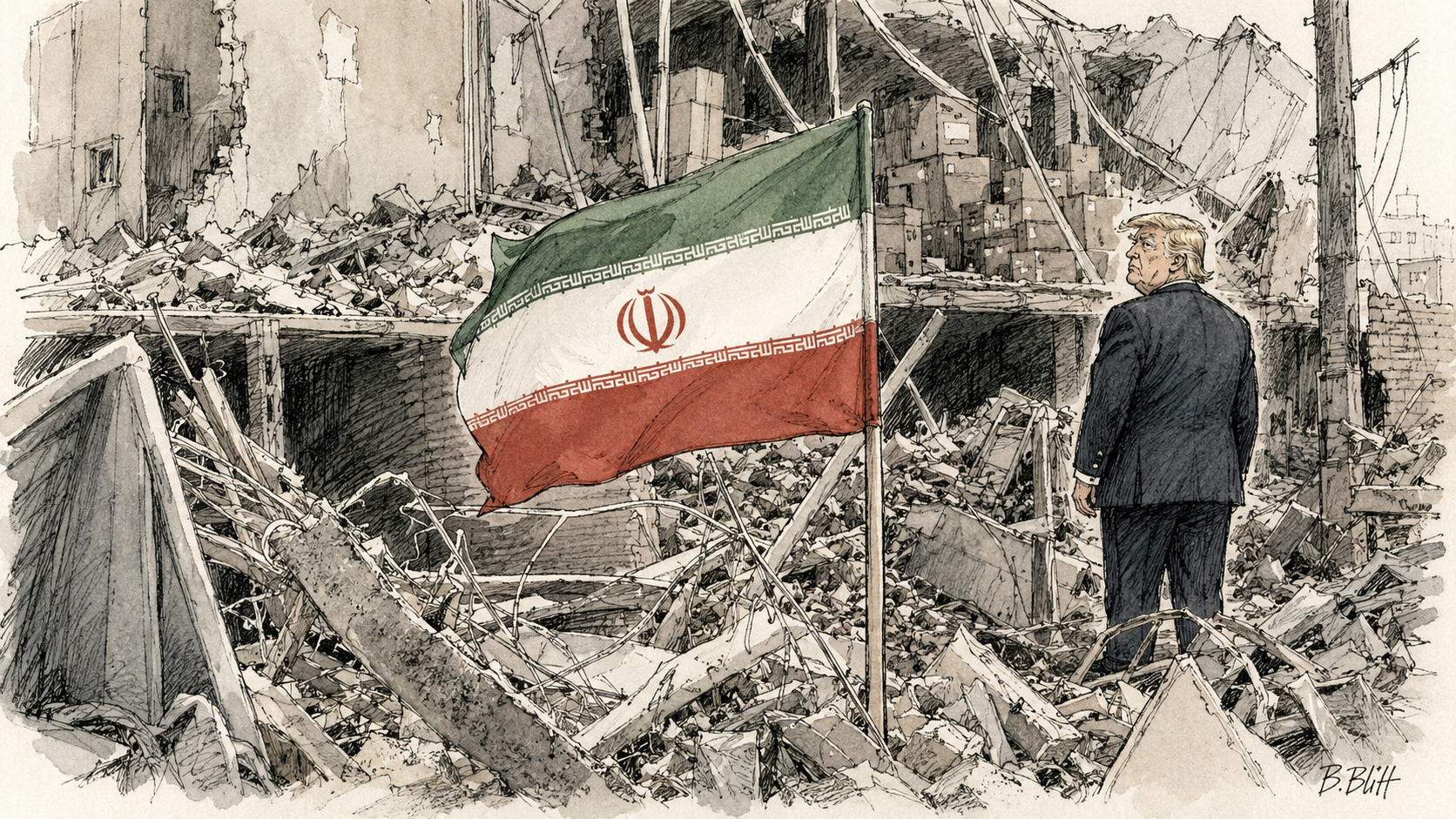
The United States cannot indefinitely call a policy successful simply because it postpones the consequences of failure.
Washington has treated the Iranian threat as a problem to contain and postpone. Trump’s wager is that the greater danger now lies in allowing that strategy to continue.
For nearly half a century, the United States has pursued a policy toward Iran defined by a fundamental contradiction. Washington has consistently recognized the danger posed by Tehran’s ambitions while repeatedly avoiding a final reckoning with them.
Successive administrations have imposed sanctions, negotiated agreements, conducted limited military operations, and strengthened regional alliances. Each approach has produced temporary successes. None has fundamentally resolved the strategic problem.
That record should force an uncomfortable conclusion: managing the Iranian threat is not the same as reducing it.
President Donald Trump’s decision to confront Iran more directly rests on precisely this calculation. His approach carries undeniable risks. But the debate has too often focused exclusively on the dangers of action while treating the dangers of inaction as manageable, abstract, or distant.
They are no longer.
The central question facing Washington is not whether confrontation with Iran involves risk. Of course it does. The relevant question is whether continued restraint now carries a greater strategic risk than decisive action.
Increasingly, the answer appears to be yes.
The Failure of Deferral
For decades, American policy has operated on the assumption that time would make the Iranian problem easier to manage.
Time would allow sanctions to weaken the regime. Time would create opportunities for diplomacy. Time would produce internal political change. Time would strengthen deterrence.
But time has also worked for Iran.
While Washington debated, negotiated, sanctioned, and periodically retaliated, Tehran expanded its military capabilities, strengthened networks of armed partners across the Middle East, improved its missile programs, and continued to advance capabilities associated with a potential nuclear weapons program.
The result is not a problem that has disappeared through patient management. It is a problem that has become more technologically sophisticated and strategically consequential.
This is the central weakness of strategic patience: it is prudent only when time favors the patient.
For the United States, there is increasing reason to doubt that it does.
A policy of indefinite containment assumes that Iran can be prevented from crossing critical thresholds indefinitely. It assumes that deterrence will remain credible even as Tehran’s capabilities expand. It assumes that American allies will continue accepting an increasingly uncertain security environment.
Those are not permanent conditions. They are assumptions.
And assumptions are a poor foundation for long-term strategy when the consequences of being wrong become progressively more severe.
Why Confrontation Can Be the More Prudent Choice
Confrontation is often presented as the reckless alternative to diplomacy. That framing is strategically misleading.
The relevant choice is not between confrontation and peace. It is between acting under current conditions and accepting the possibility of confronting a stronger and more capable Iran under less favorable conditions in the future.
Military action carries immediate costs. Delay can create deferred costs.
A nuclear-capable Iran would alter the strategic landscape of the Middle East. It could encourage proliferation among regional powers, complicate Israel’s security calculations, increase the vulnerability of American forces, and place new limits on Washington’s ability to deter Iranian activity.
Once such capabilities are acquired, preventing their use or containing their consequences becomes considerably more difficult.
This is why preventive action has historically been among the most difficult questions in statecraft. The costs are visible immediately, while the dangers it seeks to prevent remain hypothetical. Political systems naturally place greater weight on the costs that can be seen than on catastrophes that might occur years later.
But strategy requires the ability to assess both.
The absence of an immediate crisis does not mean that the strategic environment is improving. Sometimes it means that the crisis is being allowed to mature.
Trump’s wager is that the United States has reached that point with Iran.
Power Must Change Calculations
The purpose of American military power should not be punishment for its own sake. Nor should it be the pursuit of an unlimited conflict.
Its purpose is to change calculations.
For too long, Iran has been able to test American and regional resolve while assuming that Washington’s overriding objective would remain the avoidance of escalation. That assumption can itself become a strategic asset for Tehran. An adversary that believes the United States will always prefer de-escalation can exploit American caution to establish new facts on the ground.
Deterrence depends on uncertainty as much as capability. An adversary must believe that certain actions will produce consequences it cannot control or comfortably absorb.
Trump’s approach seeks to restore that element of uncertainty.
Operation Epic Fury was significant not simply because of the military capabilities it targeted but because it challenged the assumption that American power would remain largely reactive. The message was that the United States was prepared to act before threats became irreversible.
That principle carries risks. But so does allowing adversaries to determine when and under what conditions confrontation becomes unavoidable.
The strategic advantage belongs to the side that retains the initiative.
The Alternative to Action Is Not Necessarily Peace
One of the most persistent errors in debates over the use of force is the assumption that avoiding military action preserves peace.
Sometimes it does.
But sometimes it merely postpones a conflict until the balance of power has shifted against the state attempting to avoid it.
The United States has already spent decades attempting to prevent the Iranian challenge from reaching a decisive point. If Washington concludes that Tehran is approaching capabilities that would fundamentally alter the regional balance of power, the argument for further delay becomes increasingly difficult to sustain.
This does not require the United States to seek war.
It requires Washington to recognize that a willingness to accept limited confrontation may be necessary to prevent a much more dangerous confrontation later.
That is the logic of preventive strategy.
The objective is not to fight because conflict is desirable. It is to act before the available alternatives become substantially worse.
The Political Test
The political timing makes Trump’s decision more consequential.
With midterm elections approaching, the administration has every reason to avoid economic uncertainty and international escalation. A president focused exclusively on political survival might prefer another temporary arrangement or simply defer the problem.
Trump has chosen otherwise.
That does not make his strategy correct. But it does suggest that political convenience has not been the administration’s only consideration.
National security decisions should not be insulated from democratic accountability. Presidents must justify the costs of their policies and remain answerable for their consequences.
Yet strategic threats cannot always be scheduled for politically convenient moments.
A president’s responsibility is not simply to avoid unpopular decisions. It is to determine whether postponing them will leave the country in a stronger or weaker position.
On Iran, Trump appears to have concluded that further delay would weaken the United States.
The coming months will determine whether he is right.
A Confrontation With an End
The strongest argument for confronting Iran is not that Iran must be defeated in an unlimited war. It is that the United States must prevent the emergence of conditions under which its options become dramatically narrower.
That requires clearly defined objectives.
Washington should seek to limit Iran’s most dangerous military capabilities, restore credible deterrence, protect American forces and allies, and create sufficient pressure to make a durable diplomatic settlement possible.
The United States should not confuse these objectives with the far more ambitious—and far more dangerous—goal of remaking Iran through force.
A successful confrontation would therefore be limited but decisive. It would impose costs sufficient to alter Tehran’s calculations while preserving a path away from permanent conflict.
That is the strategic balance Trump must achieve.
The administration should be judged not by whether it uses force, but by whether force serves a coherent political purpose.
The Choice Washington Can No Longer Avoid
For decades, the United States has attempted to manage Iran without resolving the fundamental strategic challenge posed by its regional ambitions and advancing capabilities.
That approach has reached its limits.
The danger of confrontation is real. So are the dangers of escalation, miscalculation, and prolonged conflict.
But the danger of continued deferral is equally real—and may ultimately be greater.
Washington’s choice is no longer between risk and safety. It is between different forms of risk, operating on different timelines.
Trump’s decision to confront Iran rests on the belief that acting now, while the United States retains significant military, diplomatic, and strategic advantages, is preferable to waiting until the threat becomes more difficult and more costly to address.
History will judge whether that calculation was correct.
But one conclusion is increasingly difficult to escape: the United States cannot indefinitely call a policy successful simply because it postpones the consequences of failure.
At some point, management becomes avoidance.
Trump has decided that point has arrived.
Related Topics
Related Posts