The Little Film That Could – Until October 7th
What began as a cute film about a Holocaust survivor became something much more complicated after October 7th.
Making a documentary film can take years. In our case, it took more than five. During those five years, the world changed so dramatically that the film we started making became something else entirely. The best-laid plans, as they say.
It began when filmmaker Yaniv Rokah, director of the award-winning documentary Queen Mimi, learned about my partner Gidon Lev and me. Gidon, now 91, survived four years in the Theresienstadt concentration camp as a child. Twenty-six members of his family were murdered in the Holocaust, including his father. After the war, he came to Israel and built a life here, raising a family, working, loving, losing, laughing, and generally being a rascal.
Yaniv envisioned a documentary about our unconventional relationship, with footage of Gidon delivering flowers, telling his story, and charming just about everyone he encountered. So we began filming here and there, whenever circumstances allowed. It was fun.
Once, while filming at Kibbutz Hazorea, where Gidon lived when he came to Israel in 1959, an elderly woman drove past the film crew surrounding Gidon as we were working on a scene. Suddenly, the brake lights of her little electric cart came on. She turned around, craning to cast her withering gaze on Gidon.
“Gidon Lev! I remember you! You are a rascal!” she called out in Hebrew.
Then she drove on. I didn’t ask.
During the COVID pandemic, like most of us, Gidon and I found ourselves at home, wondering what to do with all that time. So we started a TikTok account. Why not? What did we have to lose? It was a lark.
To our complete and utter amazement, TikTok fell in love with Gidon Lev. Before long, videos of this elderly, charming Holocaust survivor dancing, telling jokes, and sharing his memories had accumulated millions of likes and nearly half a million followers. My phone notifications never stopped dinging.
Something truly amazing was happening. Young people, many of whom had little knowledge of the Holocaust, were listening to a survivor because they liked him. They weren’t experiencing Holocaust history as an assignment or a museum exhibit; they were, through their screens, getting to know Gidon, a funny, mischievous, very much alive human being whose childhood had included unimaginable suffering. Somehow, Gidon personified hope, resilience, and some very difficult history at the same time. And he did it while dancing around our living room.
As for the film, it was back to the drawing board. We’d already filmed hours of footage, but now we had to find a way to incorporate this latest, crazy TikTok development.
And so the filming continued. Prague, Theresienstadt, New York, California, and shooting locations all over Israel. Reader, the number of flights, hotels, rental cars, cameras, microphones, fundraising pitches, pep talks, and Zoom meetings would boggle your mind. Not to mention the more Zoom meetings. I had absolutely no idea that making an independent documentary could be so exhausting. If I never have to be wired with a microphone again, I will be quite happy.
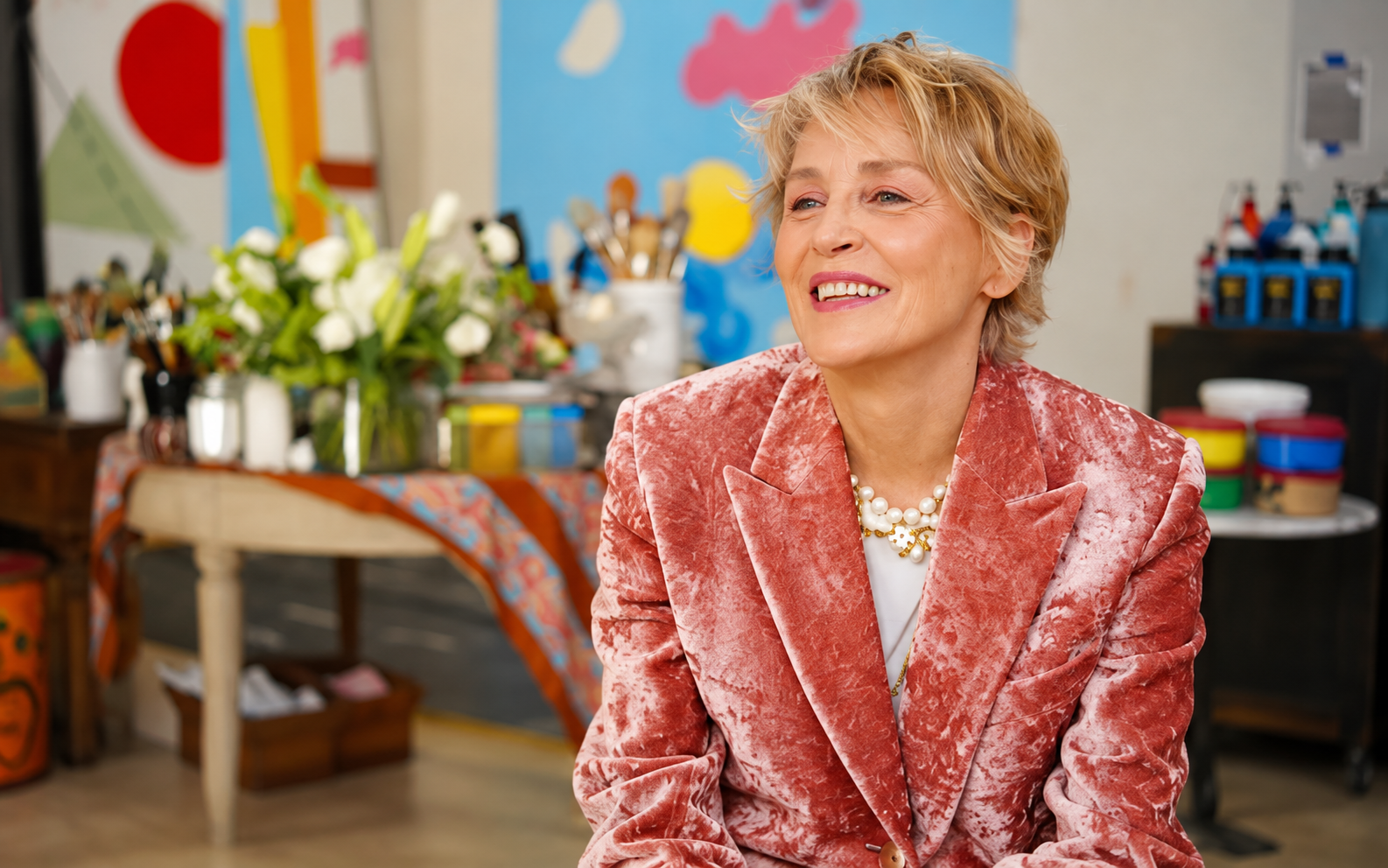
Gidon’s charm, the footage Yaniv had captured, and Gidon’s growing public profile were enough to persuade social media superstar Montana Tucker to make a guest appearance in the film. Then Bravo’s Andy Cohen (who had made Gidon his “Mazel of the Day”) came aboard, too. And then Sharon Stone. Wow. We were really rolling.
And then October 7th happened, and the whole world turned inside out and upside down.
Suddenly, a film about a charming Israeli Holocaust survivor dancing on TikTok took a very dark turn. Not only because the atrocities of October 7th happened while we were working on the film, but because in the aftermath, something happened that neither Gidon nor I could have imagined.
Knowing that Gidon was Israeli, a small but very loud faction of his fans began flooding his social media accounts with hate, threats and accusations that he supported genocide. Here was a man who had survived the Holocaust, who had spent years trying to teach young people about hatred, antisemitism, and the value of human life. He had attracted an enormous international audience by showing that a survivor could be funny, joyful and optimistic, and that learning could be yes, even entertaining. Now he was being called a supporter of genocide. A baby killer. It defied belief.
It was not lost on me that we had once made a TikTok video explaining Holocaust inversion. Now we were living it.
Then, just like that, potential funding for the documentary evaporated. Investors who had once been enthusiastic about Gidon’s extraordinary story became reluctant. An Israeli Holocaust survivor was suddenly a liability. The film might provoke protests. It might create problems. Best not to touch it. It wasn’t a good time, we were told.
But time was exactly what we didn’t have. Gidon was getting older. The last living Holocaust survivors are passing away, and with them, the opportunity to hear directly from eyewitnesses. We had years of footage, an extraordinary story, and a director determined to tell it. What we didn’t have was the money to finish the film.
So Yaniv did what any Israeli would. He didn’t give up.
Yaniv handled the film’s editing and post-production himself, through funding setbacks, disappointments, and an increasingly hostile atmosphere surrounding everything Israeli. Living in New York, he narrowly avoided fistfights with people tearing down hostage posters between editing sessions. He taped the posters right back up again.
And then he went back to editing.
And nes gadol, he finished it. Shehecheyanu. Amen amen amen.
And now, after more than five years, Follow Me is finally making its way into the world. The documentary has been accepted into the Newport Beach Film Festival, where it screens on October 18 and 20, and the Miami International Jewish Film Festival in January 2027.
On January 27th, International Holocaust Remembrance Day, Gidon has been invited to speak at the United Nations in New York. That same evening, the Streicker Cultural Center at Temple Emanu-El in Manhattan is scheduled to screen Follow Me.
Naturally, I’m worried about what to wear to the Manhattan screening, but I’m much, much more worried about Gidon speaking at the UN. He has some rather choice opinions about that institution, as do I. Anyone who has ever met Gidon knows that he isn’t particularly inclined to keep his opinions to himself. To put it lightly.
As for the film, we hope it will hit streaming platforms next year, so people everywhere can get to know this extraordinary, exasperating, irrepressible man I’ve shared my life with for the past nine years.
And Gidon, at 91, has another adventure ahead.
God help the United Nations.
Follow Me screens at the Newport Beach Film Festival on October 18 and 20, 2026. Festival tickets and screening information. The film will also be presented at the Miami International Jewish Film Festival in January 2027, with a New York screening planned for International Holocaust Remembrance Day.