The Living Message of Passover
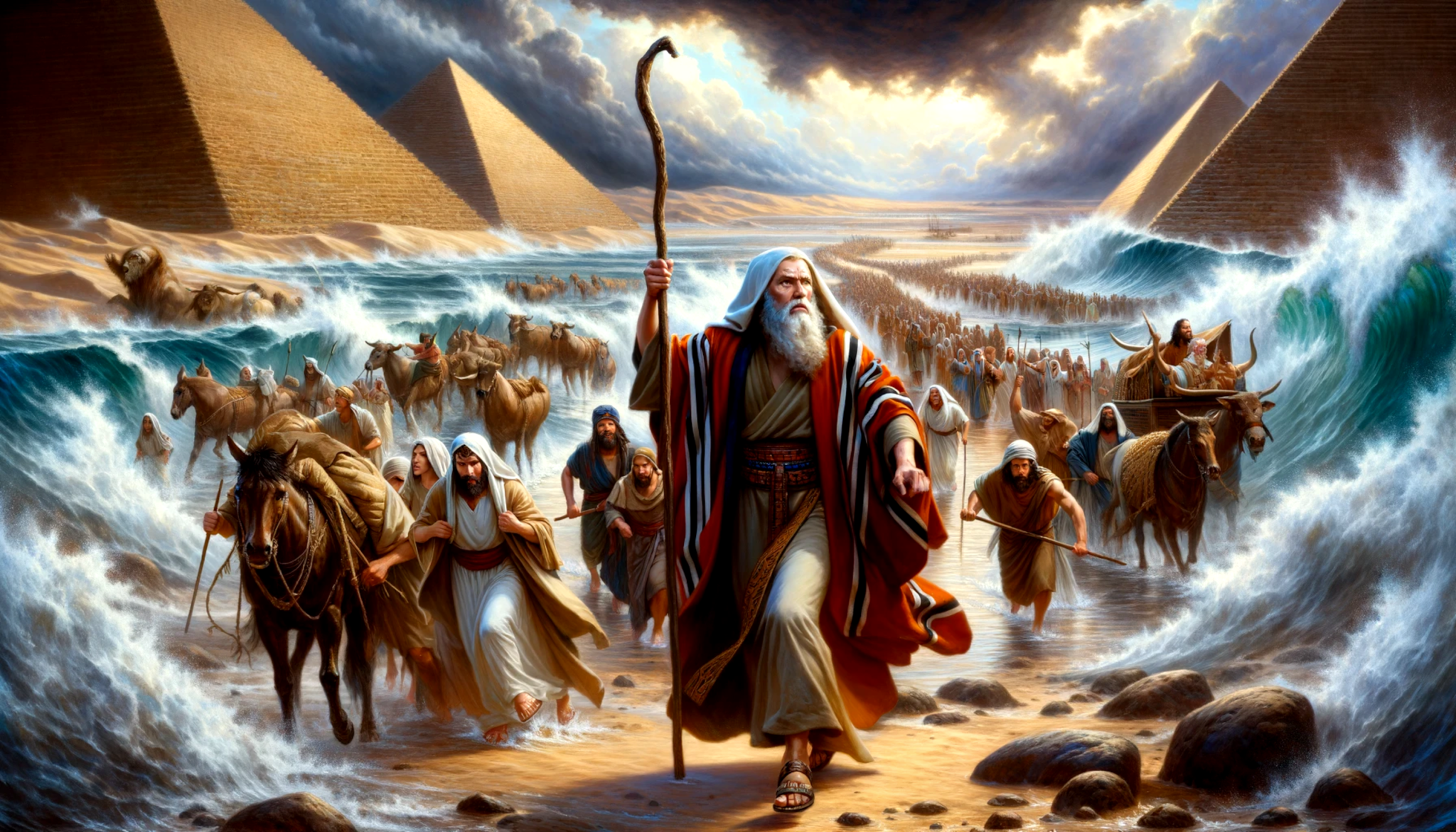
The late Rabbi Lord Jonathan Sacks, once reflected about Passover: “Pesach tells us that the strength of a nation does not lie in horses and chariots, armies and arms or in colossal statues and monumental buildings and overt demonstrations of power and wealth. It depends on simpler things: humility in the presence of the God of creation, trust in the God of redemption and history, and a sense of the non-negotiable sanctity of human life, created by God in His image: even the life of a slave or a child too young to ask questions.”
These are not just nice words. Rabbi Sacks here speaks a truth that we often fail to remember or carry in our daily lives. Although we know the ancient story all too well – the journey of our people from slavery to freedom, we too often overlook the deeper message it’s meant to teach us.
Passover is not just about the past, about a people who lived long ago.
It is about the present. It is about us now.
It is about the ongoing struggle for freedom – for ourselves, for our families, for our country, and for our people.
History has shown us that the words of the Passover Haggadah have indeed played out. That is, in every generation, we as a Jewish people have faced existential threats from our enemies. Today this threat of annihilation is perhaps more visible than in any time in recent history.
In the words Vehi She’amda, which we sing at the Passover seder, we give voice to this reality:
“That which stood for our ancestors applies to us as well.
For it was not only one individual who stood up against us to destroy us.
Rather, in every generation they stand up against us to destroy us.
But the Holy One, Blessed Be He, redeems us from their hands.”
In these words, we are told what has happened, what will happen, and where to place our faith.
Egypt is not only a place our ancestors left; it is a condition of exile we continue to experience.
We see this by our behaviors as a people, as a Jewish nation. When we hesitate to speak out, to stand for what is right. When we allow ourselves to be on the defense even when we know the actions of our leaders and our people are just. When we compromise on our values or identity or religion in response to external pressures or expectations, or in response to what other nations expect of us.
So often we have found ourselves reacting rather than leading, shaped more by the forces around us than by the principles within us. And yet, our history reminds us that we were never meant to live that way. We are a people defined not by silence, but by purpose; not by fear, but by faith.
We must, as a nation, recognize where we have held back, where we have strayed, and find the courage to steer ourselves onto the right path even when others go a different way, and to do this with strength, clarity, and conviction.
At the same time, we must not only remember and appreciate the miracles of our past, the plagues, the splitting of the sea, the exodus from Egypt, but also recognize the extraordinary miracles unfolding in our own time. Even in moments when Israel faces relentless missile attacks from Iran, from Hezbollah, and from the Houthis, there are far fewer casualties than might be expected, and countless miraculous stories emerging. Here we should pause and recognize that there is a higher power at work.
And just as we as a nation must confront our limitations and break them, so too, we need to do this as individuals. We may feel it also in our personal lives when we self-censor. When we know we must not raise a certain topic or say a certain thing because it’s just not what is said or done. We limit our speech and perhaps our actions. We hold back, even when it does not reflect what we truly believe. We repeat destructive behaviors and habits, and we continue to let meaningless distractions consume us. Each of us carries our own version of confinement.
And so, on Seder night, we ask Ma Nishtana – “Why is this night different from all other nights?”
This question, sung by the children and often assumed to be meant primarily for them, may in fact be more than it appears. Perhaps it is meant for each of us. Why is this night different? What will we do differently tonight, and in the year ahead, that we did not do last year?
Slaves do not question. Slaves accept their reality as it is, unable to imagine change, trapped within narrow confines with no clear way out. But a truly free person dares to ask, dares to challenge, and dares to believe that the world can be different, and that they themselves can be different. That there is a choice.
Passover offers us that moment of decision and transformation. It calls on us to choose freedom, to choose growth, to choose responsibility. It reminds us that freedom is not a single moment, but an ongoing process and practice.
When we tell the story on Seder night, we are doing more than recalling a journey of the past. We are being called to continue it, bringing the story from history into the present and carrying it forward into our future.
The strength, therefore, of our people, and of each of us individually, is measured not only by displays of power, but as Rabbi Sacks stated, by humility, faith in God, and a steadfast respect for ourselves, our identity, and our shared heritage. Passover challenges each of us to live our story, stand up and fight for the truth and for our God-given freedoms, and translate the lessons of the Haggadah into our actions, shaping ourselves, our communities, and the world around us.
The true measure of the Seder is therefore, not only what we say around the table, but what we carry with us when we leave it, and who we become because of it.