The look I still remember
When I was five years old, our house caught fire.
It was still dark outside—around four or five o’clock on a Sunday morning. My mother woke us from our beds, grabbed my sisters and me, and ran outside as smoke and flames consumed our home. More than 30 years later, I can still remember the smell.
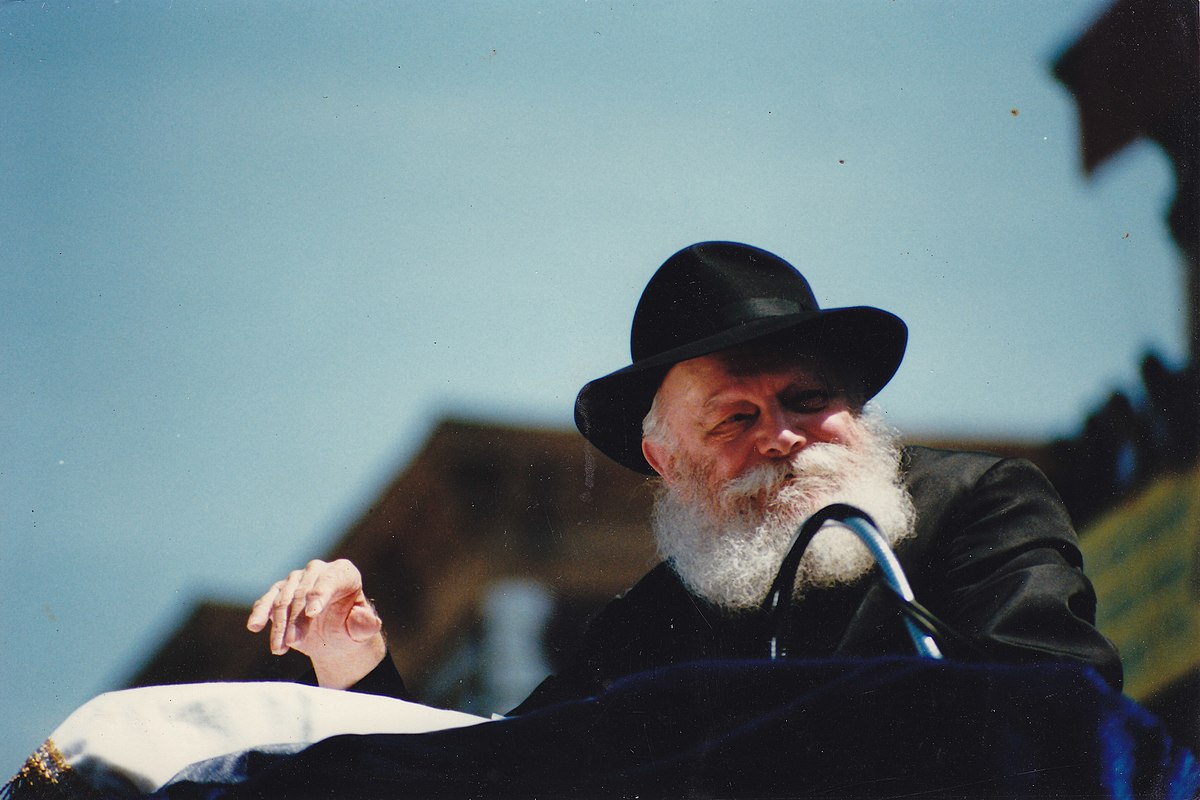
A few hours later, we were standing in front of the Rebbe.
Looking back, I realize how unusual that must sound. We hadn’t spoken to the insurance company. We hadn’t figured out where we were going to live. We hadn’t begun replacing what we’d lost.
In our family, before you called the insurance company, you went to the Rebbe.
Not because we expected him to magically solve our problems.
But because that was simply where you went when life happened.
The Rebbe looked at my parents, then at each of us children, and told my parents in Yiddish, “נאָך אַ שריפה ווערט מען רייך” — “After a fire, one becomes rich.”
For years, I smiled at those words.
We never became rich — not in the way most people define wealth.
But perhaps we did.
We became rich in resilience.
Rich in gratitude.
Rich in faith.
Rich in the certainty that even after everything burns down, life can be rebuilt.
That was one of my earliest memories of the Rebbe.
It wasn’t my strongest.
My strongest memory is the way he looked at people.
Like many Lubavitch children, I stood in line to receive a dollar from the Rebbe.
I don’t remember the dollar.
I remember the look.
We always went youngest to oldest, and my sister Ricky was just ahead of me. What fascinated me wasn’t what the Rebbe said. It was what happened afterward.
He didn’t immediately turn to the next person.
He watched each child walk away.
Even as a little girl, I noticed it.
He looked at my sister until she disappeared from sight, as though, for those few moments, there was no one else in the room.
Thousands of people were waiting.
Yet somehow one little girl felt completely seen.
Thirty-two years later, that is still what I remember.
As a child, I didn’t understand why my grandfather loved being around the Rebbe so much.
There were Hasidim who wondered whether they should stand in line for dollars, worrying that it meant making the Rebbe stand a little longer.
My Zaidy couldn’t understand the question.
“If the Rebbe is already standing,” he would say, “of course I’m going.”
It wasn’t about the dollar.
He simply wanted one more moment in the presence of someone who radiated goodness.
Only years later did I understand.
My grandfather wasn’t chasing a miracle.
He was drawn to someone who made people feel seen.
Growing up, I heard countless stories that reflected that same quality.
One involved my mother, who desperately wanted to attend a camp her parents opposed. The Rebbe saw not simply a disagreement, but a young girl with a unique mission.
Another came from one of my own teachers. As a little girl, she refused to go to school. Most adults saw a stubborn child.
The Rebbe saw a child who needed understanding before correction.
Instead of asking, “What’s wrong with her?” he seemed to ask, “What does she need?”
That question has stayed with me.
Especially this year.
For years I’ve always said that I wanted to become the teacher I never had.
This year I realized something.
Maybe that’s not actually my goal.
Maybe what I’ve been trying to become is the kind of teacher the Rebbe showed me a teacher could be.
The Rebbe never stood in front of my classroom.
Yet he taught me one of the most important lessons I’ve ever learned.
See the child before you see the behavior.
This year, as an educator in Israel, that lesson has become more important than ever.
Our students have lived through things children should never have to experience.
Sirens.
Sleepless nights.
Parents serving in the reserves.
Anxiety that follows them into the classroom.
The truth is, we rarely know what they’re carrying.
Some students are easy to teach.
Others test every ounce of patience we have.
They interrupt.
They seem uninterested.
They push every boundary.
Sometimes they arrive looking as though no one had the chance — or the emotional capacity — to care for them before school.
It’s easy to react to what we see.
The harder task is to ask what we don’t.
What happened before this child walked through my classroom door?
Tomorrow morning, I’ll unlock my classroom.
My students will walk in.
Some laughing.
Some exhausted.
Some carrying stories I’ll never know.
Thirty-two years after the Rebbe’s passing, I can’t ask him how to teach them.
But I can remember the look.
The one that lingered until a little girl disappeared from sight.
The one that made people feel that, for one brief moment, they mattered.
Only after writing this did I realize something I should have noticed from the beginning.
Thirty-two is the numerical value of the Hebrew word לב—heart.
Not because the Rebbe simply had a kind heart.
But because he taught generations of us how to use ours.
Perhaps that is the truest measure of a legacy.
Not how many people remember your words.
But how many people spend the rest of their lives trying to see the world the way you did.