The Madness of Dreams
It is the climax of a heart wrenching story of twenty two years. In this week’s parasha, in one of the most emotional scenes in the Torah, Yoseph reveals himself to his brothers. It ends with grandeur and reconciliation in Egypt, but it all began with a dream that Yoseph had when he was merely seventeen years old in the Land of Canaan. With the benefit of retrospect, we can ask an interesting question: Did Yoseph’s dreams come true?
It is hard to give a clear answer. The Torah does not directly address this question. We must piece together the clues from the few facts we have available to us. First, let’s review the dreams:
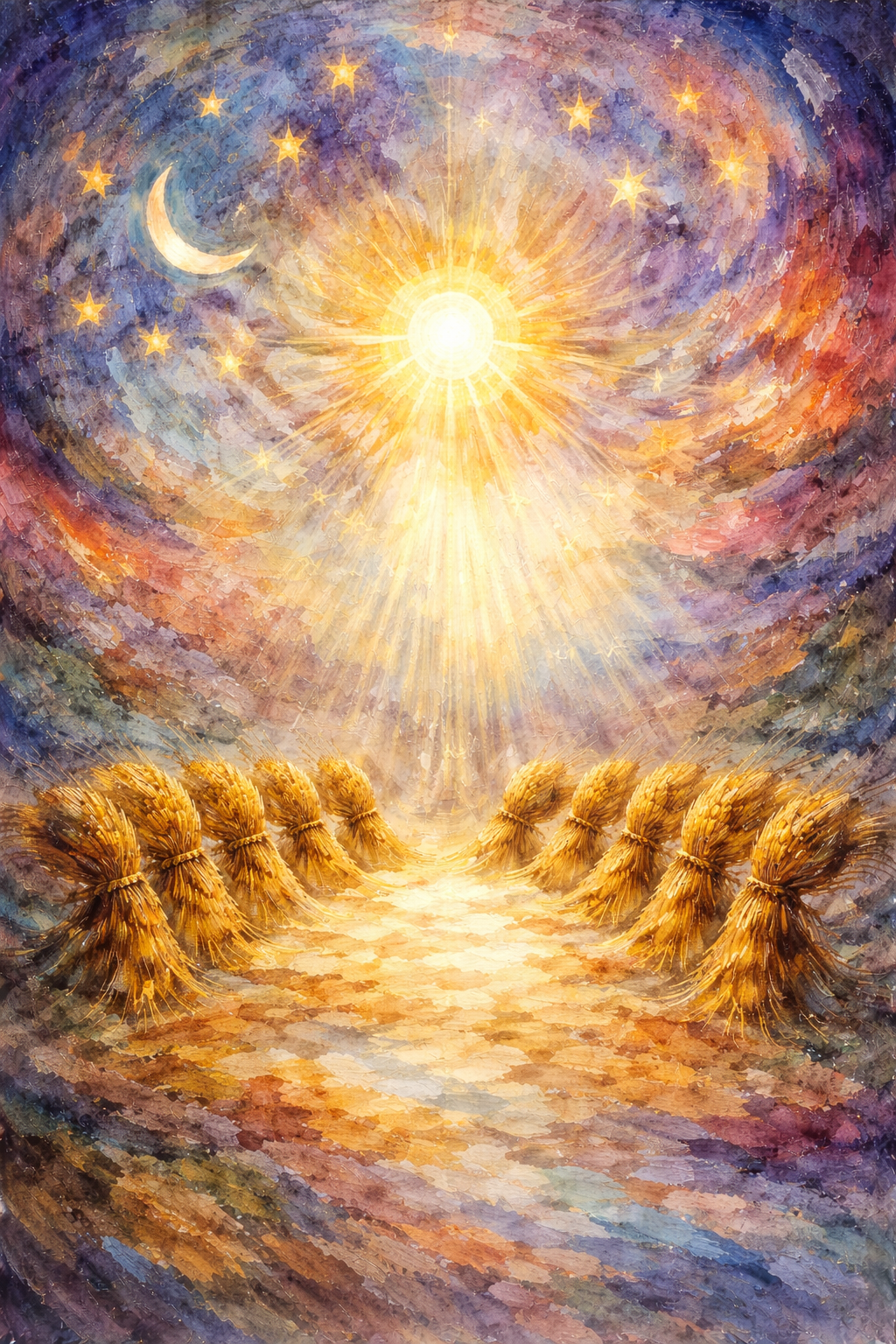
He said to them, “Hear this dream which I have dreamt: There we were binding sheaves in the field, when suddenly my sheaf stood up and remained upright; then your sheaves gathered around and bowed to my sheaf.” His brothers answered, “Do you mean to reign over us? Do you mean to rule over us?” And they hated him even more for his dreams and for his words. And he dreamt another dream and told it to his brothers, saying, “Look, I have had another dream: And the was the sun, the moon, and eleven stars were bowing down to me.” And when he told it to his father and brothers, his father berated him. “What,” he said to him, “is this dream you have dreamt? Are we to come, I and your mother and your brothers, and bow to you to the ground?” So his brothers were envious of him, and his father kept the matter in mind. (Bereishit 37:6-11)
These two dreams are different. The first has no definite number of items representing the brothers, and the second does: eleven. Part of these visions definitely came true: His brothers bowed to him, several times. This happened first when they came to him to purchase grain in Egypt. And indeed, the first dream had the brothers symbolized as sheaves of grain:
The sons of Israel were among those who came to procure rations, for there was famine in the Land of Canaan. Now Yoseph was the vizier of the land; it was he who dispensed rations to all the people of the land. And Yoseph’s brothers came and bowed low to him, with their faces to the ground… For though Yoseph recognized his brothers, they did not recognize him. Recalling the dreams that he had dreamed about them, Yoseph said to them, “You are spies; you have come to see the land in its nakedness.” (Bereishit 42:5–9).
It is quite clear from here that Yoseph was conscious of his dreams, and that they seem to guide the course of action he subsequently took against his brothers. He accuses them of being spies, forcing them to return home and bring their youngest brother with them back to him. He takes one of his brothers prisoner, attempting to guarantee that they will indeed return.
Was his course of action justified? A number of commentators criticize Yoseph for this. Yet Yoseph seems to have other competing considerations on his mind: The dreams are yet to be fulfilled; not all eleven of his brothers have bowed to him. He must find some way of bringing them all before him.
The plot takes a darker turn. Binyamin, the youngest brother, comes down to Egypt. Famine has forced Yaakov’s hand; he waits, gripped with angst and anxiety, for him to return. Yoseph frames Binyamin and then condemns him to slavery. This brings us to the beginning of the week’s parashah, where Yehuda pleads to be enslaved instead of Binyamin, to allow Binyamin to return to Yaakov. Yehuda’s speech finally breaks Yoseph, who tearfully reveals himself to his brothers. This was not the plan. It was an emotive response.
So what was Yoseph’s plan? Why did he frame Binyamin? It would seem that the next step would have been to imprison Binyamin in Egypt. This is what he said he would do. Yoseph knew that his father would never leave Binyamin to this fate. The old Yaakov himself would have to travel to Egypt, bow, and plead before this foreign ruler for Binyamin’s release. If this would happen, Yoseph’s second dream would be fulfilled. Yoseph then could have his grand reveal. With his father, brothers, and their families in Egypt, with the sun, moon, and stars all bowing down to him, with his dreams fulfilled, he could suddenly pull off his mask, comfort their racing fears, and reveal that he was not a foe but the long lost Yoseph. What a climax to the story that would have been! Putting aside the uneasy feelings that would have come from dragging out the story even more, would this not have been an even greater ending to this remarkable story?
But putting aside those feelings is the problem itself. He could have made both dreams come true, but at what cost? He would put his father through the trauma of losing a second son, the degradation of having to beg for his child’s life in a distant land. How much debris would be left in the wake of his dream chasing? What if his father died of grief while he was focused on making some youth-dreamt vision come true? During the heartfelt pleas of his brother Yehuda, Yoseph realized: he could be a son or a dreamer, he could not be both:
(Yehuda said) Now, if I come to your servant my father and the boy is not with us… he will die, and your servants will send the white head of your servant, our father, down to the grave in grief. Yoseph could no longer control himself… his voice broke into tears… Yoseph said to his brothers, “I am Yoseph. Is my father still alive?” (Bereishit 44:30–45:3)
Yoseph almost fulfilled his dreams. The first dream came true; the second required Yoseph the Dreamer to replace Yoseph the Son. This was a step that Yoseph would not take. The second dream remained unfulfilled.
Or maybe:
The final chapter of Masechet Brachot discusses dreams at length. I am no “dream expert,” but there are two fascinating principles about dreams that are taught there and are relevant here. First: the teaching of Rabbi Elazar (Berachot 55b) that “כל החלומות הולכים אחר הפה – all dreams follow their interpretation.” Second: the teaching of Rabbi Shimon Bar Yochai (Berachot 55a) that “אי אפשר לחלום בלי דברים בטלים – dreams always have some useless content.”
Let’s return to the second dream. It did come true, just not according to Yoseph’s understanding of it. His father was wiser: he did not dismiss the dream, only part of its content. He did two things: He rebuked his son for supposing that his parents would bow to him, and privately, he took the dream to heart. The Midrash (Bereishit Rabba 84:12) even says he wrote down the hour, day, and place that his son had had this vision. He said to his son: “You might have dreams, but even they have limits. Do you really think a day will come when you allow your parents to bow to you?!” The dream indeed came true, but on Yaakov’s terms.
When the brothers return to Yaakov to tell him that Yoseph is still alive, they use the eternal phrase “עוד יוסף חי – Yoseph is still alive!” (Bereishit 45:26) Yaakov, after taking in the enormity of the situation, responds:
“עוֹד־יוֹסֵ֥ף בְּנִ֖י חָ֑י – Yoseph, my son, is still alive.” (Bereishit 45:28)