

The man Rabin called a ‘gang leader’ is still in power. Remove him in time
Thirty-one years after Rabin’s assassination, “My country is gone” is no longer an expression of grief, but a statement of fact. I stood by his side as we initiated projects and built a nation. Today, they are merely clinging to power and dismantling our national assets. We owe Yitzhak Rabin one simple thing: to restore his priorities. It is up to all of us.
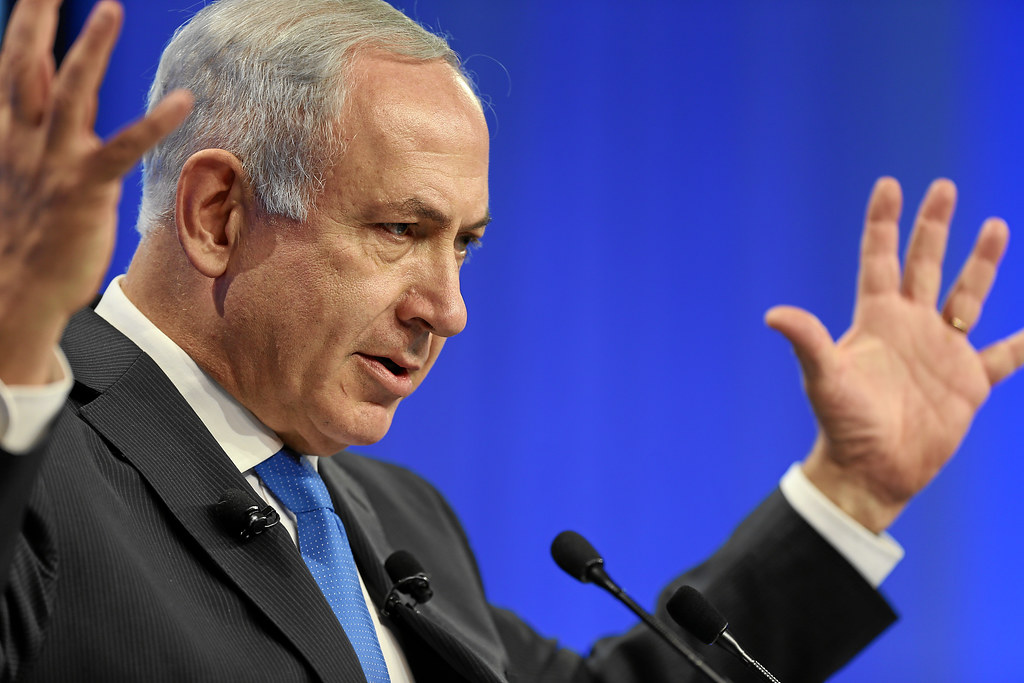
November 4. Thirty-one years since the heinous assassination. Thirty-one years of incitement, rebellion and the stoking of hatred. Thirty-one years during which the man who stood on the balconies, and later inherited the seat of power, has worked systematically to strip Yitzhak Rabin of his legitimacy, even after his death. “A saboteur,” Yitzhak Shamir called Benjamin Netanyahu. “The head of the gang,” Rabin called him. Both knew exactly whom they were talking about. Today, every Israeli knows.
That night, as I left Ichilov Hospital, the first microphone thrust in front of me prompted a single sentence: “My country is gone.” At the time, it sounded like an expression of grief. Today, it is a statement of fact. The Israel that existed before the assassination has not returned, and probably never will. What has happened to us since? More hatred, more strife, deeper divisions. And in the meantime, we have lost sight of a simple truth: a country can be governed, and a leader’s job is to govern it for its citizens, not to use the country and its people for his own purposes.
Because with Rabin, it was not only the peace process that was murdered. An entire system was murdered, too. A model of leadership that saw the state as something of value, something to be served and governed: setting goals, making decisions, implementing them, reviewing progress and correcting course when necessary.
The system died with him, too.
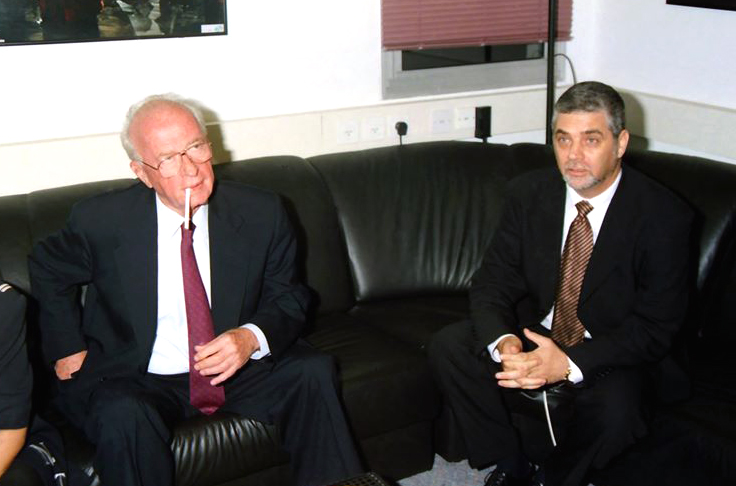
I spent 12 years by his side, day and night, through joy and sorrow, success and failure, in almost every situation imaginable. I never once saw him lose his composure. He knew how to get angry, argue and make tough decisions, but he never lost his head. Just as importantly, he never compromised on Israel’s identity as a country, nor on its Jewish character. To him, there was no contradiction between the two. A strong Jewish state also had to be Israeli, democratic, governed by the rule of law and practical. No messianism, no personality cult. Just responsibility.
“Changing priorities” was the slogan in 1992, and anyone who thought it was just another election slogan did not know Rabin. Every day of that government was measured by what it delivered. In practice, we had two governments: one made up of elected officials and another of director-generals. Every Tuesday, the “director-generals’ bus” went out into the field to see what was moving forward and what was stuck. We initiated Ben-Gurion Airport 2000 and Terminal 3, set Highway 6 in motion, expanded and illuminated the Jerusalem highway, and opened roads in the Galilee and the Haifa region. We designated 14 cities and local authorities as national priority areas, appointing a director-general to oversee each one. We established the city of Modi’in. We abolished the position of “Adviser on Arab Affairs,” which still carried the stench of military rule, and replaced it with a committee of director-generals dedicated to Arab society. It was a revolution in Arab society, a revolution in settlement, and a revolution in education. Not all of it succeeded, and we made our share of mistakes. But there was someone accountable, there was a plan, and there was someone making sure it was carried out.
Look around today. A government that has failed to bring a war to an end, that left hostages to die in captivity, and whose ministerial committee on the cost of living met seven times before simply disappearing in February 2024. Instead of work plans, it churns out an endless stream of political spin. Once, we built a country and worked for its benefit. Today, all they do is cling to power.
He never lost his head.
A country is not governed only through roads, budgets and meetings of director-generals. Leadership is also measured by the ability to recognize its strategic assets and protect them. And Israel’s greatest asset has always been, and remains, its alliance with the United States. President George H. W. Bush refused to provide Shamir with loan guarantees because Shamir insisted on continuing to pour money into the settlements. Rabin was elected in 1992, changed the country’s priorities and secured $10 billion in loan guarantees to help absorb immigrants from the Soviet Union. In 1994, after previous Israeli requests had been rejected, the Clinton administration approved the sale of supercomputers to Israeli universities. That may sound like a technical footnote today, but anyone who remembers the state of Israeli technology at the time knows that it was another door opened to the technological revolution. The presidents who followed continued along the same path, until, in 2016, Obama signed the largest memorandum of understanding in the history of the relationship, worth $38 billion over ten years.
And what does the head of the gang do? He gives it away. On October 23, in a television interview, Netanyahu said that American security assistance was “over,” without a Cabinet decision or a government resolution. Yesterday, Donald Trump told the truth: “I made a deal with Netanyahu that we stop giving Israel $4 billion a year,” adding, “They’re fine with it. They don’t need us.” Rabin fought for every dollar and every screw because he understood that the alliance with America was a strategic asset. Netanyahu is voluntarily giving up $4 billion a year as though it were loose change in a grocery store till, while promising to add NIS 450 billion to the defense budget. Where will the money come from? Ask him. Or wait for the crypto economy.
The same principle guided Rabin in the Palestinian arena: his central question was what served Israel’s interests. We must also tell the truth about Oslo, because for 31 years you have been told lies about those agreements. The Oslo Accords did not give the Palestinians a state. They transferred responsibility for much of their daily lives to the Palestinian Authority: the budget, education, healthcare and local government. And this also benefited Israel. For the first time since 1967, we stopped directly administering a substantial part of the lives of millions of Palestinians. At the same time, a security coordination framework was established that, over the years, helped prevent numerous terrorist attacks. The man who once incited against the “Oslo criminals” now signs agreements far worse than Oslo, while leading us, with our eyes wide open, toward a single state in which we will once again be responsible for running schools in Nablus and hospitals in Gaza.
At this moment, in the very week when the leaders of the Change Bloc must decide whether to form a government at any cost or drag us into yet another election, they would do well to remember Rabin’s simplest lesson: a leader is judged by decisions, not promises. Rabin never asked whether people would like him. He asked what was good for the country, and paid for it with his life.
In our final telephone conversation, just hours before the rally, Rabin was worried that not enough people would show up. He said to me: “Sheves, let’s be optimistic.” Rabin, the ultimate pessimist, was encouraging me. For 31 years, I have tried to honor that request, and I admit that it has never been harder than it is today. Nevertheless, I refuse to give up.
Thirty-one years after the assassination, the man Rabin called “the head of the gang” is still sitting in his seat of power. We owe Yitzhak one simple thing: to restore his priorities and remove the gang from the Prime Minister’s Office before it is too late. It is up to all of us.