A Call to the Moral Debate the World Refuses to Face — A Black Jewish Voice Speaks for Israel and Global Jewry
The Mayor Who Showed Up: A Jewish Reflection on Eric Adams’s Leadership
By Dr. Shmuel Legesse Former New York City Government Employee
Upcoming Author of Moral Diplomacy for a Broken World: Inspired by the Vision of Rabbi Jonathan Sacks
In the two decades I worked for New York City in public service, youth programs, community outreach and crisis-response I learned that leadership is measured not by popularity but by presence. A leader’s character is revealed by whom he shows up for, especially when attention turns elsewhere.
Mayor Eric Adams is a complicated figure, as every public leader is. But in a moment when the city feels fractured and trust in institutions is strained, some important truths risk being lost behind the noise of criticism. One of them is this: Eric Adams has consistently stood with New York’s Jewish community, with Israel, and with many of the most vulnerable people in this city. That record should not be dismissed.
I write this as a Black Ethiopian Jew, an Israeli, and an immigrant who has long considered New York a second home. My community knows what it means to feel invisible, misunderstood, or politically convenient. We also know who reaches out with sincerity. In more than 20 years of government service, I had the opportunity to observe how elected officials engage with the communities they claim to support. Some appear only when cameras are present. Others show up quietly, persistently, and without theatrical intention. Eric Adams has been the latter.
Long before entering City Hall, he spent years advocating for tenants, expanding anti-gun initiatives in Brooklyn, supporting mental-health interventions and community partnerships, and trying to knit together neighborhoods that had been overlooked by generations of policymakers. These efforts were imperfect, but they were real. And they shaped a political identity grounded not only in rhetoric but in the day-to-day work of meeting residents where they lived.
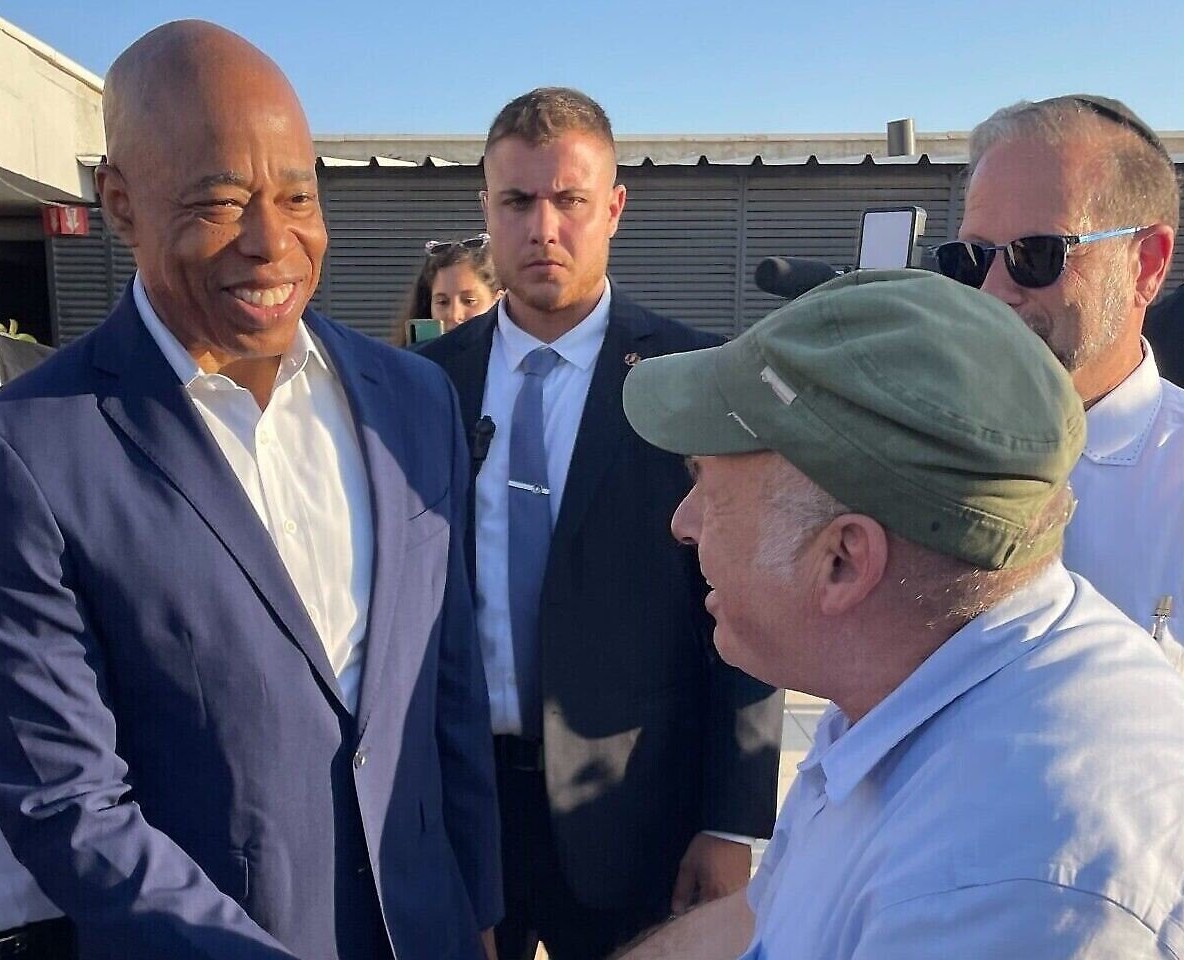
For Jewish New Yorkers in particular, his consistency has been unmistakable. At a time when antisemitic attacks have risen sharply on subways, sidewalks, campuses and inside school hallways Mr. Adams has not hesitated to call out the danger plainly. He increased security around synagogues and yeshivas, showed up at Jewish institutions when they were under threat, and spoke directly with community leaders across the spectrum of American Judaism. His words were not always polished. But they were unequivocal when many public figures chose caution. His relationship with Israel has also been unusually direct for a municipal leader. In the aftermath of the Hamas massacre of Oct. 7, 2023, when political calculations led some public officials to weigh every syllable, Mr. Adams visited Israel. He met grieving families, consoled communities, and stated without hesitation that Israel had the right and the obligation to defend its citizens. One can disagree with aspects of his approach. This is a democracy but the sincerity of his solidarity was unmistakable.
Beyond diplomacy, he has paid attention to the small but essential details of city life: expanding food-security initiatives, supporting homeless-outreach programs, partnering with faith institutions to reach underserved populations, and investing in youth interventions aimed at steering vulnerable teenagers away from cycles of violence. None of these efforts solved the city’s systemic problems; no mayor ever has. But they reflected a governing philosophy that saw New York’s poorest residents not as abstractions but as neighbors. What concerns me now, as a former government employee who understands both the fragility and the resilience of this city, is how quickly these realities have been overshadowed by controversy and political spectacle. Politics in America and in New York especially is increasingly shaped by memory loss. Leaders are judged by their worst headline rather than their full record. Communities forget who stood with them when the lights were off. And in moments of public anger, complexity becomes an inconvenience.
Rabbi Jonathan Sacks, the late British chief rabbi and one of the most thoughtful moral voices of our time, warned that democracies begin to fracture when political disagreement turns into moral condemnation. He argued that leadership must be evaluated by the capacity to elevate others, not by unrealistic standards of perfection. “The test of a leader,” he wrote, “is not whether he or she makes mistakes, but whether he or she lifts people higher.” By that measure, Mr. Adams has lifted many: Jewish families who needed reassurance, immigrants searching for belonging, low-income residents struggling to navigate city systems, and communities of color that too often feel spoken about but not spoken with.
It is possible, even necessary to hold leaders accountable while also being honest about their contributions. The two should not be mutually exclusive. Criticism is a democratic duty; erasing a record of genuine support is not. New York is a city in need of clarity. Jewish New Yorkers are anxious about rising hatred. Immigrant and Black communities remain concerned about equity, opportunity and safety. The city’s social fabric feels strained. In such a moment, recognizing those who have shown solidarity is not partisan; it is responsible.
Eric Adams has been far from flawless. But he has been present. He has been outspoken where others have been timid. And he has stood with communities, mine included when it mattered most.
Thank you, Mayor Adams.
Thank you for standing with Jewish New Yorkers when antisemitism rose sharply.Thank you for visiting Israel when others hesitated. Thank you for showing up consistently, visibly, and without theatrical hesitation for communities that often feel unseen. Thank you for supporting social services, youth programs, and food-insecurity initiatives that remain lifelines for the city’s most vulnerable. New York does not need perfect leaders. It needs present ones.
Related Topics
- 'Change Government'
- ADL Anti-Defamation League
- AJC American Jewish Committee
- American Jewry
- Anti-Zionism
- antisemitic violence
- Antisemitism
- Bible
- Biblical Criticism
- Black Lives Matter
- Black-Jewish Relations
- Charlie Kirk
- Definition of Antisemitism
- Donald Trump
- Ethiopian Jewry
- Hostages in Gaza
- Israel At War
- Itamar Ben Gvir
- Jonathan Pollard
- New Right Party
- New York
- New York Mayoral Race
- Philanthropy
- Rabbi Jonathan Sacks
Related Posts