


The medieval Jewish cemetery in the City of London
Buried beneath Europe’s largest art centre at the Barbican at the northern edge of the City of London, is an intriguing Jewish mystery. Historical records tell us that the medieval Jewish cemetery, which was left after the expulsion of Jews in 1290, was by the Cripple Gate of the old walled city of London, now known as the Barbican. The entire neighbourhood was destroyed in World War 2 by German bombers. During the rebuilding after the war, remains of the long-lost cemetery were found to the interest and amazement of the builders, historians and archeologists.
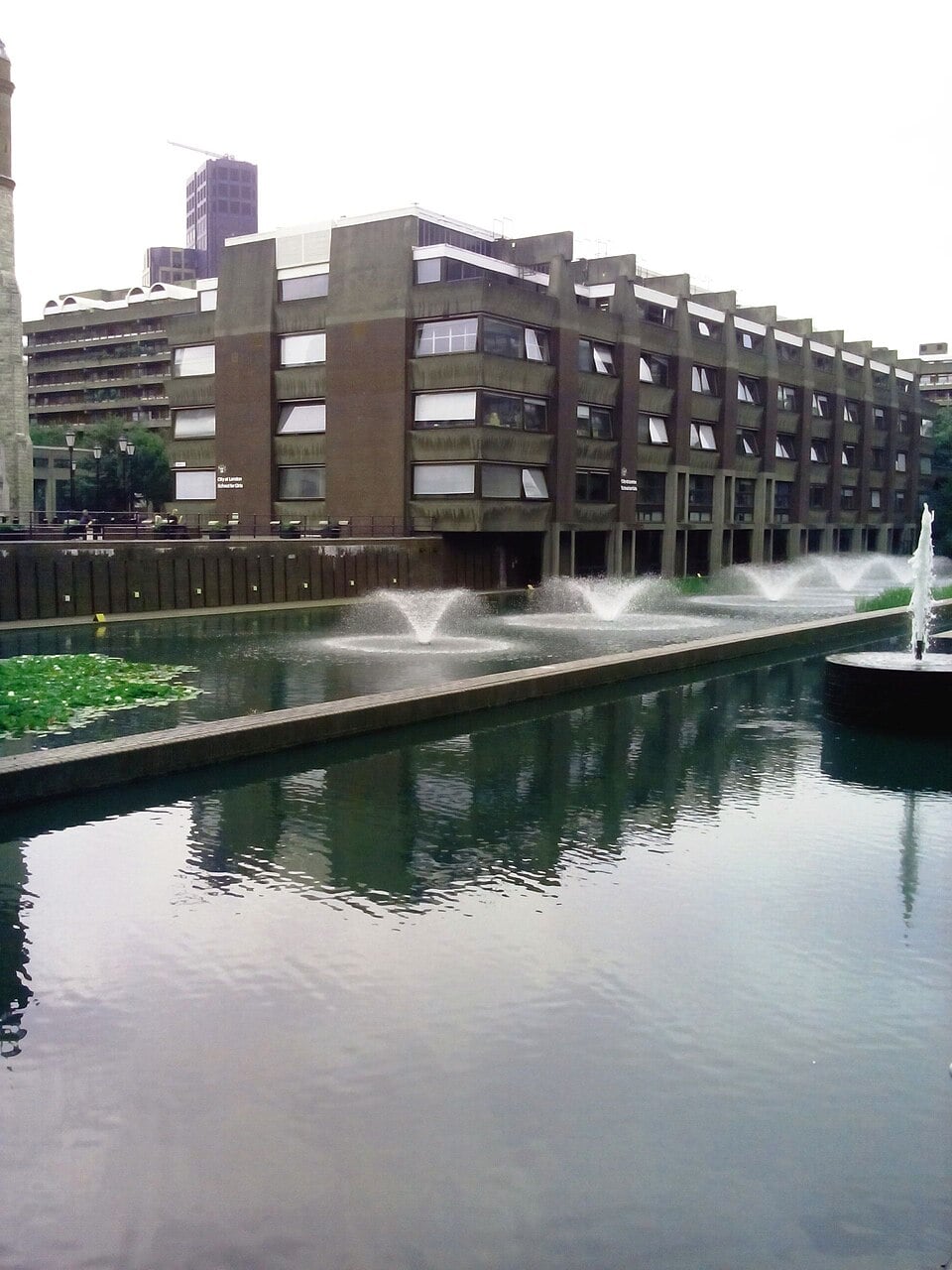
London and Roman tradition forced cemeteries to be placed outside the old City Walls. The archeological findings of the Jewish cemetery are exactly where the maps and the accounts placed it on the north west corner, just outside the city walls. This area is now occupied by City of London Girls School, a lake and some apartment blocks. The locations of some of the graves were found, but interestingly no remaining skeletons. It’s possible they had been removed by the departing community.
Some clues remain in the area. There are streets called Jewin Street and Old Jewry , there was a Crowders Well ( found across England where there were Jewish cemeteries) and two local churches are St Lawrence Jewry, and (the now closed ) St Olav Jewry. We know there were several synagogues, and schools and at least two ritual baths or mikves. Very well preserved stone foundations of one of the 12th century have been found and are on display courtesy of the Jewish museum during the current festival.
The community arrived with William the Conqueror from Rouen in France after 1066. It was an extension of the French community. The people were the property of the king and they were used to collect revenue for the crown. Because of this and subsequent imprisonment in the Tower of London we have a lot of detail about the community.
Rabbi Yacov of Orleans was buried in the cemetery. There are sections of the Gemara written in London and it seems likely that the renowned scholar known as Rashi visited. We have the location of the house off Ironmonger Lane of Hagin Ben Moses elder of the community, and we have details about Abraham who worked at the Tower of London. These provide with the records from Constable at the Tower who was responsible for the London medieval Jewry intriguing insights into a living community.
We have maps and title deeds and at least one mikve has been found underneath a Bank in a nearby street. Chicken and herring bones have been found consistent with findings in other Jewish communities. There is also a scarcity of pig bones pointing at the observance of the Kashrut dietary religious rules.
Once the Jewish community had been expelled, the Goldsmith livery company was given the ownership of the cemetery property. John Stow the 17th-century historian described the cemetery as the “Jews Garden” which was used as pleasure gardens and then eventually converted into buildings and alleys.
The Jewish Square mile project launched a festival around the cemetery and the medieval Jewish community last week (September 4th 2025) with the Chief Rabbi and Bishop of London in attendance. The festival runs during September with an exhibition at St Giles Cripplegate church.