

Be the change you wish to see in the world.
The More I Learn, the Less I Assume
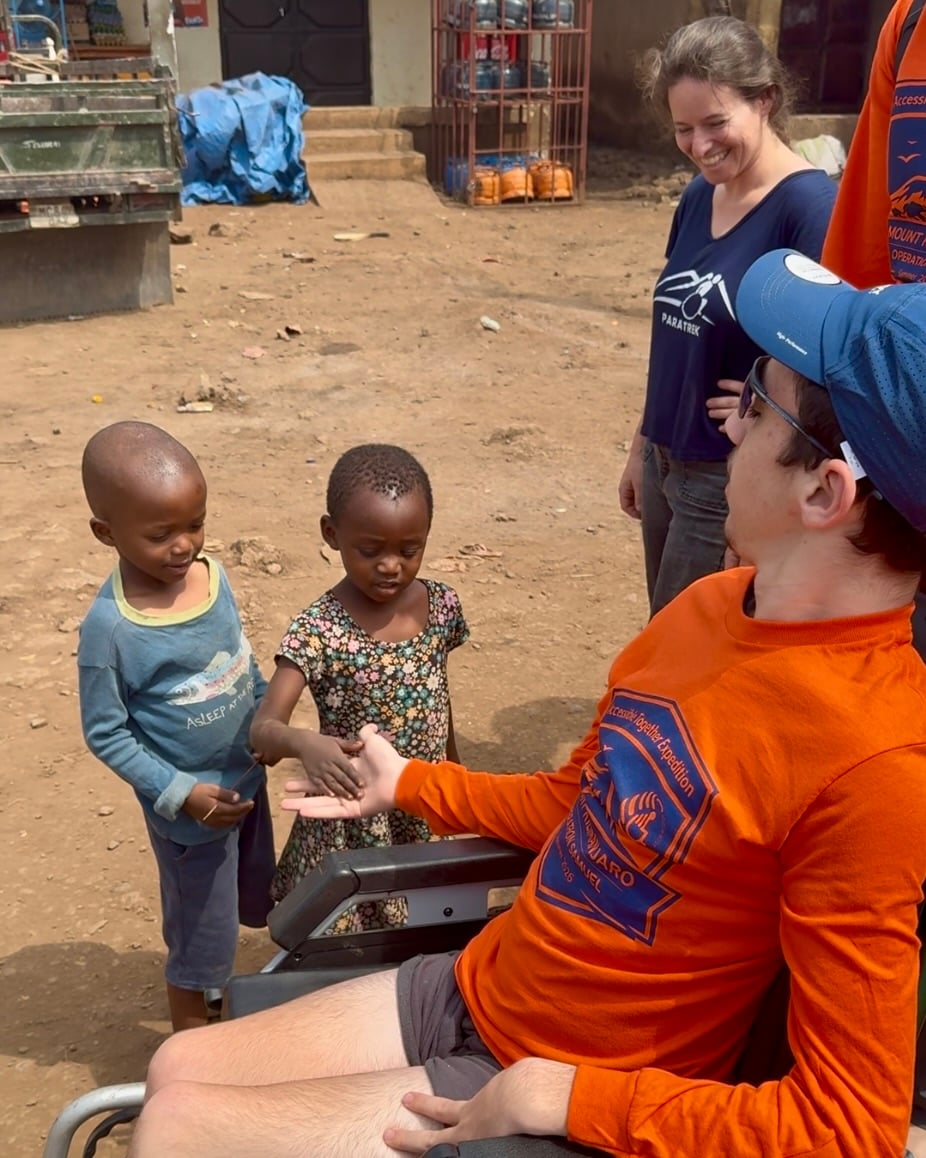
A gesture. A smile. A moment of connection. There is always more to a person than what we first assume.
One of the most important lessons I have learned, and am very much still learning, through my work alongside people of all abilities, including helping coordinate our two most recent climbs of Mount Kilimanjaro, is deceptively simple: recognize the person first. Not the wheelchair. Not the prosthetic. Not the diagnosis, injury, trauma, blindness, or any other visible or invisible disability. Recognize the human being in front of you.
I write this not as someone who has figured it out, but as someone who continues to get an education almost every day. The more people I meet and the more experiences we share, the more aware I become of assumptions I did not realize I carried. Even the best intentions deserve examination. Sometimes assumptions appear as concern. Sometimes they lead us to offer help before it has been requested. And sometimes, surprisingly, they appear as praise.
The way we celebrate people with disabilities is one example that has made me stop and think. Applause is a wonderful expression of appreciation when someone has accomplished something worthy of applause. But I am learning to ask myself a simple question: Would I be reacting the same way if this person did not have a disability? If an adult completes an ordinary task and we applaud simply because that adult has a disability, our intention may be supportive, but the message received may be very different. Without meaning to, we may be communicating, “I did not expect you to be able to do that.”
This has made me think much more carefully about the line between encouragement and condescension. I am learning that respect is not about lowering expectations and then enthusiastically celebrating when someone exceeds them. It is about giving people the space and opportunity to demonstrate who they are and what they can do without deciding the answer for them in advance.
The more time I spend alongside people whose lives, experiences, and abilities differ from my own, the more I discover when disability is no longer the primary focus. There is the person who makes everyone laugh at exactly the moment it is needed. The quiet gesture of someone reaching out to a struggling teammate. The person who listens when everyone else is talking. Determination, impatience, kindness, stubbornness, fear, intelligence, generosity, leadership, frustration, and humor. A smile that changes the mood of an entire group. On Kilimanjaro, where everyone eventually becomes tired, dirty, and considerably less impressed with themselves, those qualities become especially easy to appreciate.
Another lesson has been understanding that disability can be an important part of a person’s identity and lived experience. The answer is not to pretend disability does not exist. I am learning instead to acknowledge it without allowing it to become the entirety of how I understand someone. There is an enormous difference between acknowledging one part of a person’s life and allowing that one part to define the whole person.
The word “inspiring” has also made me think. People with disabilities can certainly inspire me, just as anyone can. But I am learning that the inspiration should come from what a person says, does, creates, contributes, or chooses, not simply from the fact that the person lives with a disability. Going to work, traveling, exercising, raising a family, attending school, or participating in a community should not automatically turn someone into an inspirational story. Sometimes buying groceries is simply buying groceries.
Some of my greatest teachers have never stood in front of a classroom, and most probably did not realize they were teaching me anything. Their lessons have come through actions, comments, gestures, humor, friendship, and occasionally by making me recognize one of my own assumptions. They continue to teach me that helping is not always helpful, that kindness without respect can become patronizing, and that inclusion is not about doing things for people. It is about removing barriers so people can participate, contribute, make decisions, lead, succeed, struggle, and sometimes fail on the same terms as everyone else. The dignity to take a risk, make a mistake, or fail belongs to everyone too.
Perhaps the most important thing I have learned is how much more there is to learn. I will use the wrong words sometimes. I will make assumptions I should not make. I will probably offer assistance when it was neither requested nor needed. My goal is not perfection. It is to remain open enough to listen, curious enough to ask rather than assume, humble enough to accept correction, and willing enough to do better the next time.
Who someone is can be found in far more than physical ability. It is found in character, choices, relationships, humor, courage, vulnerability, and the way someone treats another person when nobody is watching. It is in what makes someone laugh, what frustrates them, what matters to them, what they contribute, whom they care about, and what they hope to do next. Sometimes it is revealed in something as small as a gesture, a comment, or a smile at precisely the moment someone else needs one.
The longer I am privileged to do this work, the less interested I become in believing I have the answers. Instead, I find myself asking better questions. Genuine inclusion certainly requires ramps, elevators, accessible transportation, technology, and accommodations. Those things provide access. But I am learning that inclusion also asks something of me: to examine my assumptions, listen more carefully, and value people as they define themselves.
This is not a lesson learned. It is a lesson I continue to learn.
The more I learn, the less I assume. And I hope I never stop learning.