The Most Radical Act: Humanity in Wartime Israel
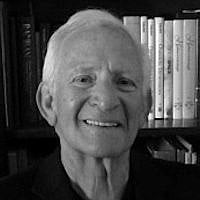
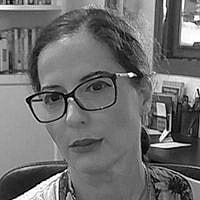
In Israel’s public discourse, whose founding values rest on the vitality of pluralism, the language of moral reflection has grown dangerously narrow. Since October 7th, 2023, mainstream media have increasingly operated under the logic of mobilization. In such a climate, even the simple insistence on humanity can sound subversive. It is precisely this quiet insistence that makes the recent collaboration between Miriam Hirschfeld from Haifa, Israel, and Aisha Saifi from Bethlehem, Palestine, worth attention.
In their joint article “Truth and Reconciliation: A Dream, a Goal for Israelis and Palestinians?” (Nursing Inquiry, 28 October 2025), Hirschfeld and Saifi – two healthcare professionals – propose not a political plan but a moral practice – one that begins not with negotiation, but with recognition. They’re not rejecting political peace; rather, they refuse to wait for it. Peace, they argue, must be cultivated “from the bottom up,” through the creation of spaces where people can truly listen to each other’s narratives. Both peoples, they remind us, carry profound collective trauma –“from the river to the sea, everyone has PTSD”– and genuine healing must begin with mutual acknowledgment of suffering.
Their approach is far from naïve. They acknowledge fractured governance, a lack of political will, and the shared entrapment in painful histories – the Holocaust, the Nakba, October 7th, the devastation in Gaza, and the ongoing violence across the West Bank. They name these not to equate them, but to recognize each other’s pain, while still nurturing “the fragile but enduring hope for a future of peace with justice for all.” Speaking in the first-person plural “we,” they do not describe two peoples, but a shared moral subject struggling to imagine reconciliation amid trauma.
Drawing on Hannah Arendt, they warn how truth collapses when fact, opinion, and interpretation blur – a condition familiar to both societies. Yet they resist imposing a single narrative. Instead, they call for a practice of honest listening – hearing the other’s story without erasing one’s own.
By beginning from the human rather than the political, Hirschfeld and Saifi expose a silence at the heart of public discourse in both societies: the silence surrounding compassion itself. For Israelis, their model offers a glimpse of the moral vocabulary that democracy requires if it is to survive war. What they model is not only an ethics of care but also a form of linguistic resistance. Their article reminds us that reconciliation begins with language – with the ability to say “we” without erasing “I.” Yet within Israel’s contemporary media sphere, the conditions for such listening have almost disappeared.
The public sphere, the hallmark of democratic vitality, has undergone a subtle but profound militarization. Language, once meant to deliberate, now serves to defend. Journalists and commentators in mainstream media now operate, consciously or not, within a logic of mobilization, where the question is no longer Is this true? or Does this deepen understanding? but Does it serve the narrative or the enemy’s? In such a climate, the ethical gestures Hirschfeld and Saifi describe of attention, empathy, and recognition, sound radical.
This militarization is not abstract theory – it operates through concrete mechanisms of distortion. One example emerged during the hostage crisis, when a Haaretz column I wrote describing a phone call between a mother and her captive son, arranged by Hamas, was recast online as an act of sympathy for terror. The piece had simply portrayed how the mother–son bond transcended and shattered the manipulative framework, revealing the capacity of the human spirit to pierce even calculated cruelty. Yet even the most elementary recognition – that beneath all layers of conflict Israelis and Palestinians are members of the same species – human beings – was enough to spark a wave of online outrage, amplified by influential media figures eager to recast it for political ends. What this episode reveals is not merely a failure of interpretation but a deeper collapse of moral attention.
When language itself becomes a field of combat, gestures of complexity and multi-dimensionality are no longer read as attempts to understand, but as threats to solidarity. In such a climate, Hirschfeld and Saifi’s vision cannot be received on its own terms. Their article does not fit the binary logic that governs public speech; it speaks in a register that Israeli mainstream discourse has almost forgotten – one that treats listening as a civic act and compassion as a form of knowledge.
The tragedy is not that such voices are absent, but that the moral frequency they speak in has become inaudible. Between the noise of outrage and the demand for alignment, the possibility of hearing the human story – any human story – is drowned out. Hirschfeld and Saifi remind us of what it means to reclaim that capacity: to hold vulnerability without fear of disloyalty, to recognize that moral strength and empathy are not opposites but interdependent virtues.
There is, perhaps, a quiet lesson in the very place where they chose to publish. Nursing Inquiry, an international, peer-reviewed journal devoted to exploring the ethical, philosophical, and social dimensions of healthcare, serves as an unexpected yet fitting home for their message. By locating their vision in a forum dedicated to care rather than politics, they convey that reconciliation is not only a political challenge but a human one. Their words resist ideological capture and keep alive the fragile possibility of dialogue within the moral terrain of care, not the battlefield of narratives.
In Israel, where the functioning of democratic life has long depended on the freedom to argue, such a reminder is not trivial. The same pluralism that once shaped public debate now struggles to survive under the pressure of an ever-growing mobilization. The voice of Hirschfeld and Saifi should enter this silence not as a political provocation but as a moral invitation: to listen again, to speak again, and to rediscover the human as a shared foundation rather than a contested category.
Their “fragile but enduring hope” deserves cultivation. Because without those who insist on human connection across divides, without the identification of transcendent moments revealing the greatness of human spirit, without attentiveness to other’s suffering – there can be no imagination of recovery, let alone peace.
Neither peace nor democracy can be imposed from above. In times when public discourse has turned defensive, perhaps the most courageous act left to us is to keep speaking. In the language of humanity.