The Muslim Brotherhood’s Sponsor: Qatar’s Quiet Conquest of the West
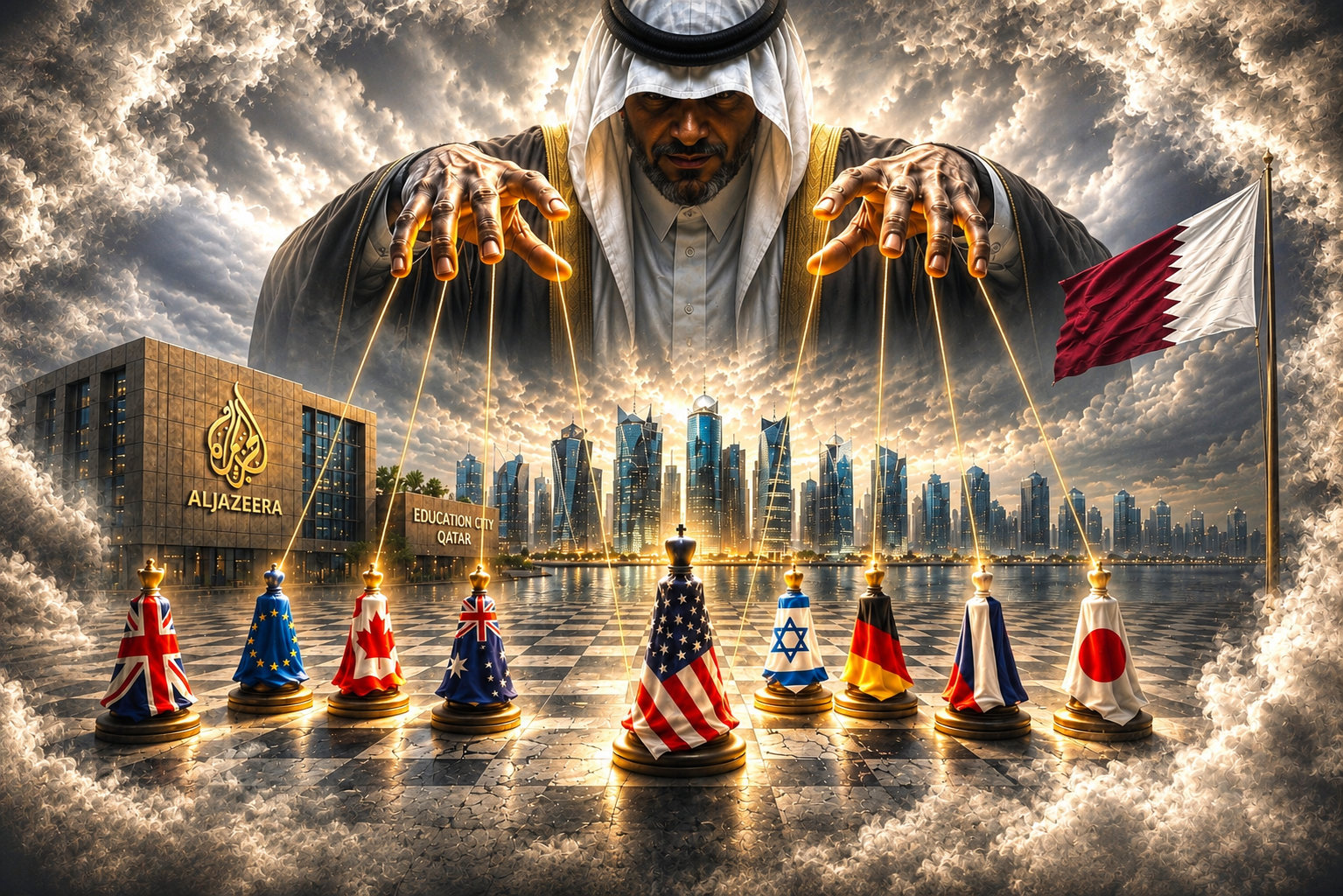
Imagine a country the size of Connecticut, floating on an ocean of natural gas, that set out to do what the Soviet Union never quite managed: reshape Western institutions not with spies or tanks, but with checkbooks, campuses, media empires, and elite access.
That country is Qatar.
While Washington fixates on Russian bots and Chinese balloons, a patient, well-funded influence architecture has been built in plain sight and it is stretching from Hamas penthouses in Doha to Ivy League lecture halls and K Street boardrooms.
This is not conspiracy. It is strategy. At its core sits Qatar’s decades-long embrace of the Muslim Brotherhood.
The Spiritual Godfather in Doha
For decades, the most influential Islamist cleric of the modern era lived like royalty in Doha: Yusuf al-Qaradawi.
Qaradawi, long the spiritual guide of the Muslim Brotherhood, openly celebrated suicide bombings against Israeli civilians. In a widely cited fatwa, he declared martyrdom operations:
“one of the greatest types of jihad in the cause of Allah.”
Qatar didn’t just host him. It granted him citizenship, a global platform on Al Jazeera, and protection until his death in 2022.
The Counter Extremism Project described him as one of the chief ideologues of the global Muslim Brotherhood movement. His presence in Doha signaled a clear policy: shelter, legitimize, and amplify Brotherhood voices while courting the West as a “moderate” partner.
Hamas Didn’t Find a Cave — It Found a Penthouse
Hamas, the Brotherhood’s Palestinian branch and a U.S.-designated terrorist group, thrived under Qatari protection. Senior leaders like Khaled Mashal and Ismail Haniyeh operated openly from Doha’s luxury hotels. Qatar has transferred billions into Gaza, much of it sustaining Hamas rule, even while marketing itself as a neutral mediator.
The contradiction is glaring: the same regime hosting America’s largest Middle East airbase (Al Udeid) also became Hamas’s most important international patron.
Al Jazeera: The State Megaphone
Narratives are power. Launched in 1996, Al Jazeera became the Arab world’s most influential network and a global English-language player. Supporters praise its boldness. Critics, including multiple Arab governments, accuse it of functioning as a sympathetic amplifier for Brotherhood causes, especially during the Arab Spring and after October 7.
Qatar doesn’t stop at broadcasting. It actively trains the next generation of journalists in its model. The Al Jazeera Media Institute has trained more than 34,000 media professionals from around the world, while Media City Qatar has become a regional hub attracting international outlets and offering specialized programs for foreign correspondents. Many participants are exposed to Al Jazeera’s distinctive editorial approach during their time in Doha.
Few nations have ever purchased such disproportionate narrative reach or invested so deliberately in shaping who tells the stories.
Buying Proximity to the Next Generation
The true masterstroke was education. Qatar has poured more than $6 billion in disclosed funds into U.S. higher education, with some researchers estimating significantly higher totals when accounting for reporting gaps and undisclosed flows. Major recipients include Cornell, Georgetown, Carnegie Mellon, Texas A&M, and others.
In Doha’s Education City, American universities built gleaming branch campuses. In exchange, Qatar gained concrete contractual leverage. At Texas A&M, for example, contracts with the Qatar Foundation granted Qatari entities ownership rights over intellectual property from hundreds of research projects, including work involving advanced scientific and technological fields.
Dr. Charles Asher Small, founder and director of the Institute for the Study of Global Antisemitism and Policy (ISGAP), has warned that the Qatari ruling family maintains a “Bay’ah” — a spiritual oath — to the Muslim Brotherhood. As a result, he argues, they are “pumping in many, many billions of dollars into our universities, K-12 schools and cultural institutions” to promote its ideology.
Influence here is rarely crude bribery. It operates through incentives, dependencies, and cultural osmosis. Universities insist partnerships preserve independence. Critics reply: watch the patterns of normalization.
Access Is the Currency
The machine extends far beyond campuses. Qatar has invested hundreds of millions in Washington lobbying, public relations firms, think tanks, former officials, and bipartisan relationship-building. The goal isn’t conversion. It’s durable access across parties, administrations, and power centers.
Real estate, sports, private equity, sovereign wealth investments, and strategic partnerships multiply the points of contact.
Money creates proximity. Proximity creates influence.
The Strategic Shield
What protects the entire system? Utility.
Qatar hosts Al Udeid, facilitates hostage talks, purchases American weapons, and positions itself as indispensable to regional diplomacy.
Every time questions arise about Hamas, the Muslim Brotherhood, or foreign influence, the response is often the same:
“But they help us.” Usefulness has become Doha’s best insurance policy.
Time to Face Reality
This is not about hating Qatar. It is about intellectual honesty.
A resource-rich monarchy with deep ideological ties to the Muslim Brotherhood has constructed one of the most effective long-term influence operations in modern history. And, they’ve done it legally, openly, and often with Western institutions’ enthusiastic participation.
The Soviets had to infiltrate. Qatar was invited in.
The pieces:
Qaradawi’s platform, Hamas patronage, Al Jazeera’s reach, university funding, K Street access, and strategic utility
They all form a coherent architecture where each element reinforces the others. The question is no longer whether this influence exists.
The question is how much longer the West will keep pretending it doesn’t matter and what price they are willing to pay for continued denial.