


The MV Arctic Sea: A mystery that still matters to Israel
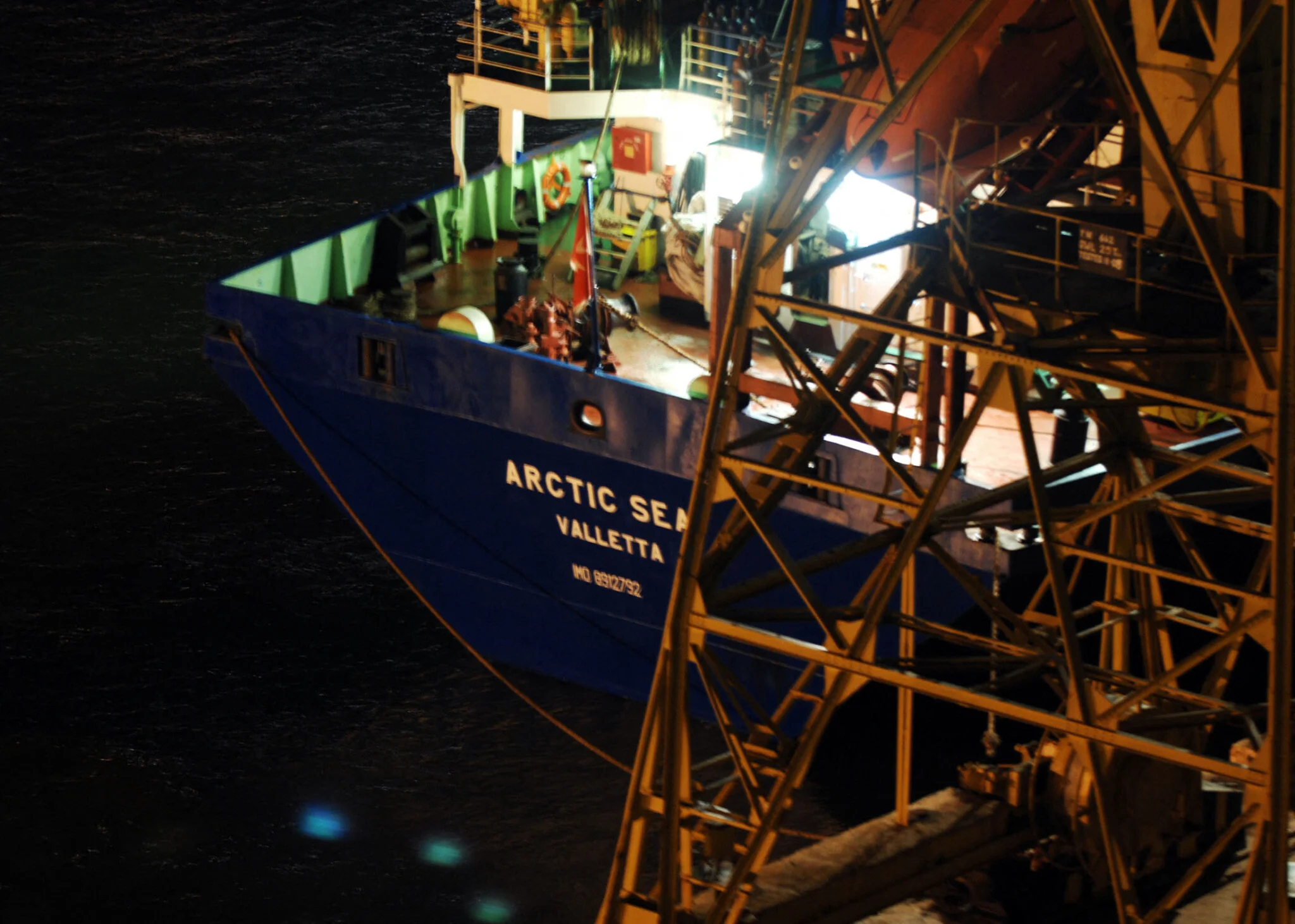
I first encountered the mystery of the MV Arctic Sea in the summer of 2009.
I was speaking with a maritime freight specialist on a transatlantic flight when reports began to emerge of a Russian cargo vessel that had seemingly vanished while carrying a shipment of timber from Finland to Algeria. At the time, it sounded like an unusual maritime incident. It would soon become something far stranger.
Nearly 17 years later, a Cyprus court may be about to reopen the story.
The court is considering an appeal against the extradition to Russia of Alexey Kratzgor, also known as Alex Brodsky, a suspect linked to the ship’s alleged hijacking. To most people, this is an aging piracy case. To those who followed the affair closely, it may represent the last realistic opportunity to revisit one of the most consequential and least understood geopolitical mysteries involving Russia, Israel and Iran – and perhaps to obtain something the public has never had: testimony under oath from a figure connected to the affair.
The official explanation has always been simple.
The Arctic Sea was allegedly hijacked by a group of criminals. Russia eventually recovered the vessel. The crew was freed. The case was solved.
Yet from the beginning, the facts never seemed to fit the narrative.
The ship disappeared while crossing some of the world’s most heavily monitored maritime corridors. For nearly two weeks, authorities could not establish its location. Public statements were contradictory. Intelligence services across Europe followed developments closely.
Then came the response.
Russia launched a secret naval and air operation near Cape Verde, thousands of kilometers from Russian territory. Warships, aircraft and special forces were mobilized to locate and seize the vessel.
Why would Moscow deploy such resources to recover a commercial cargo ship reportedly carrying nothing more than timber?
The mystery only deepened after Dmitry Rogozin, then Russia’s ambassador to NATO, publicly acknowledged that false information about the ship’s whereabouts had deliberately been supplied to the media for what he described as “tactical reasons.” The apparent objective was to buy time for Russian forces to position themselves before taking control of the vessel.
That admission remains remarkable even today. If this was simply a piracy case, why was strategic deception deemed necessary?
The affair was attracting attention far beyond Russia. Martin Selmayr, then a spokesman for the European Commission, remarked that the case was so extraordinary it would inevitably become a Hollywood film one day. What made the story so compelling was not merely the disappearance itself, but a series of events that unfolded around it.
On the very day the Arctic Sea disappeared from radar, a senior executive connected to one of Russia’s leading missile manufacturers was assassinated in Moscow. No public evidence has ever established a direct connection between the two events. Yet the timing inevitably fueled speculation.
At roughly the same time, Russian maritime journalist and blogger Mikhail Voytenko began publicly questioning the official account and highlighting inconsistencies in the information being released about the vessel’s movements. After the ship was recovered, Voytenko said he received threats and eventually left Russia. From abroad, he continued to argue that key elements of the story remained unexplained.
For Israeli observers, however, the most important question concerned the cargo. For years, some journalists, analysts and former officials speculated that the Arctic Sea may have been transporting components of Russia’s S-300 air-defense system to Iran under cover of its timber shipment.
At the time, Israel viewed the possible transfer of advanced Russian air-defense systems to Iran as a major strategic threat. Such weapons could have complicated any future military action against Iran’s nuclear facilities and altered the regional balance of power.
No public evidence has conclusively proven that the Arctic Sea carried S-300 components. But neither has the theory ever been conclusively disproven. The timing of subsequent events only intensified the speculation.
Shortly after the vessel was seized, senior Israeli and Russian officials met in Moscow for high-level discussions focused on regional security and weapons transfers. Publicly, the meetings concerned broader strategic issues. Privately, many observers wondered whether the Arctic Sea affair had become part of those discussions.
Some analysts speculated that the case touched upon a tacit understanding between Russia and Israel not to provide advanced weapons to each other’s principal regional adversaries. Whether that interpretation is correct remains impossible to verify. What is undeniable is that the official explanation continues to leave important questions unanswered.
There was no conventional ransom demand. The ship’s route remains difficult to explain. Access to crew members after their return was tightly controlled. Russian officials themselves acknowledged having deliberately misled the media during the operation. Even today, many of the underlying intelligence assessments remain hidden from public view.
The significance of the Arctic Sea extends beyond the mystery of a single vessel. In hindsight, the affair appears strikingly modern. It combined commercial shipping, intelligence operations, military power, strategic ambiguity and information management in ways that would later become familiar features of geopolitical competition.
Today, as Russia and Iran cooperate more closely on military and strategic issues than they did in 2009, the questions raised by the Arctic Sea feel less like historical curiosities and more like an early glimpse of forces that continue to shape the international system.
That is why the Cyprus appeal matters.
Russian authorities say Kratzgor was detained in 2009, released on bail, and later left Latvia, after which he became the subject of an Interpol notice. If the proceedings lead to new testimony or previously unseen evidence, they could provide fresh insight into an affair that has remained shrouded in secrecy for nearly two decades.
Perhaps no court can fully resolve the mystery. But the Arctic Sea remains a reminder that some of the most important stories in international security are not those that are fully explained, but those whose missing pieces continue to shape events long after they disappear from the headlines.
Seventeen years later, the Arctic Sea may still have secrets to reveal.