
From Kibbutz to the global stage
The Mysterious Neighbor 3I/ATLAS – Natural or Not? NASA Will Decide
The Mysterious Neighbor 3I/ATLAS – Natural or Not? NASA Will Decide.
A Global Media Storm;
The mysterious interstellar visitor 3I/ATLAS continues to dominate headlines around the world — from major science magazines to international news networks.
WIRED reported a mysterious radio signal allegedly linked to the object.
NDTV described scientists’ astonishment at a chain of anomalies — color shifts, acceleration, and the disappearance of the tail.
WION joined with reports of multiple “gas jets,” while The Economic Times in India claimed that seven jets were detected — one of them, according to social media rumors, pointing toward the pyramids of Giza.
The website Dagens.com added yet another twist: a strange new object detected between 3I/ATLAS and Earth.
Other scientists dismiss the connection, but the atmosphere across the scientific world is charged with speculation.
“Houston, we have a problem.”
Professor Avi Loeb of Harvard University, who gave an exclusive interview last week to The Times of Israel that drew global attention, said this morning:
“Houston, we have a problem with the natural comet hypothesis.”
In other words: there is a serious problem with the assumption that 3I/ATLAS is a natural comet.
Loeb argues that it will be extremely difficult to explain the non-gravitational acceleration of 3I/ATLAS through gas evaporation alone.
According to him, the energy required to accelerate an object weighing tens of billions of tons to tens of kilometers per second is enormous — an industrial-scale process, not a natural one.
If There’s No Tail — Where Does the Force Come From?
If there is no tail, no mass ejection, and no visible dust — where does the force come from that propels 3I/ATLAS away from the Sun?
And if that’s the case — who owes the public an explanation?
This is precisely the question that now places NASA and the global scientific community in an awkward position.
Scientists remain silent — because accepting this hypothesis would shake the very definition of what we call a comet or asteroid.
NASA’s continued silence may suggest it lacks a convincing natural explanation and is waiting for more data from solar observatories such as STEREO or Solar Orbiter.
Meanwhile, the media are in overdrive — and Google News algorithms are picking up the signal.
Searches for “NASA” or “3I/ATLAS” have surged in recent days, and most of the top results rely on commentary and speculation rather than verified data.
Growing Tension — and Cooperation — in Space
At a space conference in Australia this week, a senior NASA official revealed a rare phone call from China’s space agency:
“If we don’t cooperate, we’ll have to leave space”
The reason: a near-collision between American and Chinese spacecraft, following an incident in which a Chinese craft was apparently struck by orbital debris, leaving two taikonauts stranded in orbit.
The NASA official concluded:
“Either we cooperate — or neither of us will be there.”
That statement might apply equally well to the investigation of 3I/ATLAS: to understand it, we must work together.
If the Object Is Not Natural — What Must We Assume?
Let’s assume, just for the sake of analysis, that 3I/ATLAS is not a natural object.
Not as a declaration, but as a scientific working hypothesis.
What conditions would make the current data coherent?
- Mass and Size: Estimated at 33–100 billion tons, with a diameter of 5–20 kilometers.
- Unusual Properties: Higher-than-expected velocity (tens of km/s), no visible tail, shifting colors (green–blue–white), and unusually high brightness.
- Possible Explanation: A closed internal system, a reflective shell, and an independent energy source — nuclear or solar-based.
In simpler terms, 3I/ATLAS might be a self-contained reservoir of heat and gases — “a sealed gas tank inside a porous rock.”
Yet to account for its acceleration, a non-natural energy source would still be needed, since solar heat alone cannot generate such power.
Hypothetical Propulsion Scenarios
1. Solar Sail:
Scientists estimate that a solar sail capable of moving an object this massive would need to span an area the size of a continent — easily visible to any telescope.
For this reason, the solar-sail hypothesis is considered extremely unlikely.
2. Nuclear Reactor and Gas Compression System:
A more plausible model involves a nuclear reactor powering a gas compression and release system, using the body’s own material and environmental heat.
Notably, CNN today revealed details of President Donald Trump’s “Athena” program — a 62-page NASA plan to be led by the agency’s new administrative head, Jared Isaacman, which includes development of nuclear propulsion technologies for space.
Possible Technological Design Principles:
If we combine the available data, a hypothetical technological model emerges:
- A sophisticated reflective outer layer:
Possibly based on nano-materials, capable of regulating heat and directing light — explaining both the unusual brightness and color shifts. - A closed internal propulsion system:
Cavities where gases such as CO and CO₂ are stored and released directionally under pressure, producing thrust without a visible tail. - Use of ambient energy:
Solar heat is harvested and converted into propulsion — like an internal light sail or smart solar engine. - Self-regulation and control:
Magnetic or pressure-based systems could balance internal thrust, ensuring stability. - Interstellar adaptation:
A structure resistant to cosmic radiation and extreme temperatures — possibly designed for reuse across multiple star systems.
Conclusion: A Test for Science — and for Humanity:
Taken together, the 3I/ATLAS mystery goes beyond astrophysics.
It is a test for the new human era — one that demands transparency, cooperation, and the courage to accept that the universe may be more complex than we imagined.
We can only hope that NASA, ESA, and the Chinese, Indian, and Japanese space agencies, along with the international scientific community, will now work openly and collaboratively to study this phenomenon.
Whether it turns out to be a rare natural object or a designed technological artifact, its understanding will be a test of our collective ability to confront a true cosmic mystery — together.
Because if we do not cooperate —
we will not be there.
But we may also not be.
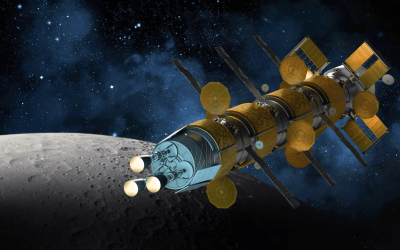
Image; pace Nuclear Propulsion – Credit NASA
Author: Rafi Glick רפי גליק))
Related Topics
Related Posts